T1 and Bauman University Launch Engineering Software Lab
T1 IT holding and Bauman Moscow State Technical University have opened a laboratory to develop engineering software and electronics, aiming to bridge the talent gap in microelectronics.
Kirill Dybko has been named the new president of the Russian microelectronics holding Element, as the company prepares to transition to a new management structure by the end of 2026.
Russian microelectronics material production is projected to hit 1.7 ₽ billion in 2026, a 17-fold increase since 2024, as the government invests billions to reduce import reliance.

Revenue from Russian-made microelectronics materials is expected to grow 17-fold by 2026, reaching 1.7 ₽ billion, despite ongoing funding shortages in the sector.
Russian microelectronics companies are forming a working group to standardize chiplet technologies and develop a state-backed trusted platform for high-load computing.
Novosibirsk State Technical University has developed radiation-hardened vacuum transistors designed for use in space and defense electronics.

The United Microelectronics Company plans to invest 1.101 ₽ trillion by 2036 to build a 14nm semiconductor factory and supporting assembly facilities in Russia.

A survey of 74 companies at the Microelectronics 2026 forum reveals current trends in AI adoption across management, development, and production processes.

The newly formed United Microelectronics Company plans to invest 1.101 ₽ trillion by 2036 to build three semiconductor facilities in Russia, including a 14nm chip plant.
Sberbank has proposed a 1.101 ₽ trillion development strategy for the United Microelectronics Corporation to scale domestic production through 2036.

The Russian government expects a new technology levy on smartphones and laptops to generate 11.7 ₽ billion in 2027 to support domestic electronics manufacturing.

Russia is introducing a new technology fee for electronics importers and manufacturers, with projected annual budget revenues reaching 12.4 ₽ billion by 2028.
Sberbank projects the Russian microelectronics market will reach up to 2.2 million silicon wafers by 2036, with a total investment of 1 ₽ trillion planned for the UMC by 2030.

Sberbank has modeled the Russian microelectronics market through 2036, projecting demand scenarios for the United Microelectronics Company amid a significant technological gap in sub-16 nm chips.
MIPT and NM-Tech have entered into a partnership to bridge the gap between academic research and industrial microchip manufacturing.
Kontrakt Holding, part of the Element group, has begun supplying Chinese semiconductor manufacturing equipment to third-party Russian companies, having already imported over 100 units.
Element subsidiary Kontrakt Holding has launched large-scale imports of Chinese semiconductor manufacturing equipment, delivering over 100 units to the Russian market.
Over 80% of Russian microelectronics companies cite insufficient domestic demand as the main growth barrier, while production capacity is projected to quadruple by 2030.
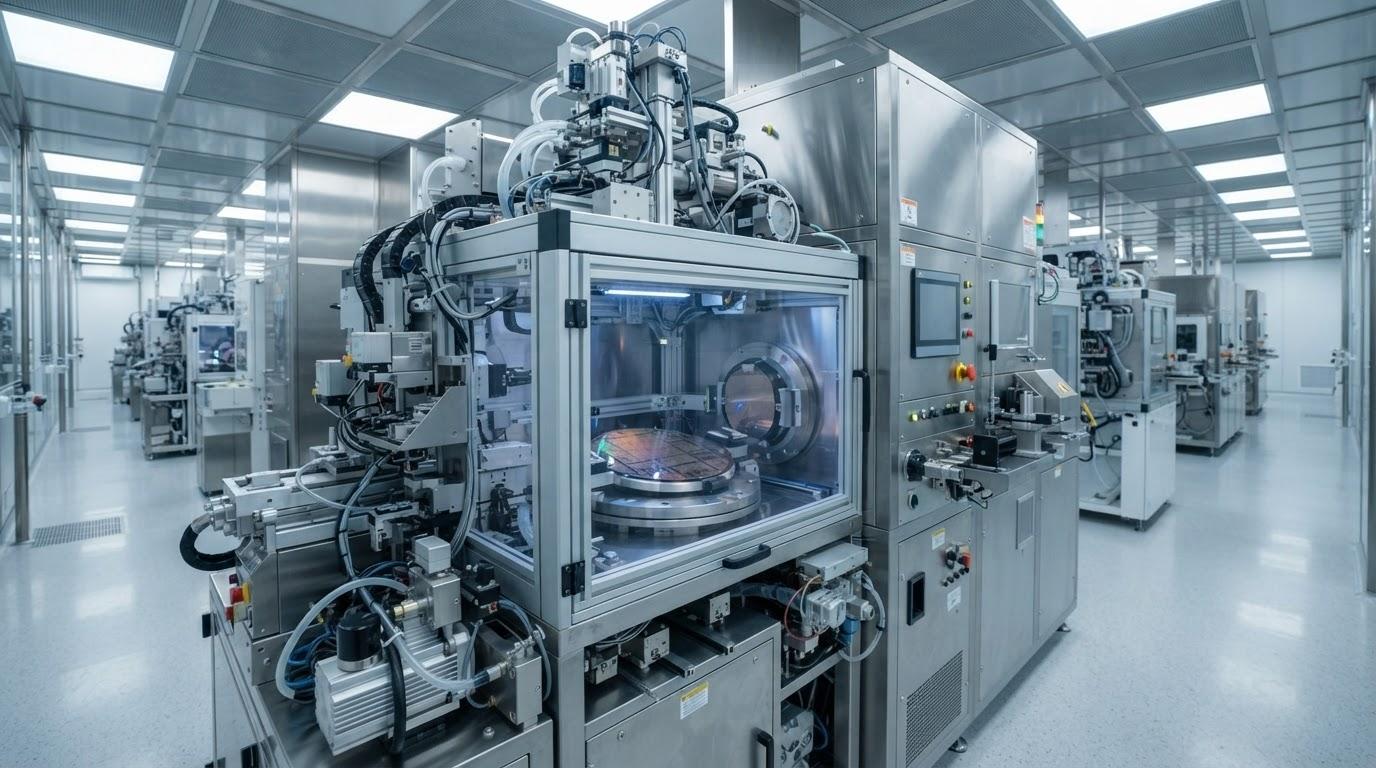
RTU MIREA has opened new cleanroom laboratories to provide students with hands-on experience in microelectronics manufacturing.
Shvabe and MIPT have partnered to develop energy-efficient electronics and photonics using materials only a few atoms thick.