SpaceX Outlines Massive AI Compute Expansion Plan
SpaceX plans to scale its AI compute capacity to 10 gigawatts by 2027 using Nvidia’s Vera Rubin architecture, with 40% of the infrastructure allocated to external customers.

SpaceX plans to scale its AI compute capacity to 10 gigawatts by 2027 using Nvidia’s Vera Rubin architecture, with 40% of the infrastructure allocated to external customers.

Meta Superintelligence Labs has launched its Muse Wonder agentic model in the Cursor code editor, featuring a 1 million-token context window and a 46.1% score on CursorBench 4.0.

Google has validated a new quantum error correction technique on its Willow chip, achieving a 40-fold reduction in error rates and record-breaking T-state fidelity.
Google has launched the Antigravity platform, an AI-driven tool that accelerates the discovery of antimicrobial peptides by integrating database screening and structural analysis.

OpenAI has upgraded its Chrome extension, allowing ChatGPT to access open browser tabs to perform tasks like data extraction, form filling, and tab management.

Meta’s Omnilingual ASR system, which supports over 1,600 languages, has been recognized as one of TIME’s Best Inventions of 2026.

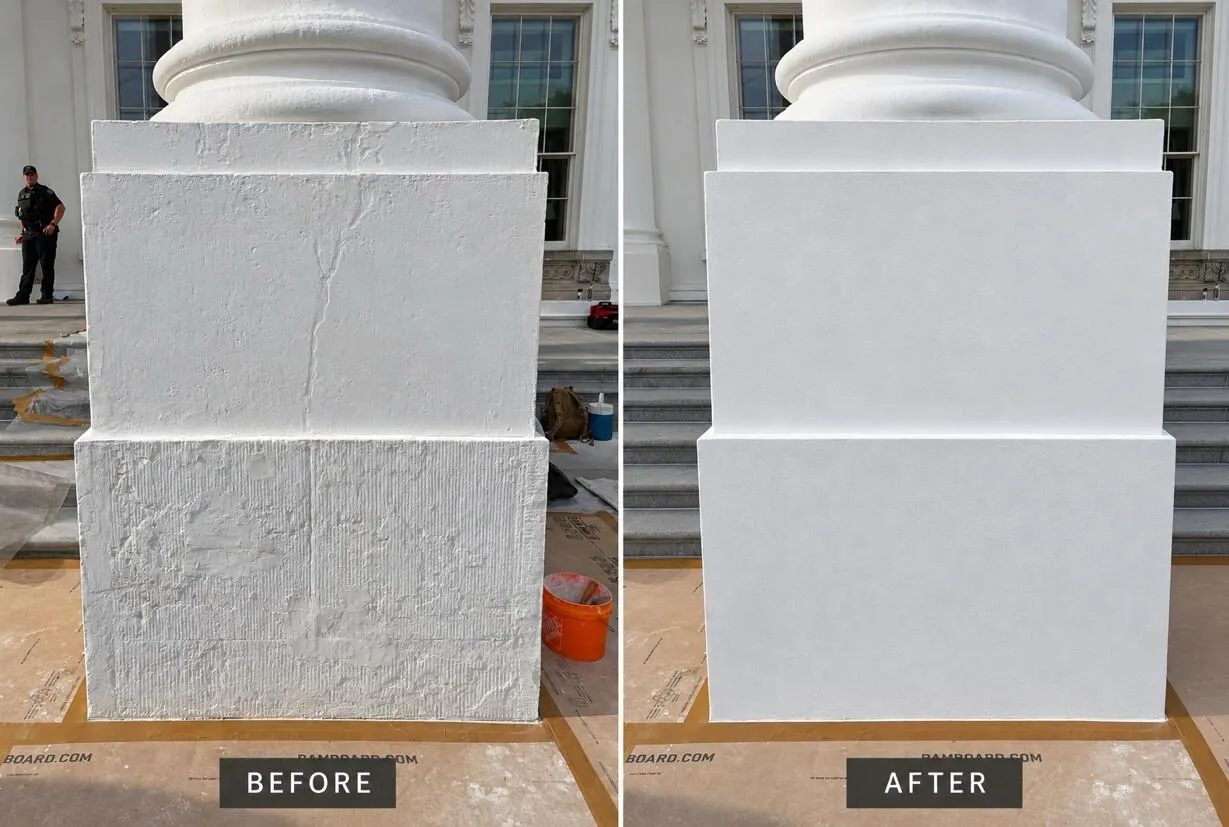
A comparison photo of White House pillars posted by Donald Trump has been flagged by Google's SynthID tool as AI-edited, sparking questions about the accuracy of visual records.

Google has expanded its News AI pilot program to over 400 publications, with CNN signing a multi-year licensing deal to provide content for generative AI features.

The New York Times visualized Epoch AI research, highlighting the rapid growth in computational power required for training frontier AI models.

Meta has released the open-weight Muse Spark AI model, featuring 816 billion parameters and a 1-million-token context window, designed for coding and agentic workflows.

PostgreSQL is seeing renewed demand as the primary database for AI-generated applications, with 80% of enterprise databases now being initiated by AI agents.

OpenAI is offering US university biology labs sponsored access to its GPT-Rosalind model, including up to 30 free seats and data privacy protections for academic research.

Black Forest Labs has launched FLUX 3 Image Klein, a compact 5.6-billion parameter open-weights model capable of running on consumer-grade GPUs.

Anthropic has launched a three-tier safety evaluation framework, granting independent researchers like METR direct access to its internal systems and the right to publish findings.

Citizen Lab has uncovered a mercenary spyware campaign that uses targeted ads to deliver zero-click exploits to mobile devices, affecting high-profile organizations and government networks.

Skoda design head Karl Neuhold warns that AI integration in automotive styling could reduce the need for human designers while significantly accelerating development workflows.

New observational data from the DESI and DES projects suggest that dark energy may evolve over time, challenging the standard Lambda-CDM cosmological model.

Anthropic expects its Claude AI models to lead the majority of its internal research and development work within nine months.

Meta has introduced Muse Spark Open, an 816-billion parameter open-weight model designed for local execution on Mac hardware with at least 1 terabyte of RAM.

Google's Gemini 4 Argon AI model has demonstrated superior performance in robotic reasoning, achieving an 87% score in spatial and physical task benchmarks.