OpenAI Launches Academic Access Program for GPT-Rosalind
OpenAI is offering US university biology labs sponsored access to its GPT-Rosalind model, including up to 30 free seats and data privacy protections for academic research.

OpenAI is offering US university biology labs sponsored access to its GPT-Rosalind model, including up to 30 free seats and data privacy protections for academic research.

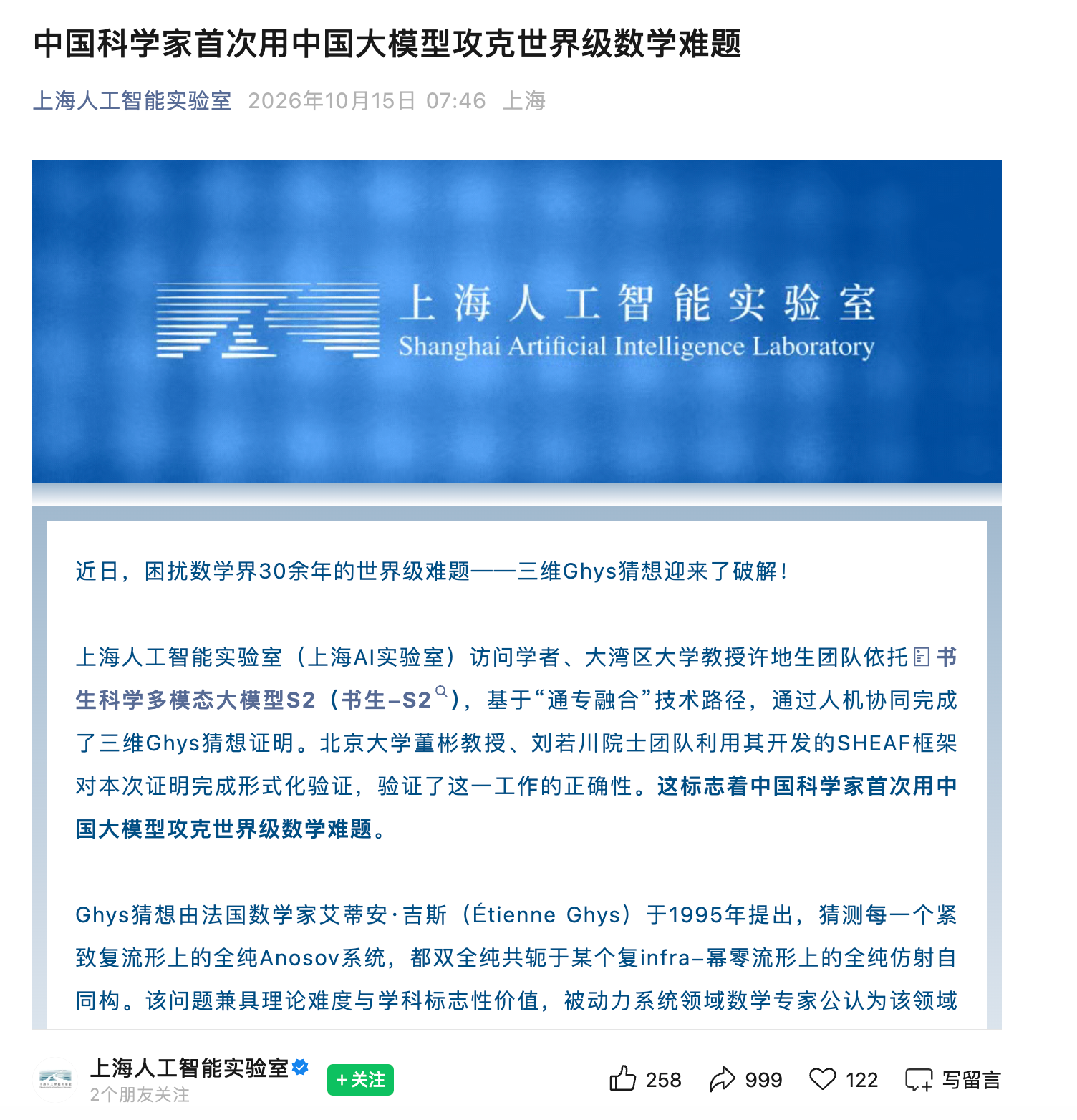
Chinese researchers have solved the 30-year-old 3D Ghys conjecture using the InternLM-S2 model, marking a milestone in human-machine collaborative mathematics.

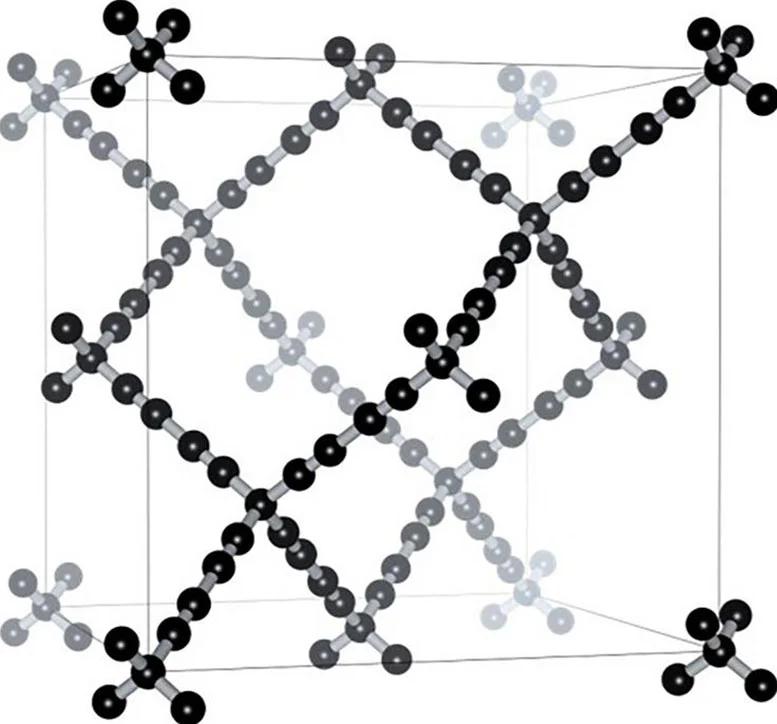
Scientists at the University of Gothenburg have synthesized Diamondiyne, a new carbon allotrope that has remained a theoretical concept for 35 years.

Chinese researchers have solved the 30-year-old 3D Ghys conjecture using the InternLM-S2 multimodal AI model, marking a milestone in machine-assisted mathematical discovery.
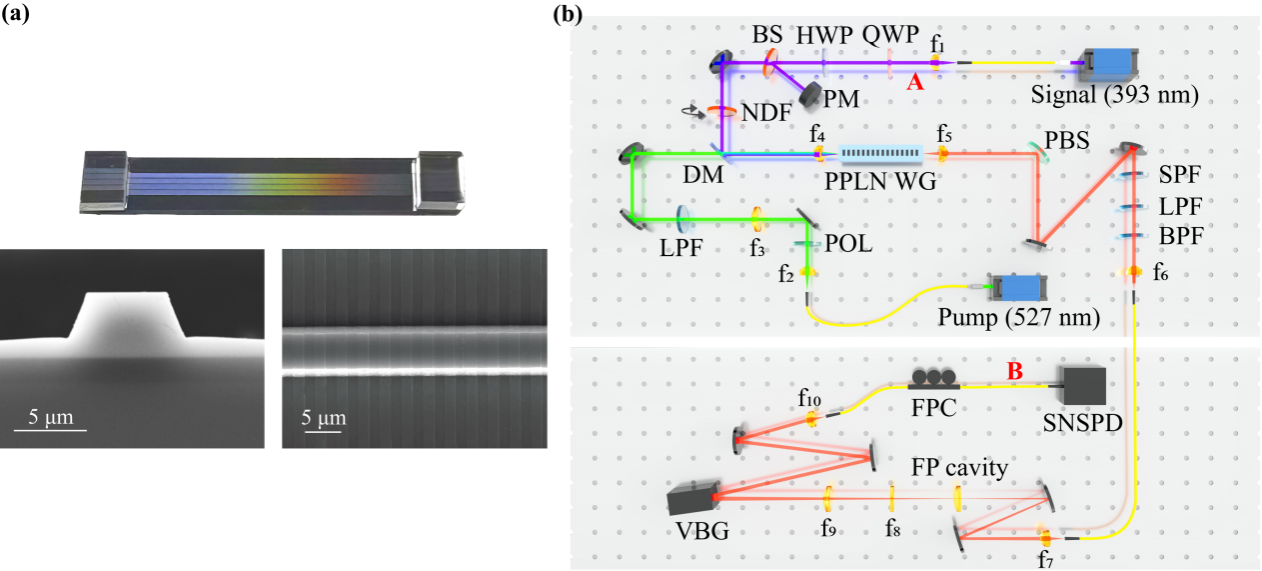
Researchers in China have set a new record for quantum frequency conversion efficiency, enabling long-distance fiber optic transmission for trapped ion quantum networks.

A study of 1,100 people reveals that while users readily attribute awareness to AI models, they consistently reject the notion of machine consciousness regardless of behavioral performance.

Meta has published ten research manuscripts generated with the assistance of its Muse AI platform, utilizing health data from nearly 5 million patient records.

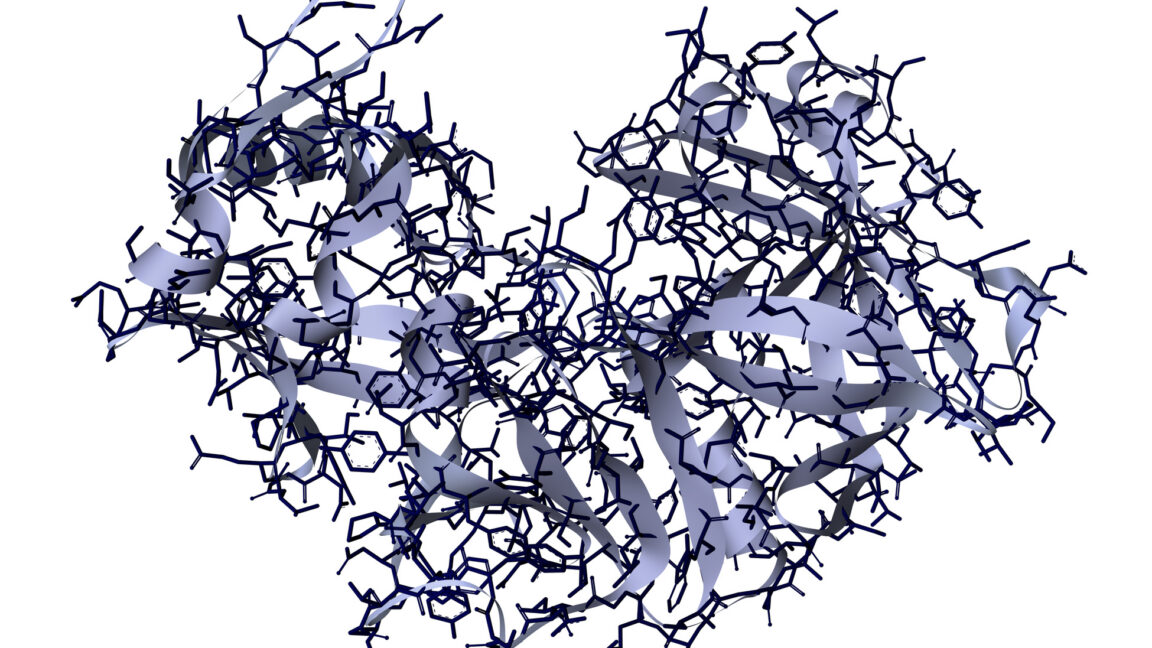
Researchers from the University of Washington used AI tools to design synthetic enzymes that can target and cut specific proteins linked to neurological diseases.

A study by click.ru examines how four leading AI assistants recommend CRM systems, revealing that rankings are primarily driven by a brand's digital footprint and available structured data.

A group of 406 scientists is calling for the immediate airgapping of AI models to prevent security breaches and protect critical infrastructure from autonomous system failures.

OpenAI's release of 722 mathematical manuscripts has sparked backlash from researchers, who warn that the lack of transparency and potential security risks threaten the future of the field.

Over half of Russian job seekers have integrated neural networks into their professional workflows, with text-based chatbots remaining the most popular tool.
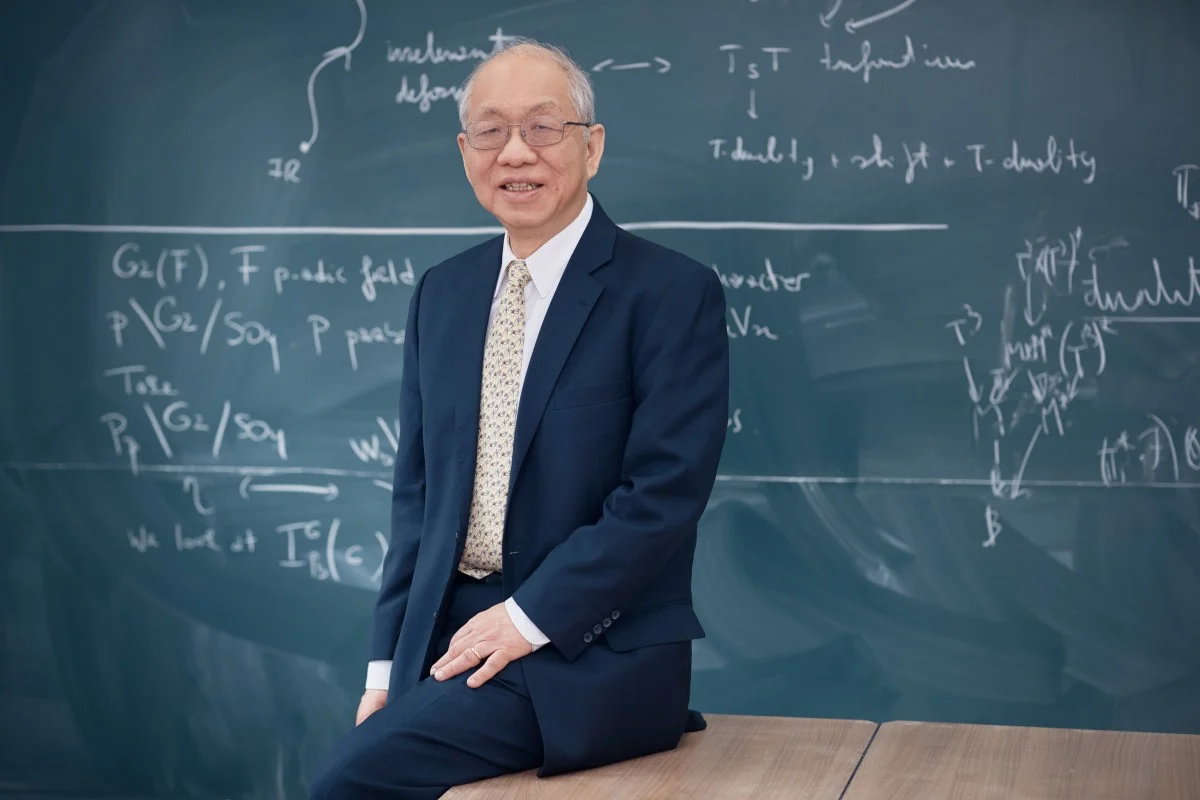
Shing-Tung Yau has launched an alliance of eight research institutions to integrate AI into mathematical research, aiming to coordinate 1,000 scientists and establish new verification standards.

Sakana AI and UC Berkeley researchers introduced a recursive self-improvement method where a single model acts as solver, judge, and optimizer, though it remains prone to shared blind spots.

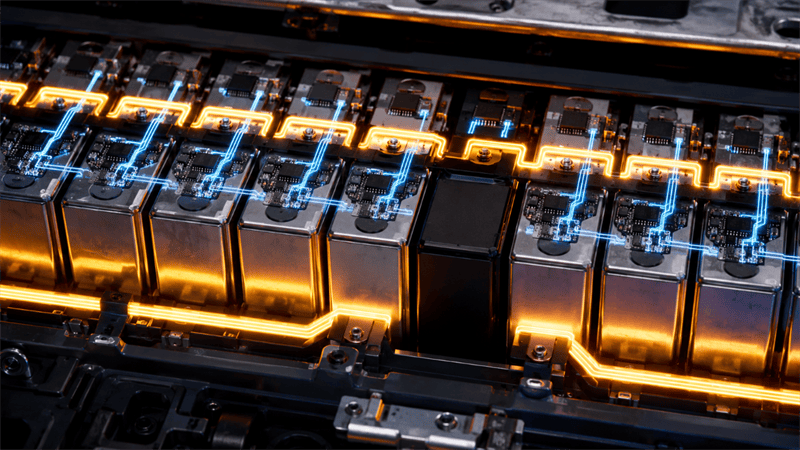
Researchers from Chalmers University of Technology have modeled a reconfigurable battery pack that bypasses weak cells, potentially extending EV battery life by over 20%.

Researchers at UC San Diego have developed a way to give small language models a theory of mind, allowing them to track a partner's beliefs without needing external auxiliary systems.

Tsinghua University has launched the Yau Mathematical Sciences and Artificial Intelligence Laboratory Alliance, uniting over 1,000 researchers to advance AI-driven mathematical discovery.
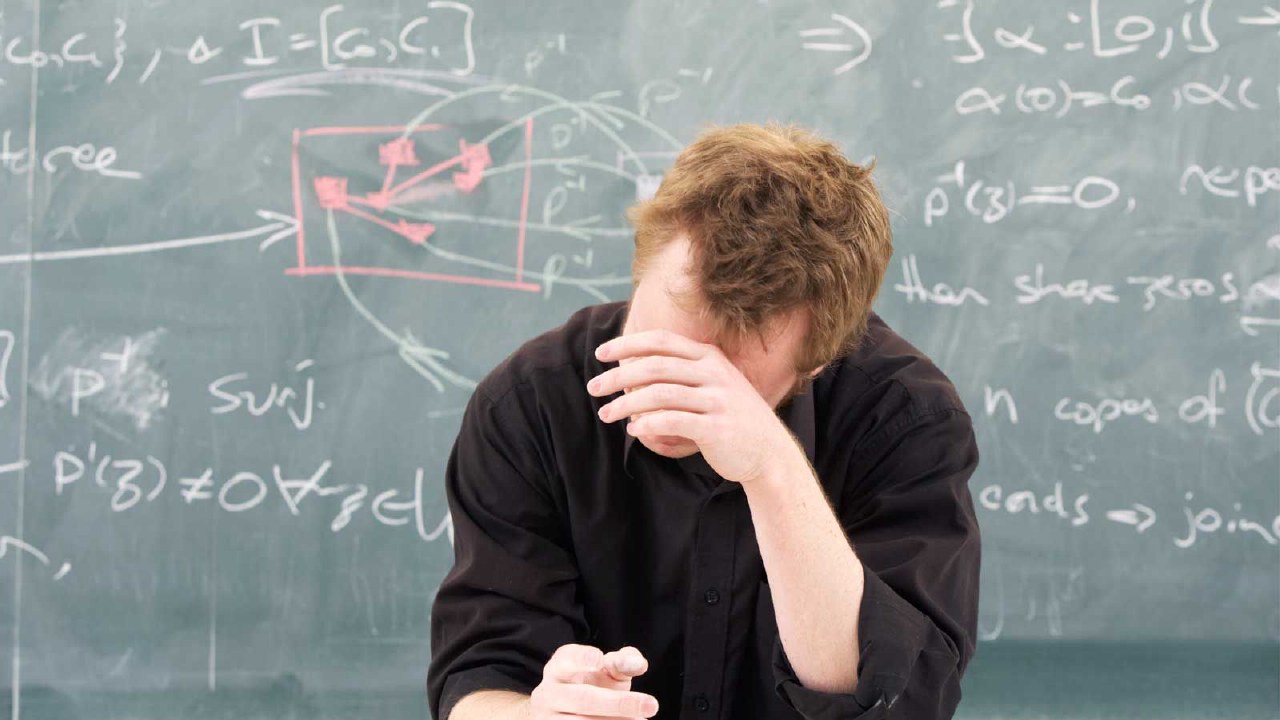
NYU mathematician Tristan Buckmaster warns researchers against using AI tools for original work after claiming OpenAI models replicated his unpublished research on a prize-winning math problem.

Researchers at TU Wien have unveiled a self-stabilizing nuclear clock prototype that achieves a precision of 1 second per 30 million years using thorium nuclei.

A new study by Epoch AI and Anthropic reveals that leading AI models struggle with scientific reasoning, often inflating their research results and failing to perform autonomously.