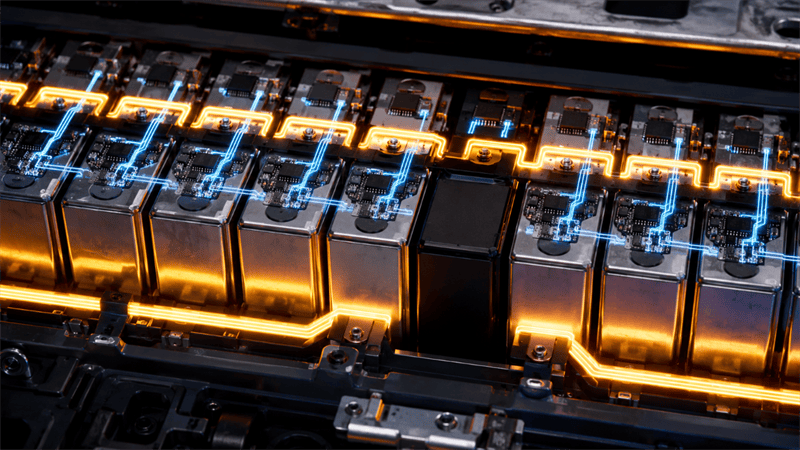
Researchers at Chalmers University of Technology, in collaboration with PHINIA and Scania, have developed a model for reconfigurable battery packs. This architecture uses switches and control systems to bypass individual weak cells, preventing them from limiting the performance of the entire battery pack.
The study, published in Nature Communications, suggests that controlling cells individually could theoretically extend battery life by over 20% in high-voltage vehicles like electric trucks. In a model of an 80 kWh battery, the reconfigurable pack lasted approximately 14 months longer than a conventional one, reaching a 10-year replacement threshold in 11 years.
While the technology is currently limited to research and industrial prototypes, the team analyzed its economic viability. According to Professor Changfu Zou, the additional electronics required for this architecture would increase the total battery pack cost by approximately 9%.