AI Skills Remain Unnecessary for Russian Civil Servants
A study of 321 civil service job openings reveals that while digital literacy is increasingly required, explicit demand for artificial intelligence skills remains virtually non-existent.
Thomas Bennett argues that mathematically gifted specialists are increasingly outperforming traditional business elites in building high-value companies.

A survey of 1,200 Russian employers shows that 54% accept AI-generated resumes, while 87% of companies have already encountered candidates using artificial intelligence in the hiring process.
A Weeek study of 1056 employees shows that 31% of staff are required to use AI tools against their judgment, with middle-level specialists in the digital sector facing the most pressure.
A joint study by hh.ru and Dream Job analyzed 2.7 million reviews to rank industries and professions by workplace comfort, placing telecommunications and data science at the top.
UserGate has appointed former Cisco executive Elena Shchedrova as Vice President of HR to lead organizational development and human capital strategy during the company's expansion.
Contact centers report declining call efficiency due to AI assistants and spam filters, forcing companies to optimize databases and integrate automation tools to maintain performance.
A SuperJob survey reveals that 77% of Russian employees trust their colleagues more than their employers or direct supervisors.
A SuperJob survey shows that 56% of Russians view humor as a career asset, with higher-income earners valuing it most.
HR departments are becoming a primary target for prompt injection attacks, accounting for up to 30% of such incidents in 2026, according to Crosstech.

Amazon is reaching out to former employees to fill vacancies, leveraging a streamlined hiring process for those previously laid off during a year of workforce reductions.

South Korea is reviving a program allowing AI researchers to fulfill military service at large corporate labs, though initial demand has fallen short of government quotas.

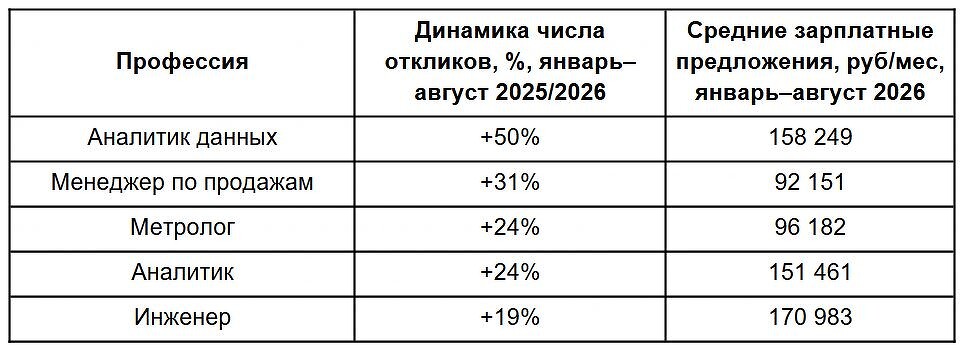
Data analyst vacancies saw a 50% surge in job applications from January to August 2026, according to Avito Rabota data.

In 2026, a company received over 400 job applications within two days of posting a vacancy.

Gartner predicts that by 2029, companies will be forced to rehire one-third of staff previously laid off due to AI implementation, often at a higher cost than initial savings.

A study by Ventra reveals that Russian businesses are deprioritizing HR automation in favor of improving hiring quality, staff retention, and performance management.

SK Hynix and its labor union have reached a new tentative agreement to adjust profit-sharing payouts, increasing the cash component to 50 percent following concerns over stock volatility.

Retail chains face operational losses and high staff turnover due to fragmented information management, which can be mitigated by implementing centralized knowledge base platforms.