Chinese Team Sets New Efficiency Record for Perovskite Solar Cells
Chinese researchers have developed a triple-junction perovskite solar cell that achieves a record 30.1% efficiency by utilizing a novel solvent treatment to improve layer uniformity.

Chinese researchers have developed a triple-junction perovskite solar cell that achieves a record 30.1% efficiency by utilizing a novel solvent treatment to improve layer uniformity.

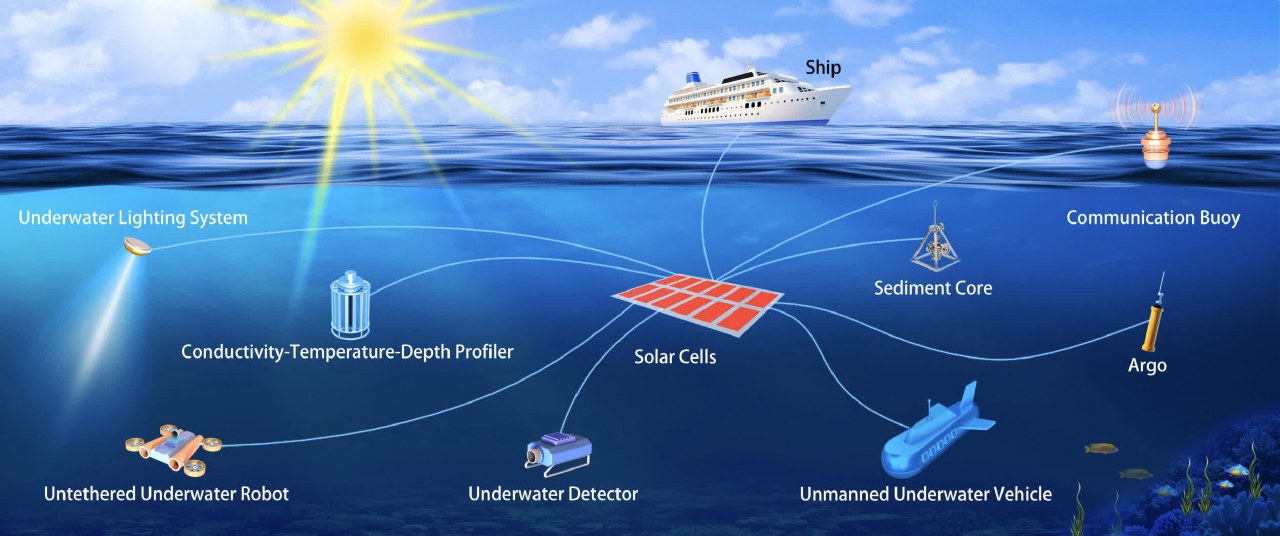
Researchers at Yunnan University have developed a perovskite-based solar cell capable of generating electricity at depths of up to 10 meters with an efficiency of up to 34.71%.

Researchers from Soochow University and LONGi have created a tandem perovskite-silicon solar cell achieving 34% efficiency using zirconium dioxide nanoparticles.

Researchers at the University of Groningen have discovered that tin-based perovskite solar cells can retain hot electron energy 1000 times longer than standard materials.

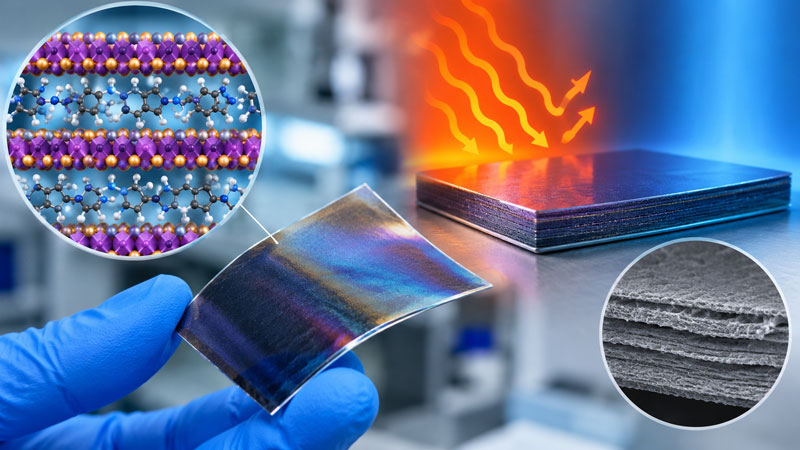
Researchers at North Carolina State University have engineered a dense, rigid perovskite film that provides five times better thermal insulation than silicone.

China has introduced its first national standard for testing perovskite photovoltaic devices, which will come into force in 2027 to unify measurement protocols for the industry.
China has introduced its first national standard for perovskite photovoltaics, establishing unified testing and measurement protocols to be implemented by 2027.
Researchers have successfully trapped hybrid light particles using perovskite metasurfaces, paving the way for optical processors that could outperform current electronics by hundreds of times.

Researchers have developed perovskite solar cells optimized for underwater environments, offering a new way to power marine sensors and autonomous underwater vehicles.

Researchers from Yunnan University have created a perovskite solar cell that functions underwater, achieving 35% efficiency in simulated deep-water conditions.

Japanese developers have created perovskite-tandem solar panels with a lifespan 1.5 times longer than Chinese counterparts, aiming for 20 GW of capacity by 2040.