

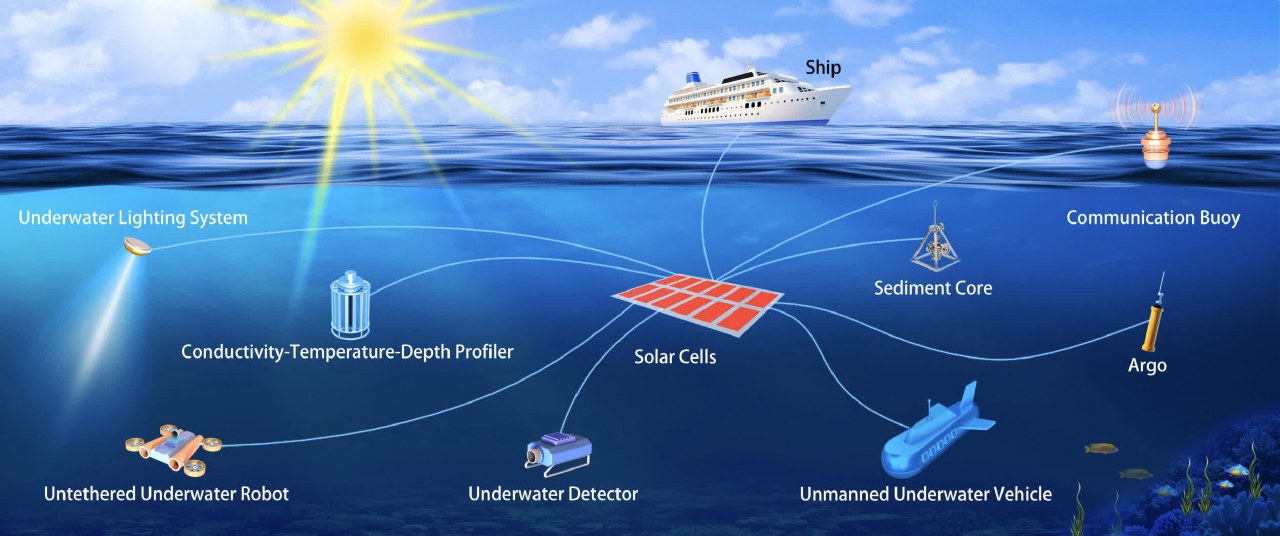
International research teams have developed a new type of perovskite photovoltaic material designed for underwater energy conversion. The technology aims to provide power for marine sensors, autonomous underwater vehicles, and long-term monitoring networks.
Traditional silicon-based solar cells perform poorly underwater because they are optimized for the full solar spectrum, whereas water absorbs most infrared and red light, leaving only blue-green wavelengths. Perovskite materials are also typically prone to degradation when exposed to water and salt.
To address these issues, researchers adjusted the bandgap and chemical composition of the perovskite to match the blue-green light spectrum found underwater. They also utilized hydrophobic polymers and multi-layer barrier films to prevent water and salt ion penetration.
Experimental tests show that these perovskite cells outperform silicon-based alternatives in efficiency and stability under simulated underwater conditions. The cells maintained stable power output even when submerged under pressure.
The technology could replace heavy battery packs in underwater equipment, which currently require frequent maintenance and replacement. Potential applications include powering buoys, underwater robots, and fixed seafloor sensors using natural light.



