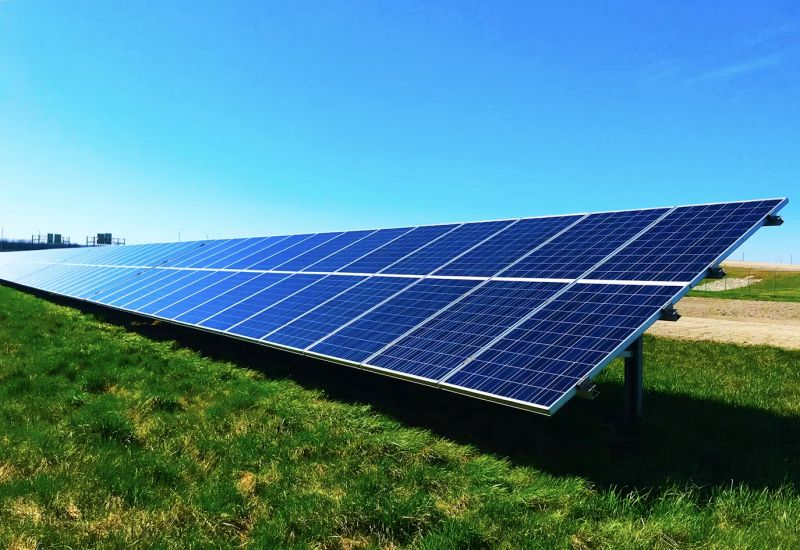
Japan's technology consortium, including Toshiba, Shin-Etsu, and Niigata University, has developed tandem solar panels combining perovskite and silicon layers. This design maintains cell flexibility and thinness while increasing power generation efficiency by approximately 30%.
The new panels feature a protective synthetic rubber layer with moisture-absorbing components to combat heat and humidity, which are the primary factors reducing perovskite cell lifespan. This allows the panels to stably generate electricity for 3,000 hours under conditions of 85 degrees Celsius and 85% humidity.
The Japanese prototypes currently measure 25 mm2, but developers aim to scale them to over 250 cm2 for mass production. In comparison, previous long-life perovskite panels developed by Chinese competitors with Singaporean support had a calculated lifespan of 2,000 hours under similar conditions.
Other Japanese firms are also advancing the technology. Kaneka plans to increase perovskite panel efficiency to over 40% by 2035, while Choshu Industry aims to extend operational life to over 20 years by the 2030 fiscal year. The Japanese government hopes to deploy up to 20 GW of perovskite-based solar capacity by 2040, a target comparable to the output of 20 nuclear reactors.