

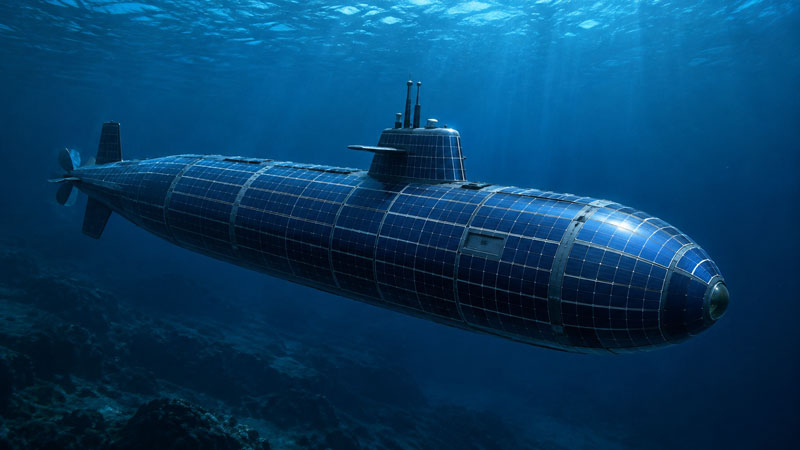
Researchers from Yunnan University have developed a perovskite-based solar cell capable of generating electricity underwater. The team adjusted the material's bandgap to approximately 1.96 eV to optimize it for the blue-green light spectrum found at depth.
To address the moisture sensitivity of perovskite, scientists incorporated polyhexamethylene guanidine hydrochloride (PHMG). This additive creates a hydrophobic barrier and suppresses ion migration, which helps maintain the structural integrity of the crystals.
In laboratory tests simulating conditions at a depth of 10 meters, the cell achieved an efficiency of approximately 35%. A prototype submerged in seawater for 40 days retained 99.6% of its initial efficiency, suggesting a potential operational lifespan of about 5.5 years.
Field tests were conducted in the South China Sea at depths of 2, 6, and 10 meters to charge nickel-cadmium batteries. While power output was higher at 2 meters, it became more stable at greater depths due to light scattering, despite a decrease in total energy production.



