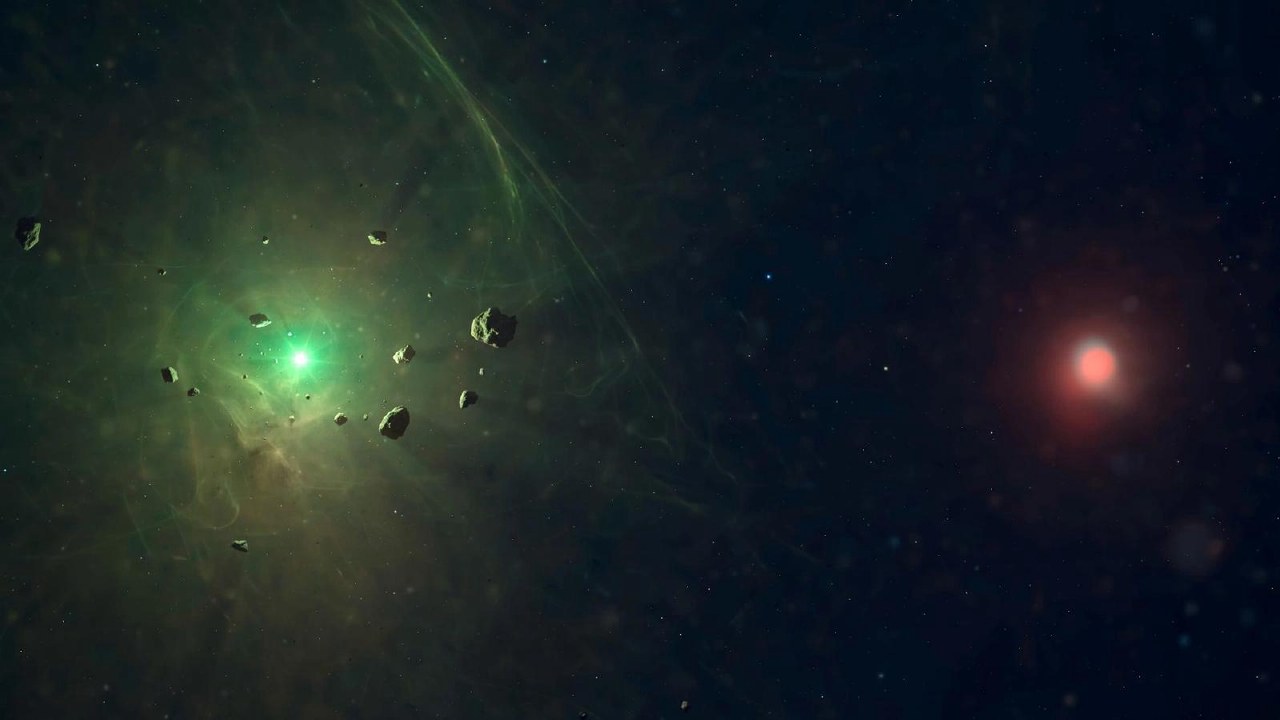
Astronomers have identified two white dwarfs with unusual colors caused by their atmospheric composition and density. The first object, WD J1330+6435, is located 284 light-years away and has a temperature of approximately 4000 degrees Celsius. Due to the presence of calcium, lithium, and sodium, the star emits a greenish light, making it the first recorded star of this color.
The second object, WD J1011+2845, is situated 48 light-years from Earth. Its atmosphere contains high levels of carbon, which shifts its spectrum toward wavelengths longer than 600 nanometers. This makes the star appear pink to the human eye, marking it as the reddest star ever observed.
The research team analyzed 151 white dwarfs within 65 light-years of Earth. Five of these stars displayed unusual colors, including two yellow and three pink ones, suggesting that approximately one in 30 white dwarfs may exhibit non-standard coloration. The median temperature for the entire sample was 6800 K.
These findings challenge the common perception that white dwarfs are predominantly blue. The study notes that hotter blue stars are often overrepresented in surveys because they are brighter and easier to detect from greater distances.