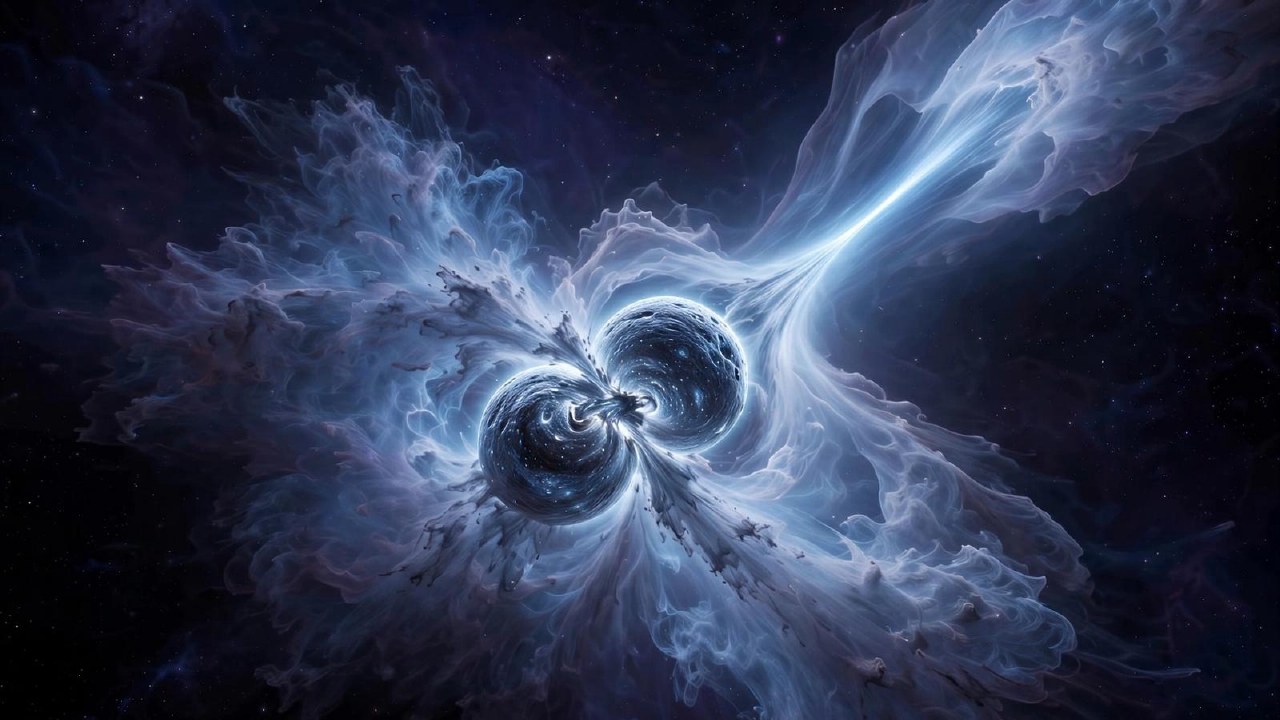
Researchers have developed a model suggesting that neutron star mergers produce X-ray flashes that remain detectable even when gamma-ray bursts are directed away from Earth. These events occur when ejected material interacts with the jet, forming a hot cocoon that releases thermal energy as it expands.
Simulations indicate that these X-ray flashes typically last between 1 and 10 seconds, with peak luminosity reaching 10⁴⁶–10⁴⁸ erg/s. The signal rises rapidly in approximately 0.3 seconds. As the observation angle increases, the flash becomes both shorter and weaker, dropping to 10⁴⁵ erg/s at a 45-degree angle.
The WXT wide-field X-ray telescope on China's Einstein Probe is capable of detecting these events at distances up to a redshift of z ≈ 0.3, provided the observation angle is around 10 degrees. For closer events, such as the GW170817 merger at 40 megaparsecs, detection remains possible at wider angles.
Scientists estimate that the Einstein Probe could identify approximately 0.5 such events annually. They suggest that some currently unexplained fast X-ray transients might belong to this category. Future observations aim to correlate these signals with gravitational waves and multi-wavelength data to confirm their origin.