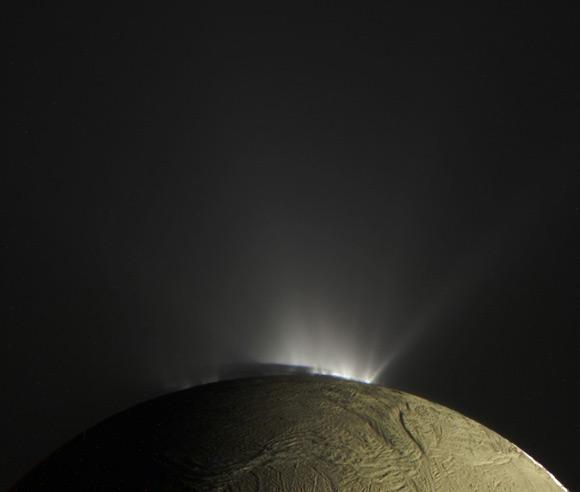
Researchers analyzed 961 salt-rich ice particles collected by the Cassini spacecraft from Saturn's E ring between 2004 and 2017. The study, published in Science Advances, reveals that these particles contain five distinct chemical subtypes, including sodium chlorides, carbonates, bicarbonates, phosphates, and potassium salts.
Previously, scientists categorized these particles into only three groups: pure water ice, ice with organic compounds, and salt-rich ice. The new findings suggest that the chemical diversity stems from the freezing process within the moon's subsurface ice channels. Laboratory experiments confirmed that salts crystallize and separate at different temperatures during slow cooling.
The proposed two-stage formation model suggests that large saltwater droplets freeze slowly within the ice shell, causing salts to distribute unevenly. Subsequent fragmentation creates particles measuring 1–2 micrometers. This indicates that individual grains reflect specific local processes in the ocean and ice shell rather than the average composition of the water.
The study highlights the importance of analyzing individual ice grains for future missions searching for signs of life. While this research did not detect biological markers, it establishes that measuring the composition of separate particles is essential for identifying potential microbial material in the future.