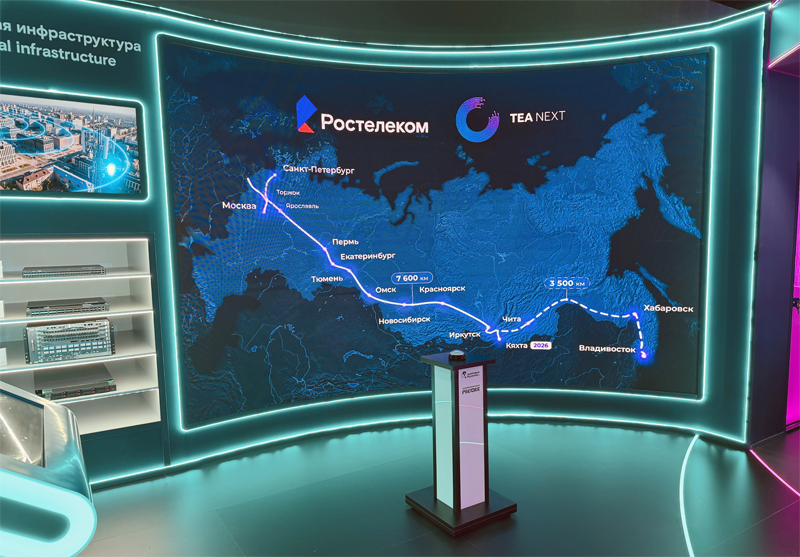
Rostelecom Completes New Trans-Eurasian Fiber-Optic Route
Rostelecom has launched the 7,600-kilometer TEA Next fiber-optic line, a 28.1 ₽ billion project connecting Europe and Asia with record-low latency.

Rostelecom has launched the 7,600-kilometer TEA Next fiber-optic line, a 28.1 ₽ billion project connecting Europe and Asia with record-low latency.

Rostelecom has launched the TEA Next fiber-optic line connecting Europe and Asia, offering a potential data throughput exceeding 1 Pbps.

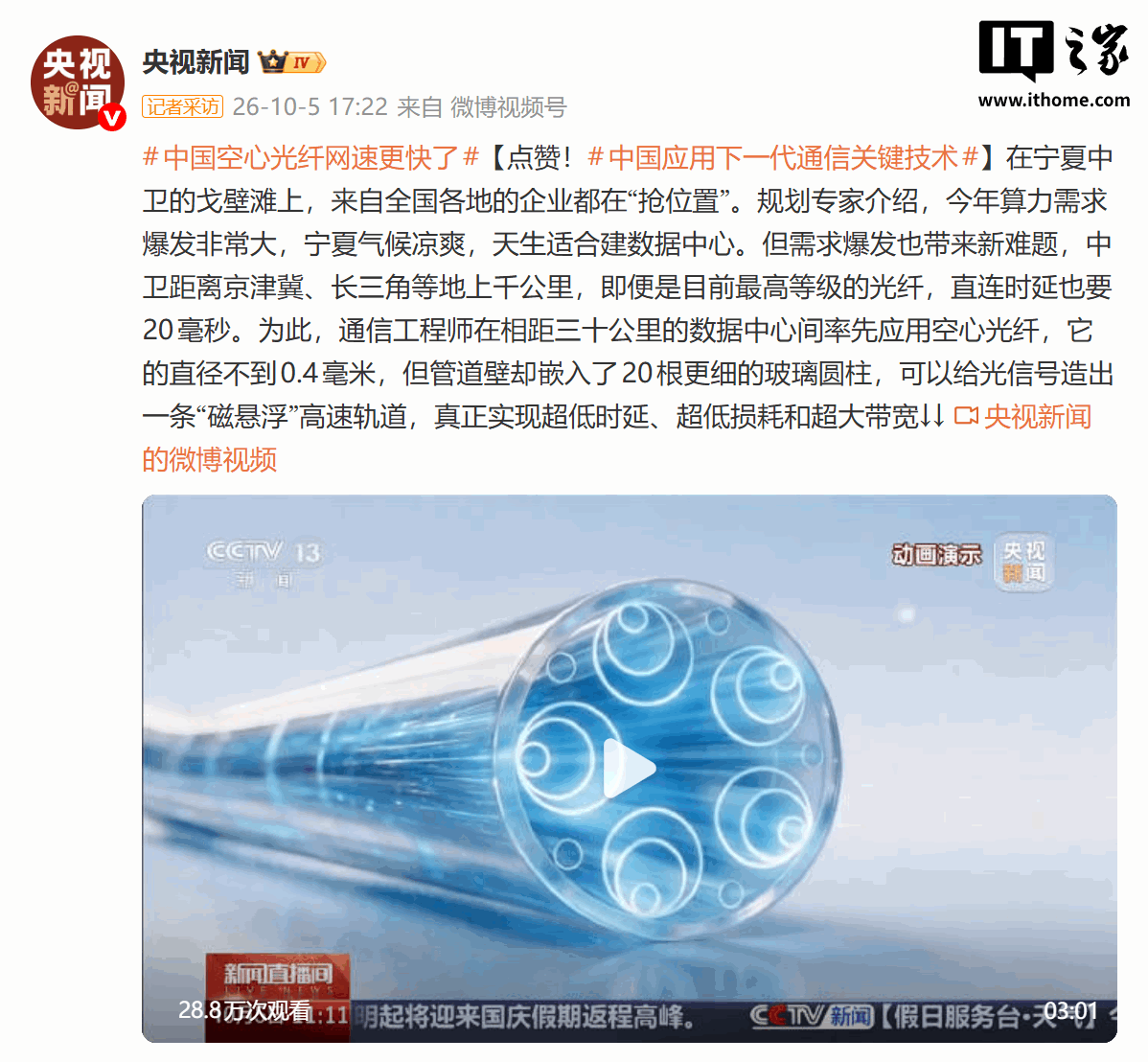
China has launched commercial hollow-core fiber optic links between data centers in Ningxia, achieving a 30 percent reduction in latency for AI computing networks.

Global demand for optical fiber is set to hit 860 million kilometers by 2030, fueled by a 20.74% annual growth in data center requirements.

Optical fiber transmission speeds are currently following a growth trajectory that triples performance every four years, governed by fundamental information theory constraints.

Over 50% of Russia's backbone fiber-optic infrastructure has exceeded its 25-year service life, with potential replacement costs estimated at 400 ₽ billion.

Over 50% of Russia's fiber-optic infrastructure may require replacement in the coming years, with estimated costs reaching 400 ₽ billion.
Meta is developing Petal, a 7,000-kilometer subsea cable between the US and France, set to deliver 1 petabit per second of bandwidth by 2029.

Meta is developing Petal, a 7,000-kilometer transoceanic cable capable of 1 Pbps bandwidth, with a commercial launch expected in 2029.
Beeline Business has deployed a 1.8-kilometer fiber-optic network for a strategic facility in the Southern Federal District, overcoming complex terrain and environmental constraints.

South Korean manufacturer Taihan Fiber Optics has acquired Incab America, a fiber optic cable producer previously separated from the Russian company Incab.

Fiber-optic cable manufacturer Incab has significantly reduced its debt burden following a 2 ₽ billion IPO on the Moscow Exchange.