

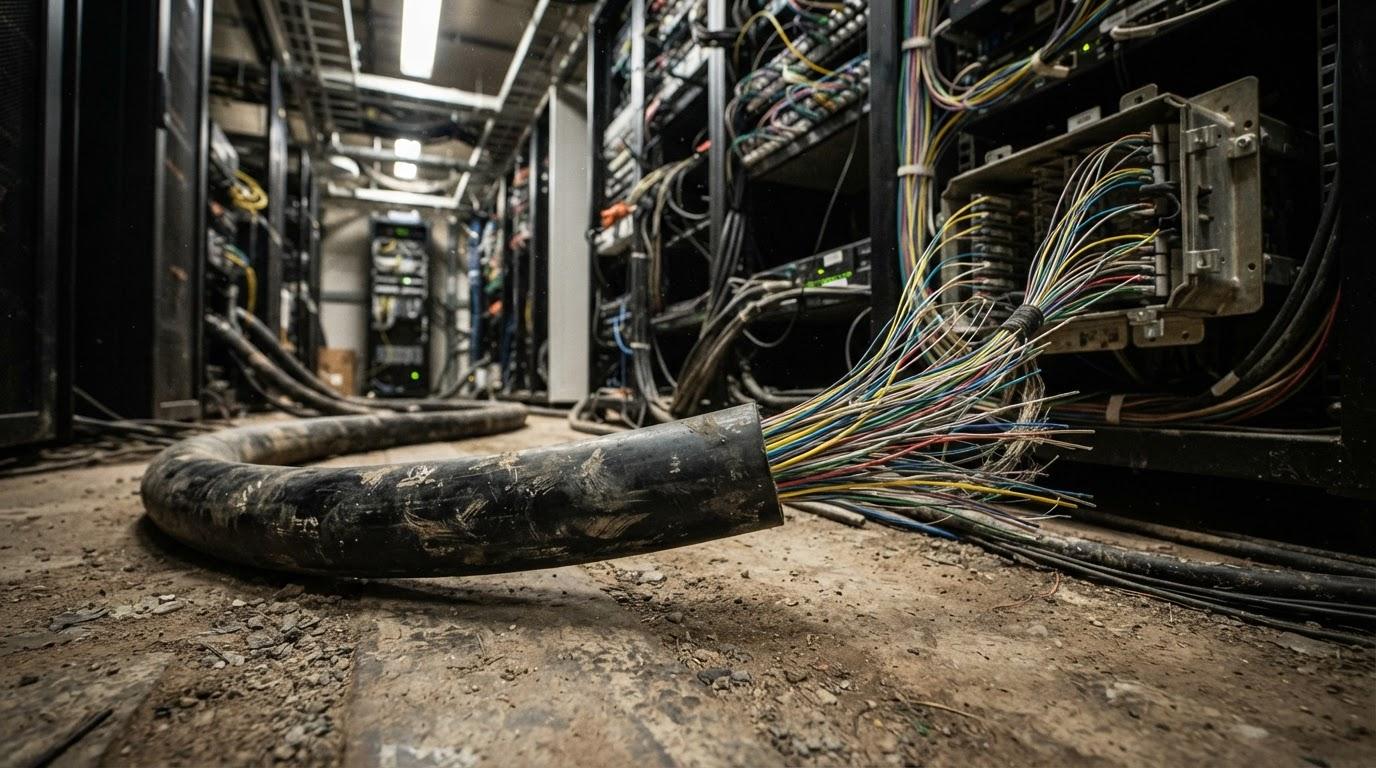
According to the Ministry of Digital Development's draft strategy for the communications industry until 2035, over 50% of Russia's backbone fiber-optic lines have exceeded their 25-year service life. The ministry reports that infrastructure wear has reached a critical level due to insufficient renewal rates, necessitating an accelerated replacement schedule in the coming years.
The total length of backbone fiber-optic lines in Russia exceeds 1.46 million kilometers. Analysts at J'son & Partners estimate that between 2020 and 2030, more than 400,000 kilometers of cable that has been in operation for over 20 years may require replacement. Aging fiber can suffer from signal loss and reduced transmission range, potentially increasing the risk of service disruptions.
Replacing 400,000 kilometers of cable is estimated to cost approximately 400 ₽ billion, based on an average construction cost of 1 ₽ million per kilometer. Costs may rise significantly on complex segments, such as river crossings. The need for upgrades is driven by both aging infrastructure and a tenfold increase in internet traffic, which reached 218.8 exabytes between 2015 and 2025.
Telecom operators are already working on infrastructure modernization. MTS, for instance, is implementing a project valued at over 22 ₽ billion to fully upgrade its transport network across 29 regions by the end of 2028. Beyond replacing physical cables, operators are increasing capacity by upgrading data transmission speeds and utilizing previously unused optical fibers.


