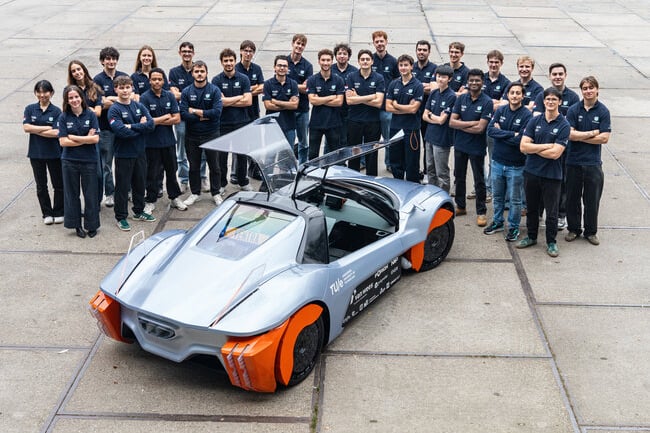
Students at TU Eindhoven have unveiled the VENTRA electric car concept, designed to mitigate non-exhaust emissions. The vehicle features a system that electrically charges particles from tire and brake wear, attracting them to a grounded surface for collection. Developers suggest these particles can be removed via vacuum or water and potentially recycled for interior components.
Simulation data indicates the system captures up to 42 per cent of particles at lower speeds, while at speeds between 50 and 80 km/h, the efficiency is approximately 24 per cent. To further limit wear, the chassis utilizes carbon-fibre-reinforced thermoplastic panels, reducing the vehicle's total weight by nearly 100 kg.
The project also includes the Clean-Drive system, which monitors driving habits and provides real-time feedback to encourage smoother acceleration and braking. These measures aim to address the regulatory challenges posed by the upcoming Euro 7 standards, which will introduce limits for non-exhaust particle emissions starting in November 2026.
VENTRA serves as a research and demonstration platform rather than a precursor to commercial production. The team at TU/ecomotive, which previously developed the Aria modular urban car in 2025, intends for this project to highlight technical strategies for reducing emissions that persist even in electric vehicles.