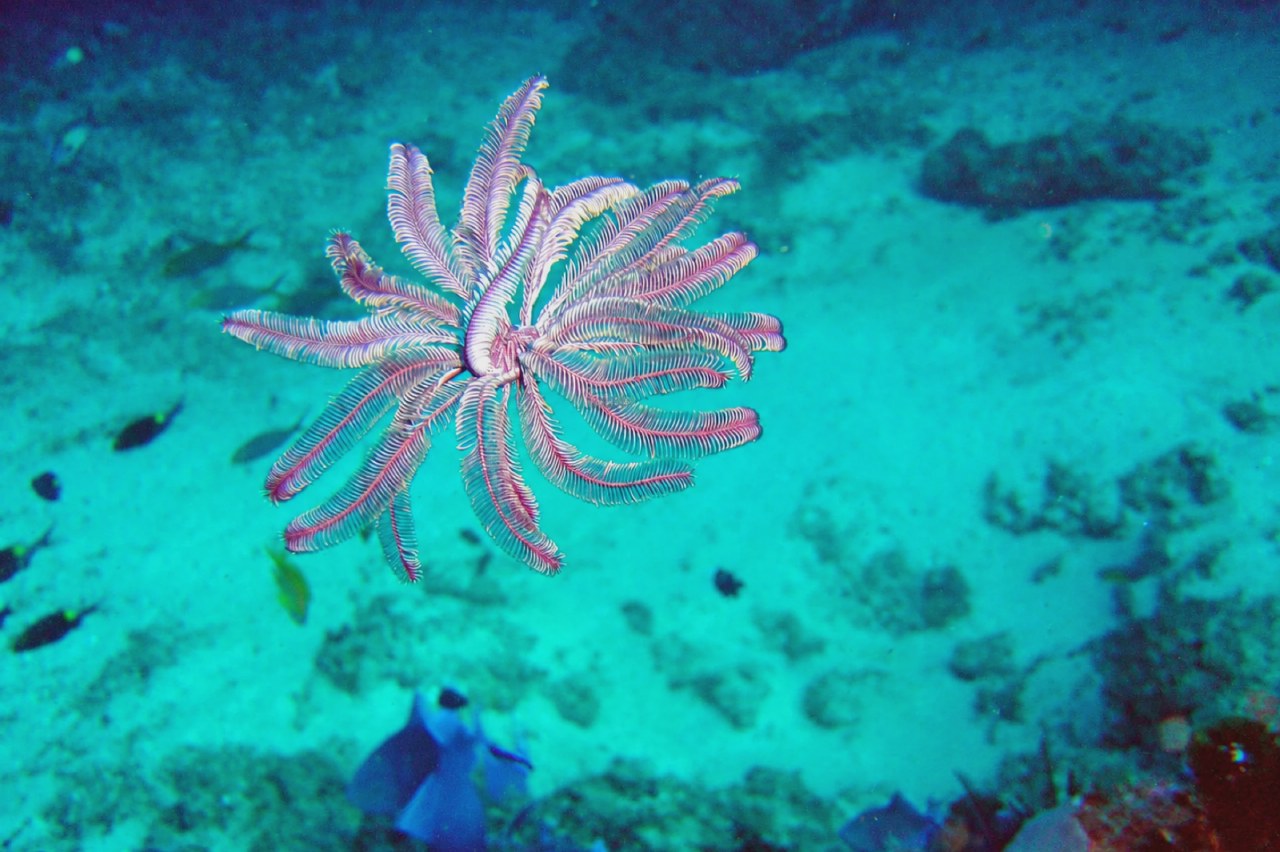
Researchers at North Carolina State University have developed a soft underwater robot inspired by the crinoid. Unlike traditional designs that require multiple motors, this device utilizes only two pneumatic actuators to achieve vertical movement, forward and backward swimming, hovering, and rotation.
The robot features a central body with four flexible wing-like structures. By alternating the pneumatic inputs, the system switches between three movement modes: the jellyfish mode for vertical displacement, the fish mode for directional swimming, and the rotor mode for rotation around its own axis.
The design relies on mechanical intelligence, where the physical properties of the flexible materials handle control functions. This approach allows the robot to perform complex maneuvers with only two actuators, whereas conventional designs typically require at least six.
Experimental results indicate a maximum swimming speed of 1.64 body lengths per second and a rotation speed of 90 degrees per second. The transport cost metric was recorded at 17.6, demonstrating energy efficiency in its movement.
The study, published in Science Advances, suggests potential applications in environmental monitoring, underwater exploration, and object recovery. Future development will focus on creating a wireless version to eliminate external connection constraints.