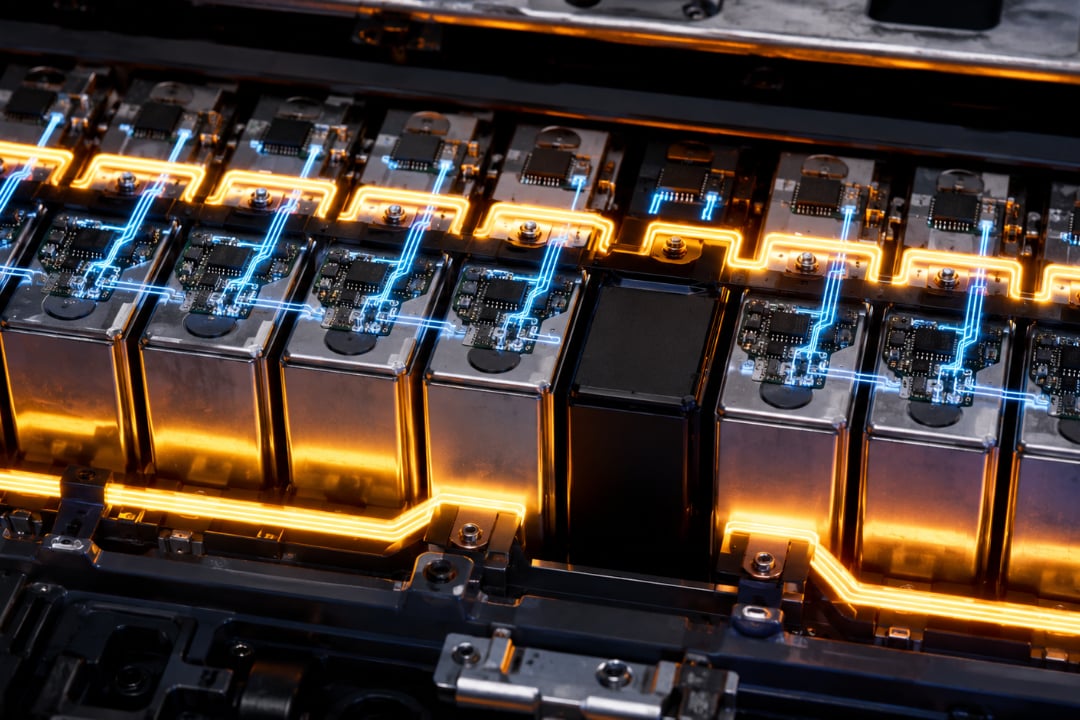
Researchers at Chalmers University of Technology have explored reconfigurable battery packs designed to bypass weaker cells. By using switches and control systems to alter wiring, the system allows the pack to continue operating while isolating cells that have degraded faster than others.
Simulations indicate that this architecture could extend the lifespan of high-voltage vehicle batteries by over 20 per cent. This potential is particularly high for electric trucks and long-range vehicles with many cells in series. In an example with an 80-kWh battery and 12,000 km annual mileage, the system delayed the replacement point by approximately 14 months.
While the technology requires additional electronics, researchers suggest that increased residual value and longer service life can offset higher initial costs. The approach also simplifies production by reducing the need for strict cell matching, as the system can tolerate greater variations between individual cells.
The study, published in Nature Communications, involved collaboration with PHINIA and Scania. While not yet in production vehicles, the concept has been tested in research and industrial prototypes. Future implementations will likely focus on bypassing groups of cells rather than individual ones to balance complexity and performance.