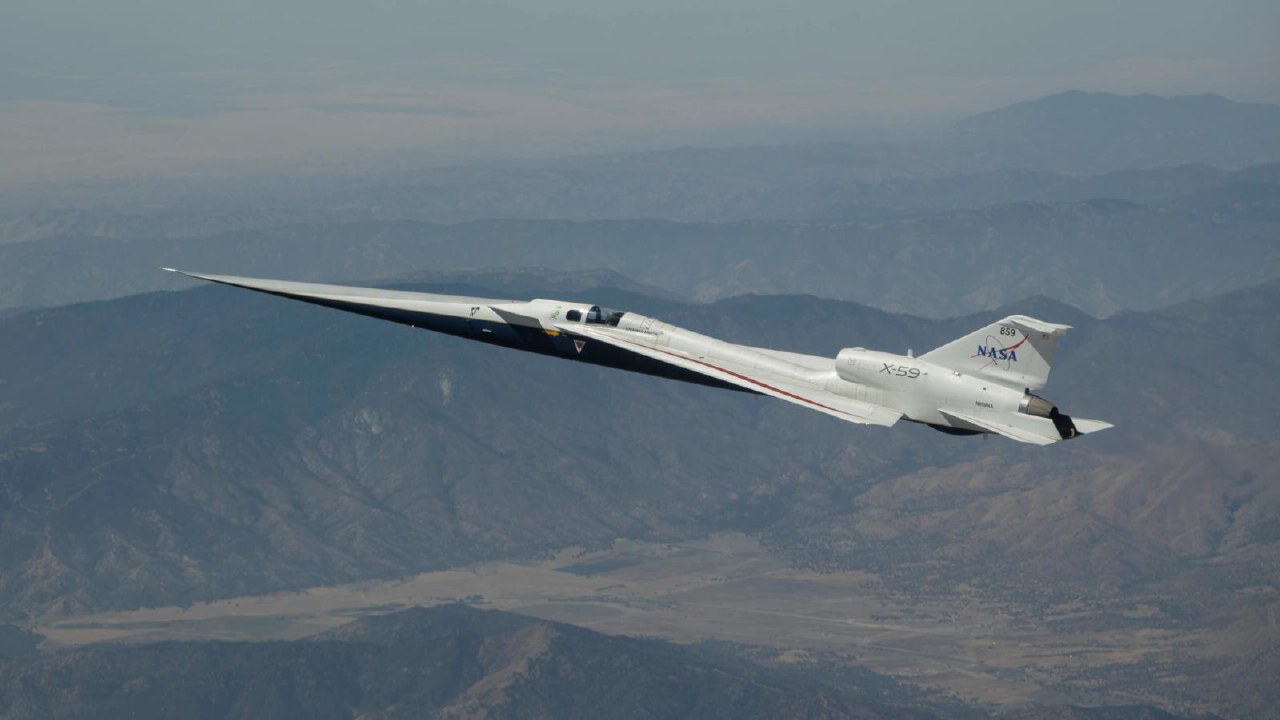
The experimental X-59 aircraft from NASA has completed 25 test flights, confirming critical calculations regarding structural integrity, stability, and control. The project is now transitioning to the acoustic validation phase to determine if the aircraft can replace traditional sonic booms with a quieter sound.
During testing, the X-59 reached speeds of 1.2 Mach at an altitude of 14.9 kilometers, and previously achieved 1.4 Mach at 16.8 kilometers. Flight telemetry data matched pre-construction digital models, showing stable performance under high loads without unexpected vibrations or flutter issues.
The aircraft features a unique aerodynamic design with an elongated nose to redistribute shockwaves. A top-mounted air intake successfully maintains stable airflow to the GE F414 engine across various flight modes and maneuvers.
NASA plans to deploy ground-based sensors and airborne microphones to measure shockwave parameters. If successful, the agency will conduct flights over populated areas in the United States to gather public feedback on noise levels.
Data collected from these tests will be provided to aviation regulators to potentially support lifting the ban on civil supersonic flights over land. The Quesst program aims to enable a new generation of commercial aircraft capable of supersonic travel without loud sonic booms.