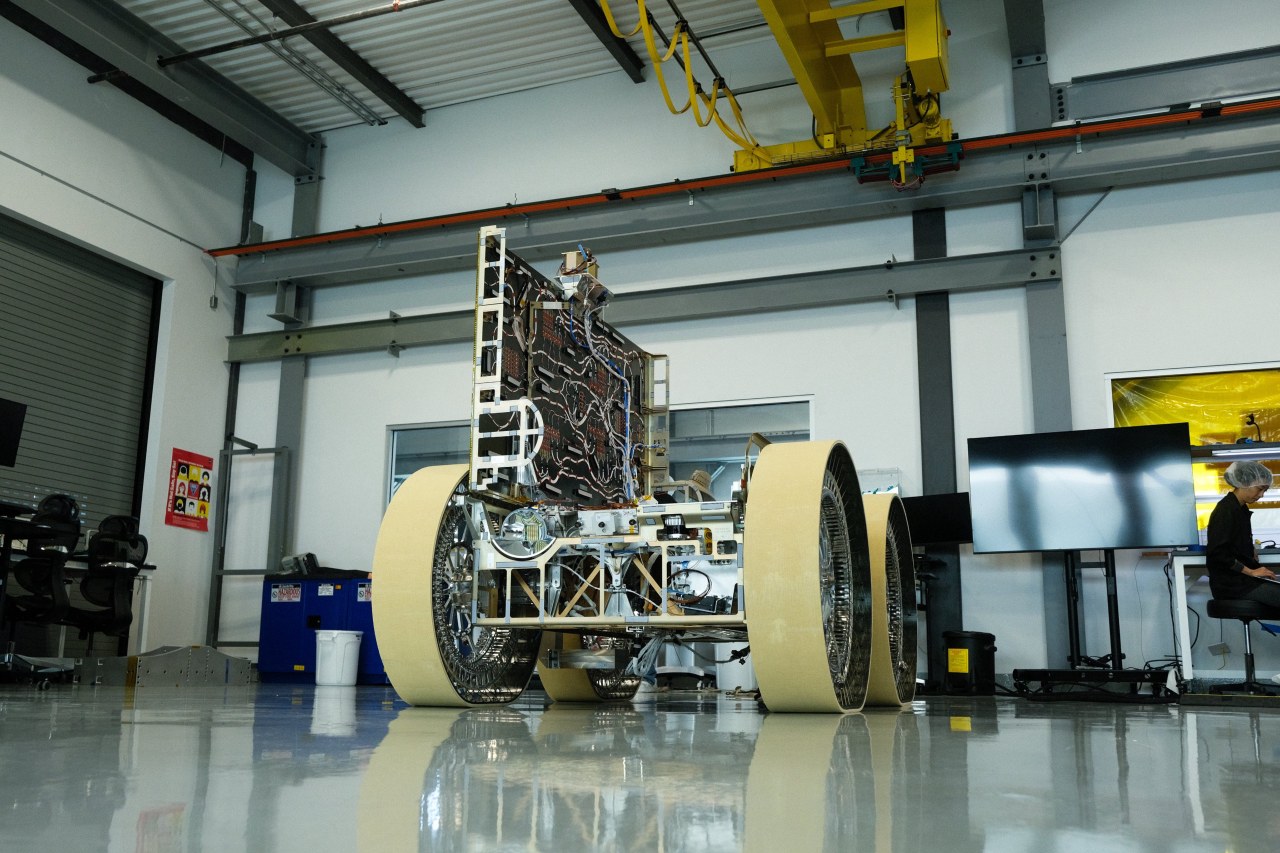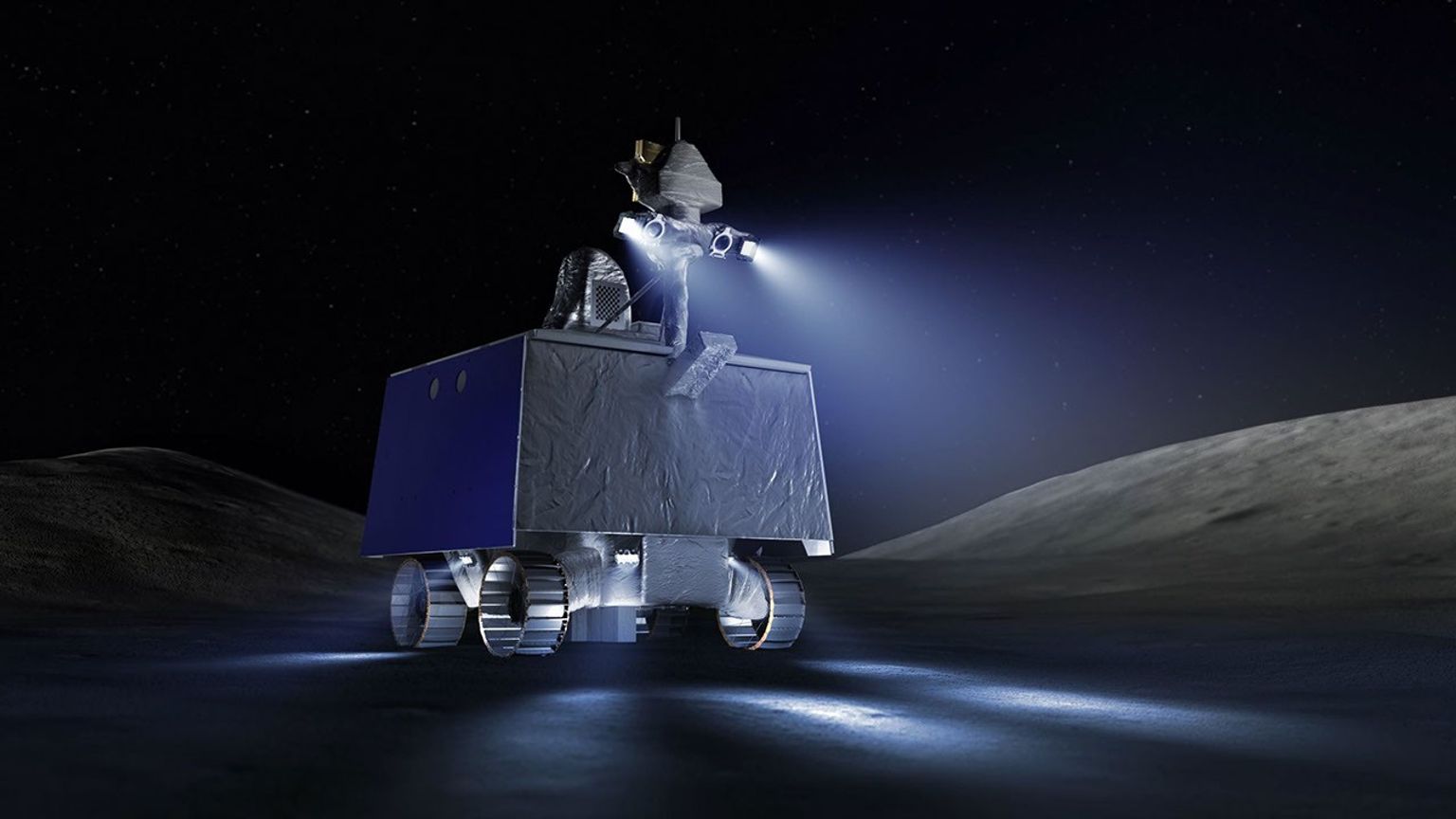
NASA has confirmed that the Volatiles Investigating Polar Exploration Rover (VIPER) is scheduled to reach the lunar south pole in late 2027. The rover has completed assembly at the Johnson Space Center and is currently undergoing final testing before its transfer to the Kennedy Space Center for launch preparations.
The mission will utilize Blue Origin’s second Blue Moon MK1 lunar lander to transport the rover to the surface. VIPER’s primary objective is to survey the south pole, specifically targeting permanently shadowed craters to map water ice and other volatile resources across varying depths and soil conditions.
In addition to the robotic mission, NASA plans to deploy a Lunar Terrain Vehicle (LTV) by 2028. The agency has selected Astrolab and Lunar Outpost to lead the initial development phase of this unpressurized vehicle, which will be capable of transporting both astronauts and cargo during surface operations.
The LTV will support future human exploration and moon base construction. Before crewed missions arrive, the vehicle will be remotely operated from Earth to map terrain, gather environmental data, and test performance under extreme lunar conditions, including significant temperature fluctuations and varying light levels.
Both the VIPER rover and the LTV are designed to work in tandem to establish early infrastructure. While VIPER focuses on identifying resource availability, the LTV provides the necessary mobility for scientific research and logistics, ensuring data collection for future lunar surface systems.