NASA researchers at the Goddard Space Flight Center have developed the Concurrent Artificially-intelligent Spectrometry Lidar System (CASALS). This instrument uses a tunable laser at 1040 nanometers to cycle through 256 wavelengths, allowing it to steer light without mechanical mirrors.
The system achieves 80% Quantum Efficiency, enabling the detection of weak signals from dark surfaces or dense vegetation. By eliminating moving parts, the design reduces size, weight, and power requirements, increasing reliability for space missions.
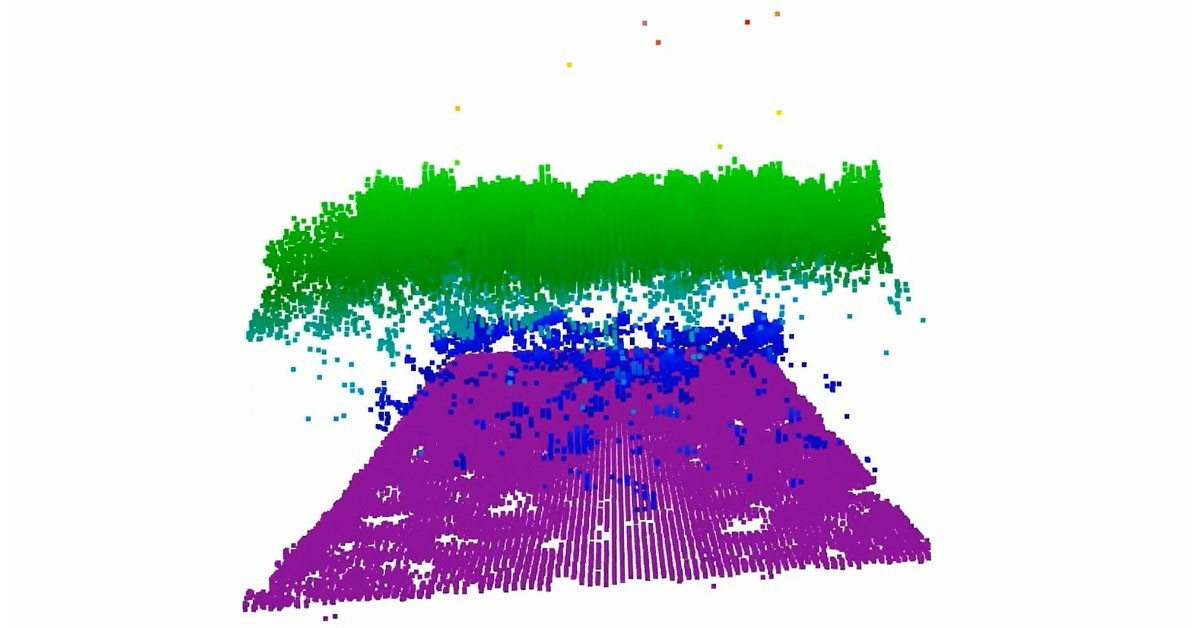
In November 2024, an airborne prototype was tested on a B200 King Air aircraft at an altitude of approximately 5 kilometers. The instrument achieved a 22-centimeter horizontal resolution, capturing detailed data on vegetation and topography.
The team plans to participate in the Airborne Surface, Cryosphere, Ecosystem, and Nearshore Topography (ASCENT) campaign in summer 2027. Future development includes widening the swath and integrating onboard data processing software for space deployment.