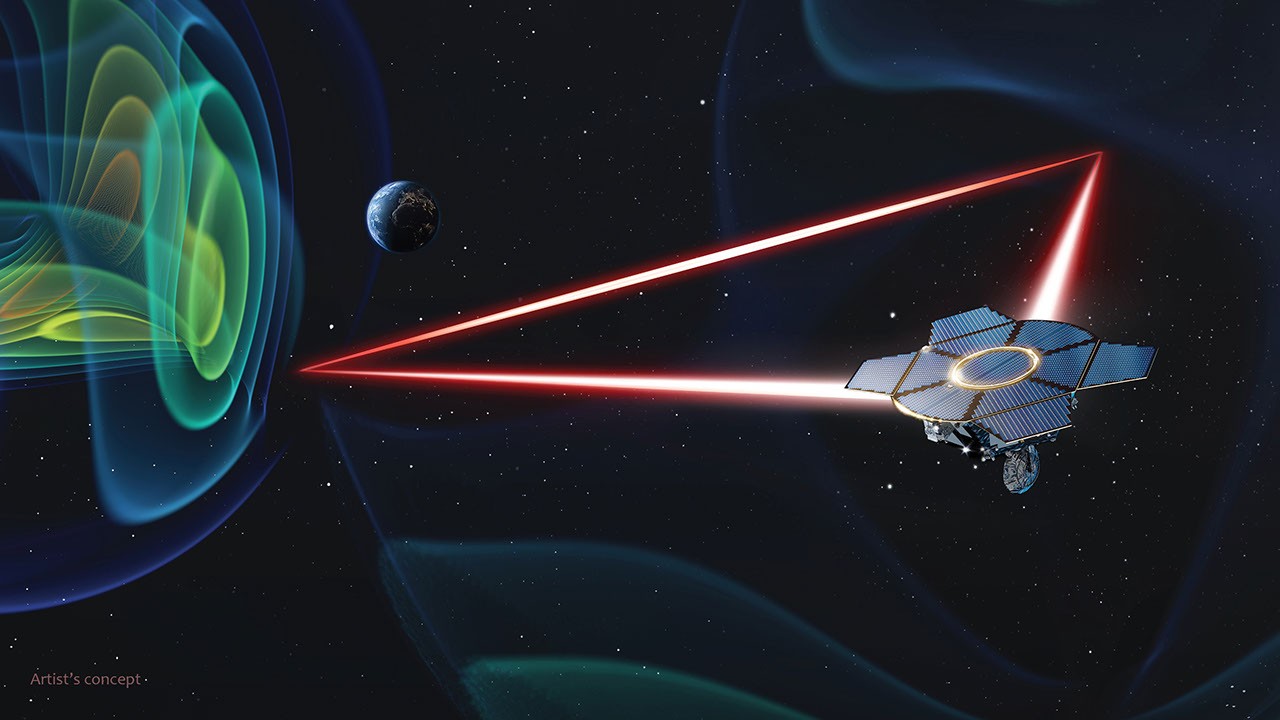
The upcoming LISA space observatory, scheduled for launch in the mid-2030s, is designed to detect gravitational waves. NASA researchers have identified a method to use these signals to discover exoplanets orbiting double white dwarf systems, a population of planets currently undetected.
The detection process relies on identifying Doppler modulations in gravitational wave signals, which appear as sidebands. This method is analogous to how radial velocity measurements detect wobbles in stars using light spectra. Astronomers estimate the Milky Way contains 10 million double white dwarf systems with orbital periods under one hour.
LISA will consist of three spacecraft forming a triangular array with sides measuring 2.5 million kilometers. The mission is led by the European Space Agency, with NASA providing telescopes, laser systems, and engineering support. The observatory will measure distance changes smaller than the width of a helium atom.
To confirm potential exoplanet discoveries, the research team proposes using the James Webb Space Telescope. Its infrared sensitivity can detect excess light from planets in these systems at distances of at least 500 light-years. Webb could identify planets with masses approximately five times that of Jupiter.