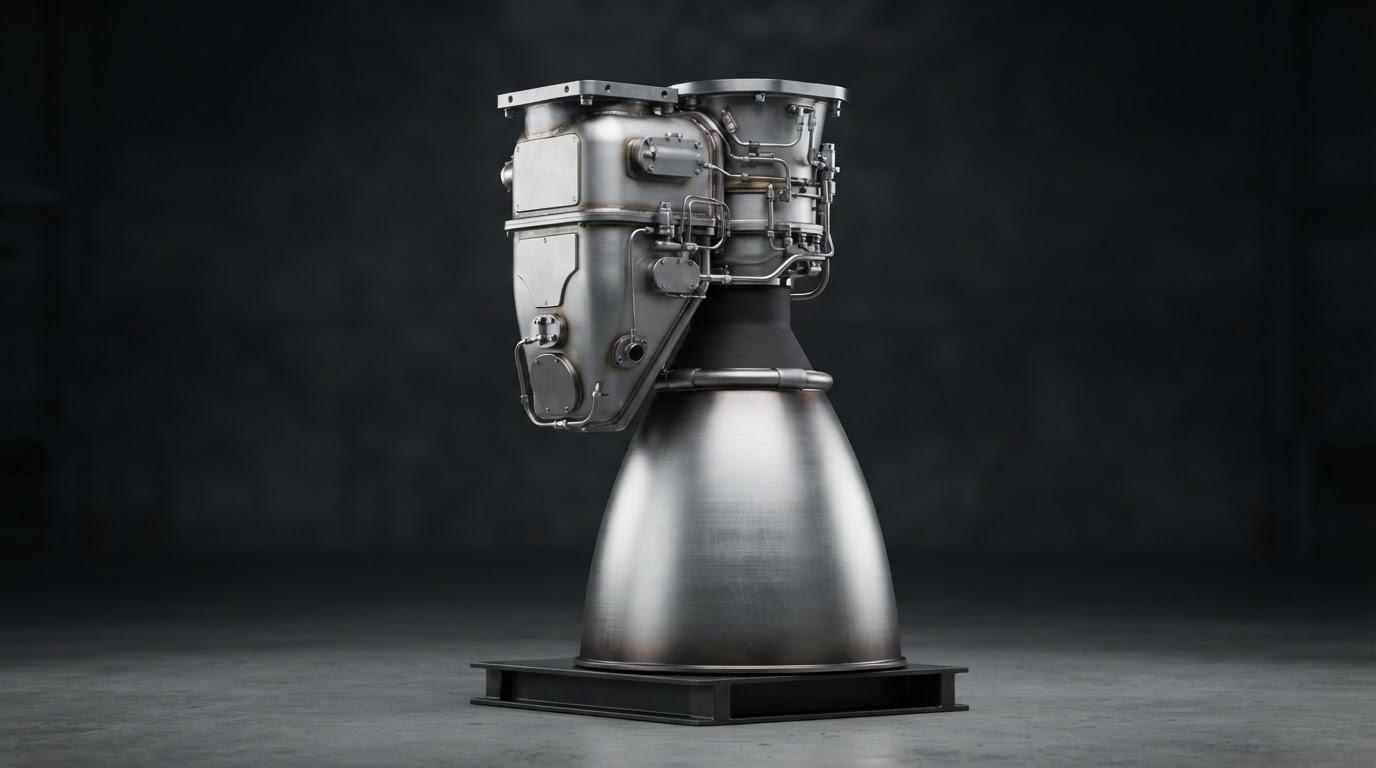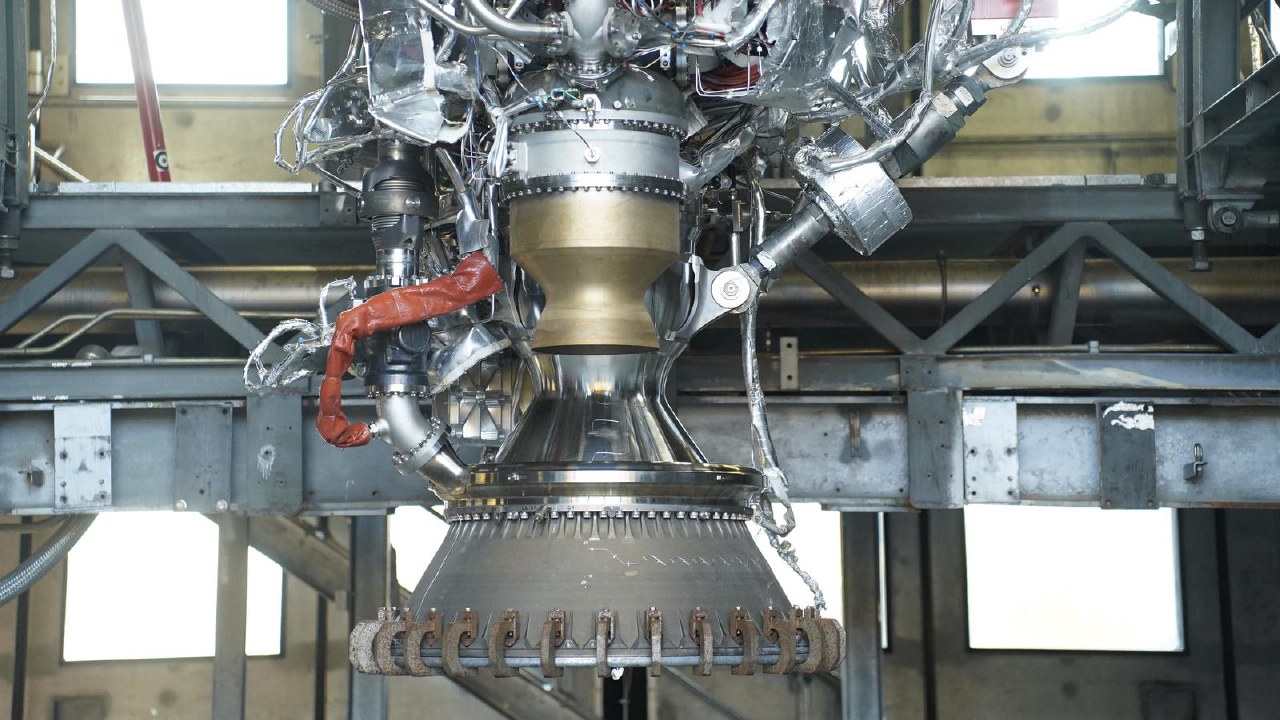
The Prometheus rocket engine, developed by ArianeGroup for the European Space Agency, has completed a new series of ground tests. The engine operates on liquid methane and oxygen, delivering approximately 100 tons of thrust. The testing took place at the upgraded P5 facility of the German Aerospace Center in Lampoldshausen.
During the campaign, the engine demonstrated multiple restarts within a single day, achieving stable operation after each ignition. It also successfully started without an external launch system, marking a milestone for a European gas-generator cycle engine of this class. The P5 facility upgrades now allow for up to five daily tests, including variable thrust levels.
Engineers tested a combustion chamber produced via Cold Gas Spray technology, a 3D-printing method that deposits metal powder to form durable layers. ArianeGroup utilizes these additive manufacturing techniques to shorten production timelines and reduce costs. The engine also features adjustable thrust, which is essential for the controlled landing of reusable rocket stages.
The choice of methane over liquid hydrogen allows for a denser fuel that can be stored at higher temperatures. ArianeGroup is currently developing an upgraded version, the Prometheus Mark 2. Future testing for the project is scheduled to take place at the company's facility in Vernon, France.