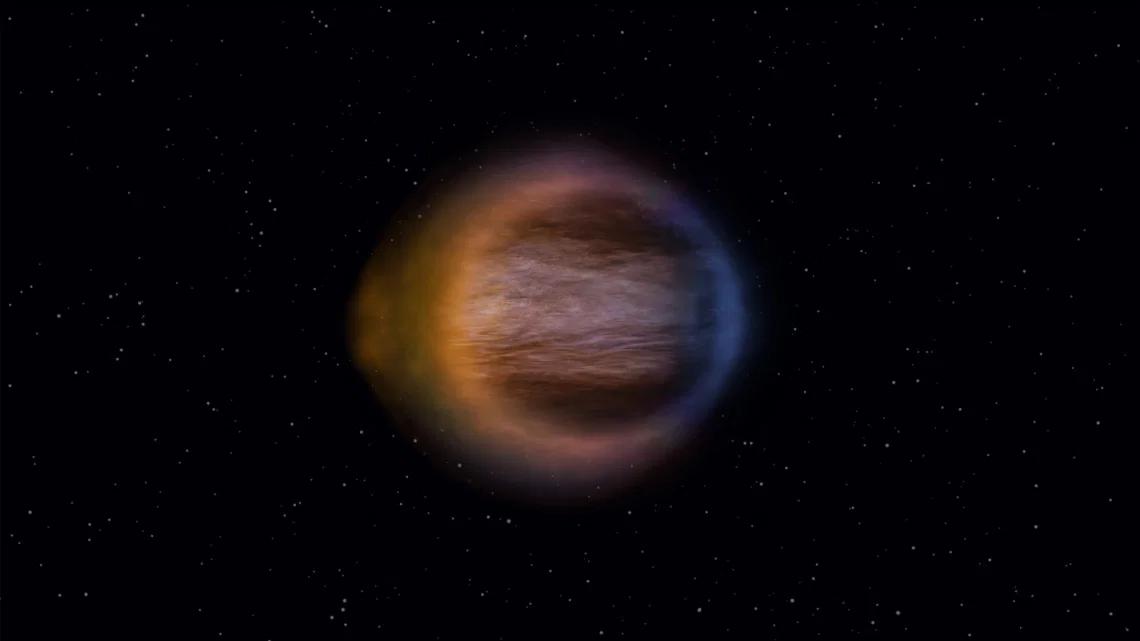
Astronomers used data from the James Webb Space Telescope to determine the shape of the exoplanet WASP-17b. The planet, located approximately 1,000 light-years from Earth, is not a perfect sphere but has an elongated, egg-like shape.
WASP-17b is classified as a hot Jupiter, a type of gas giant that orbits very close to its host star. Researchers suggest that intense tidal forces in this environment are responsible for the observed deformation of the planet.
The team analyzed changes in the brightness of the host star during the planet's transit to estimate the distance from the center of the planet to its edges. This method confirmed that the physical structure deviates from a spherical form.
While the findings align with theoretical models regarding tidal impacts on gas giants, researchers note that current transit observations cannot isolate the specific contributions of factors like atmospheric circulation or tidal synchronization.