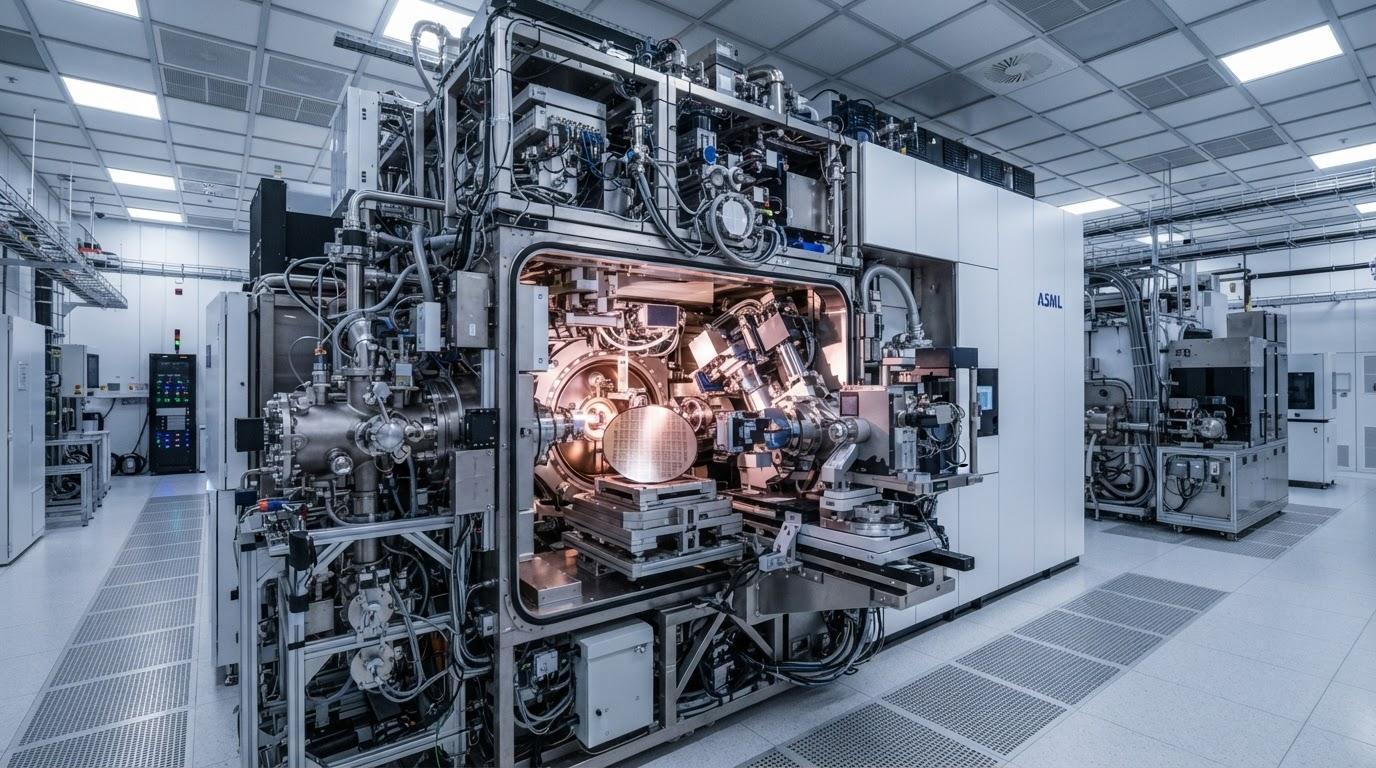
Huawei executive Richard Yu Chengdong confirmed that China is actively developing its own extreme ultraviolet (EUV) lithography equipment. Currently, the domestic semiconductor industry relies on deep ultraviolet (DUV) technology, as international sanctions restrict access to EUV machines produced by the Dutch company ASML.
To address these limitations, Huawei is implementing a strategy known as the 'tau law.' Instead of focusing solely on shrinking transistor sizes, the company aims to reduce signal propagation delays within computing systems. This involves shortening connection lengths, lowering resistance and parasitic capacitance, and increasing the density of logic elements.
The company is utilizing specific technical solutions to achieve these goals. The 'Logic Folding' technology is designed to shorten critical signal paths and boost transistor density, while the proprietary 'Lingqu' bus architecture works to minimize latency between individual computing nodes. These methods are combined with hardware-software co-optimization.
These advancements are already integrated into the latest hardware. The Mate 90 series, launched on October 1, features new-generation Kirin chips, with the Kirin 9050 Pro in the Mate 90 Pro Max model utilizing Logic Folding. Huawei aims to reach performance levels comparable to a 1.4nm process by 2031.