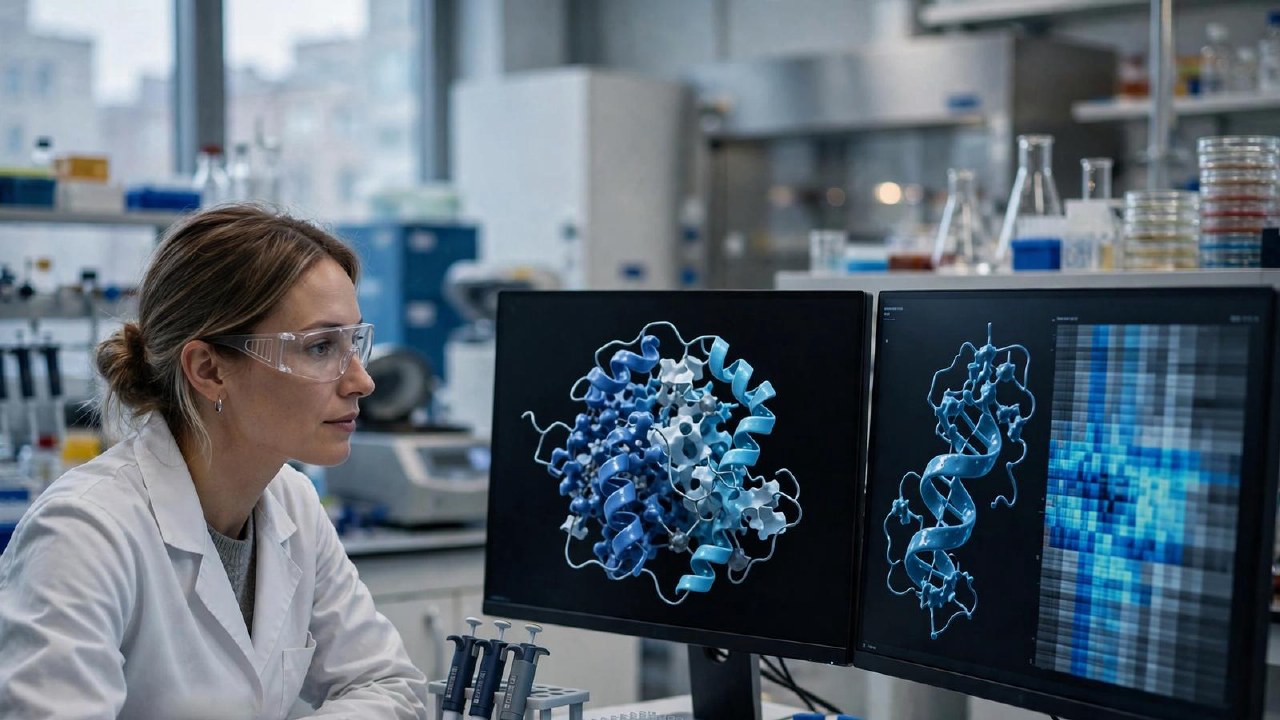
Google Research introduced VERID, a framework designed to enable AI agents to conduct autonomous laboratory experiments. The system functions as a semantic digital twin of a laboratory, allowing agents to query system states, perform simulations, and execute protocols on physical robotics.
In initial tests involving DNA aptamers for binding alpha-thrombin, the agents improved their performance significantly. While the first round yielded zero hits from 167 candidates, the third iteration achieved a 42.1% success rate with 131 hits out of 311 tested candidates.
The testing process involved approximately 1,000 candidates per round, with costs ranging from $1 to $3 per candidate. Beyond aptamers, the agents successfully designed proteins for cancer-related targets with single-digit nanomolar binding affinities.
This project builds upon Google’s Co-Scientist system and aligns with the broader Virtual Biology Initiative. On October 7, 2026, a coalition including Google DeepMind, Meta, Isomorphic Labs, and US government partners announced a commitment of nearly $1.8 billion to this initiative.