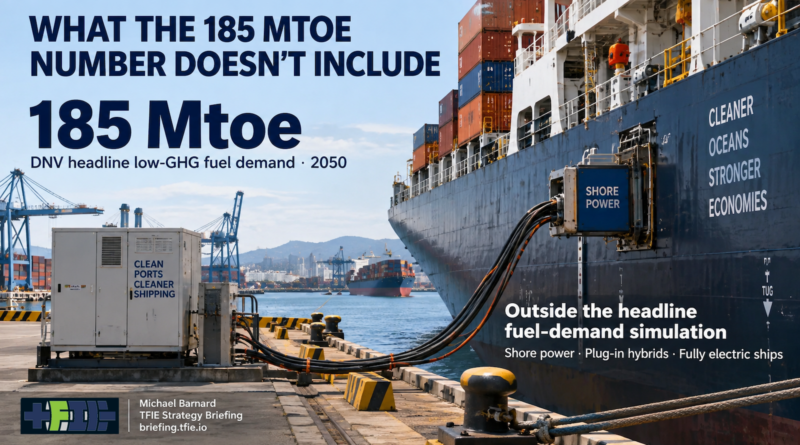
DNV released its Maritime Forecast to 2050, projecting that international ships over 400 gross tonnes will require approximately 185 million tonnes of oil equivalent of low-GHG fuel by 2050. This estimate corresponds to roughly 7.7 to 7.8 exajoules of energy.
The report acknowledges that shore power, plug-in hybrids, and fully electric ships could significantly reduce fuel demand. However, these electrification pathways are excluded from the simulation used to calculate the headline fuel-demand figures.
Data from the report indicates that there are currently more than 1,500 battery-equipped vessels in operation, with an additional 371 ships on order. Ferries currently account for the majority of these battery-powered installations.
DNV estimates that stronger global regulatory signals could lead to a reduction in fleet energy consumption of up to 25% by 2050. This reduction is expected to be achieved through improved vessel efficiency, operational practices, and reduced speeds.
The forecast highlights that the future market for low-carbon fuels is sensitive to technological developments, regulatory changes, and cost factors. The final demand for these fuels depends on how much maritime activity remains after accounting for efficiency and electrification.