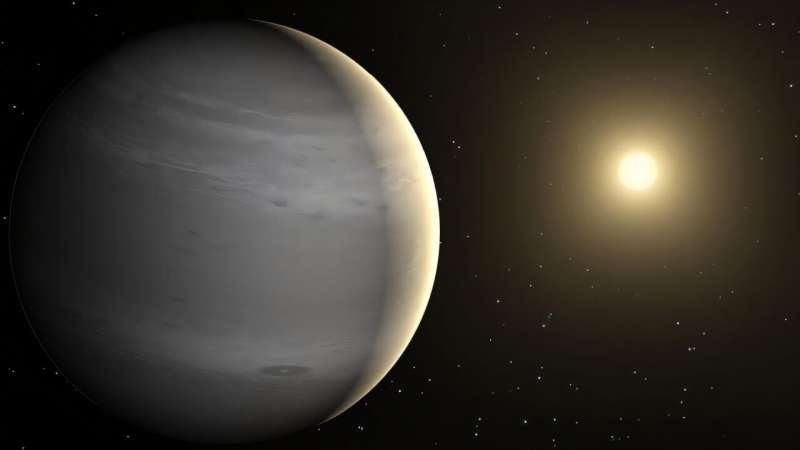
A research team led by Professor Qian Shengbang from Yunnan University has identified three exoplanets that survived the expansion of their host stars. The findings were published in the Proceedings of the National Academy of Sciences.
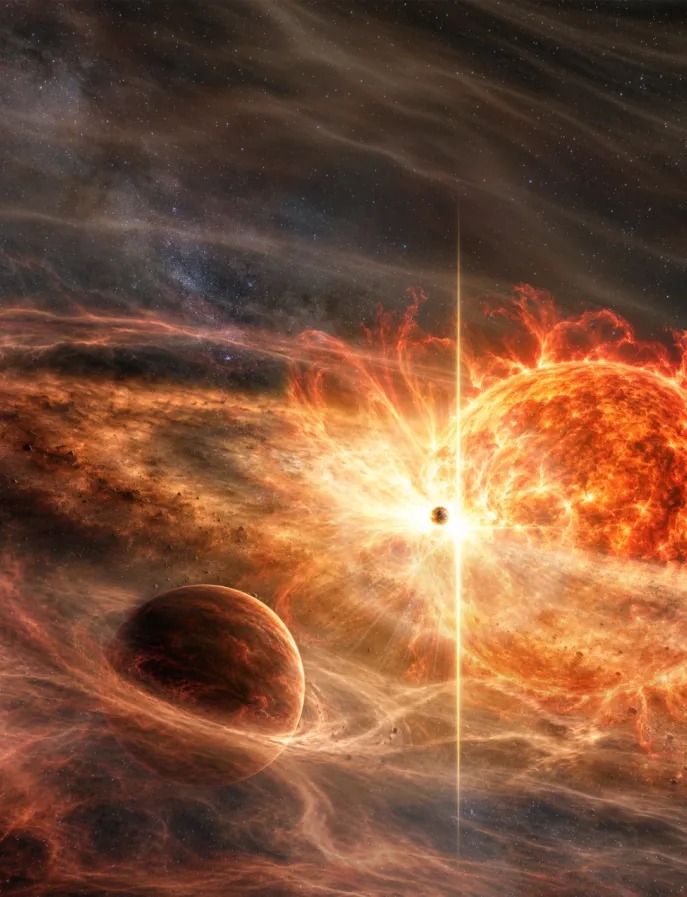
The observed host stars, identified as 24 Boo, HD 12648, and TYC 4282-605-1, have entered the core helium-burning phase. According to traditional stellar evolution models, these stars should have expanded into red giants, consuming any nearby planets in the process.
The researchers used satellite data to track luminosity variations and compared the current orbital positions of the planets with the historical expansion ranges of their host stars. The data confirms the planets reside in regions that should have been engulfed.
Professor Qian suggests that the simultaneous discovery of three such planets indicates a common physical mechanism rather than a series of isolated accidents. This challenges existing models regarding the interaction between aging stars and their planetary systems.
The study, which involved collaboration between Yunnan University and the Yunnan Observatories of the Chinese Academy of Sciences, also suggests that the long-term fate of the Earth may be more complex than previously predicted.