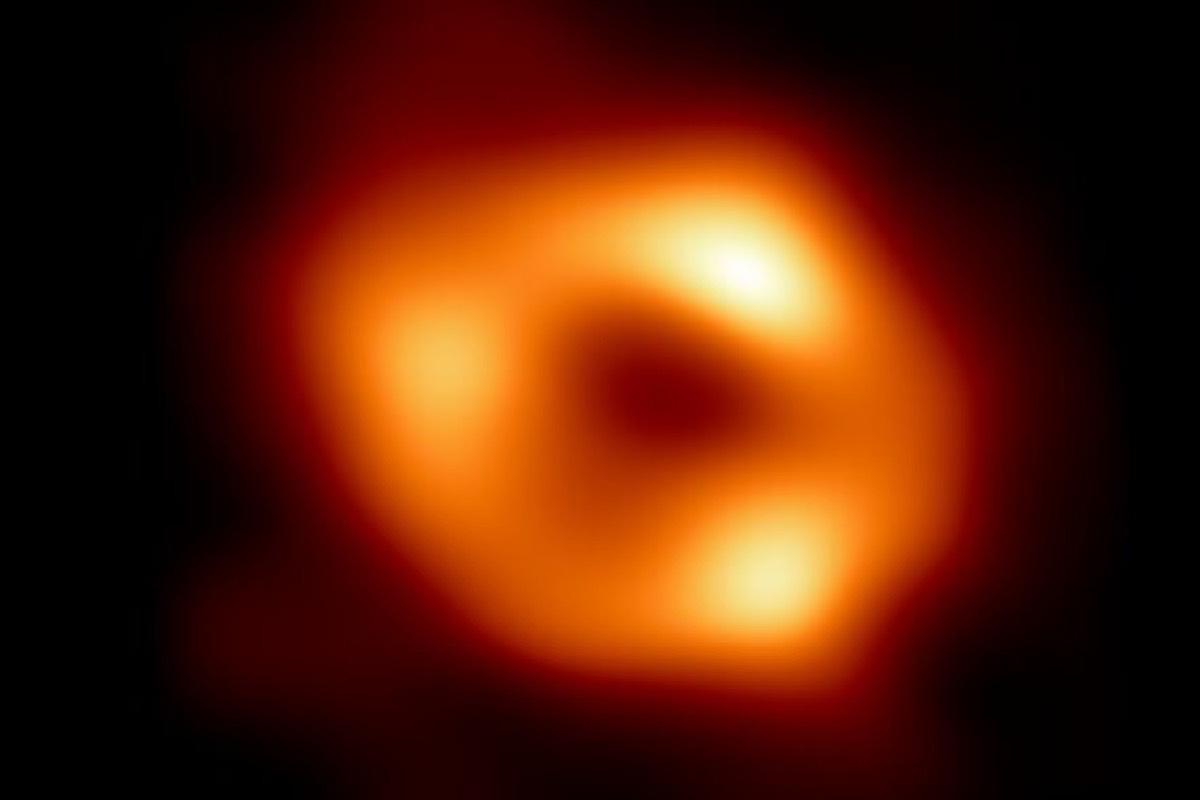
An Australian research team has developed an AI algorithm named GenDIReCT to independently verify the 2019 image of the M87* supermassive black hole. The tool utilizes generative deep learning with latent diffusion to reconstruct images from radio data collected by the Event Horizon Telescope (EHT) network.
Unlike traditional methods, GenDIReCT does not rely on predefined shapes or manual calibration parameters. The algorithm processes raw radio signals from EHT observations conducted in 2017, 2018, and 2021. It reconstructs the structure by iteratively refining images from noise, effectively bypassing common calibration errors between telescope stations.
The AI successfully reconstructed a ring structure with a diameter of 42.2 ± 1.5 microarcseconds, closely matching the original EHT findings. A secondary Bayesian model validation yielded a similar result of 42.3 ± 1.1 microarcseconds. The brightest part of the ring was identified in the southern or southwestern region.
Based on the ring dimensions, the researchers estimated the mass of M87* at 6.5 ± 0.5 billion solar masses, which aligns with previous estimates derived from stellar motion. While the study confirmed the ring structure and mass, the current data proved insufficient to determine the rotation speed of the black hole.