Money
IMF Highlights Risks of AI Sector Market Correction
The IMF warns that high valuations and rising debt in the AI sector could trigger a global equity market correction.
October 15, 2026, 08:14 PM·Crypto Briefing

The IMF warns that high valuations and rising debt in the AI sector could trigger a global equity market correction.
Anthropic co-founder Jack Clark will address the IMF and World Bank on October 17, 2026, to discuss the risks of rapid AI development and propose new regulatory safety standards.
The IMF warns that a potential correction in the AI market could reduce global economic output by 0.4% in 2026, impacting valuations for firms like Anthropic.

The IMF warns that advanced AI models could increase systemic risks and bank failures, urging regulators to prioritize technology-focused stress testing and cross-border oversight.

The IMF reports that AI investments are sustaining global growth at 3%, though the technology threatens 40% of jobs and risks widening economic inequality.

Senegal has launched a Bitcoin mining pilot to monetize surplus energy as it negotiates the restructuring of its multi-billion dollar external debt.

IMF Managing Director Kristalina Georgieva reports that AI infrastructure investment is sustaining 3% global growth, while warning that 40% of jobs worldwide face potential disruption.

IMF Managing Director Kristalina Georgieva reports that the global economy is caught between an AI-driven investment surge and energy supply shocks linked to Middle East conflicts.

The IMF reports that tokenized stocks show strong retail demand but suffer from high volatility and low liquidity, with the market currently valued at $2.3 billion.

The IMF projects that effective integration of artificial intelligence could boost global annual economic growth by 0.5 percentage points.
The IMF warns that the rapid growth of tokenized markets could amplify systemic financial risks, including liquidity crises and contagion, as these assets become more integrated with traditional finance.

The IMF has released $138 million to El Salvador under a $1.4 billion financing program, despite the country missing specific Bitcoin-related performance targets.
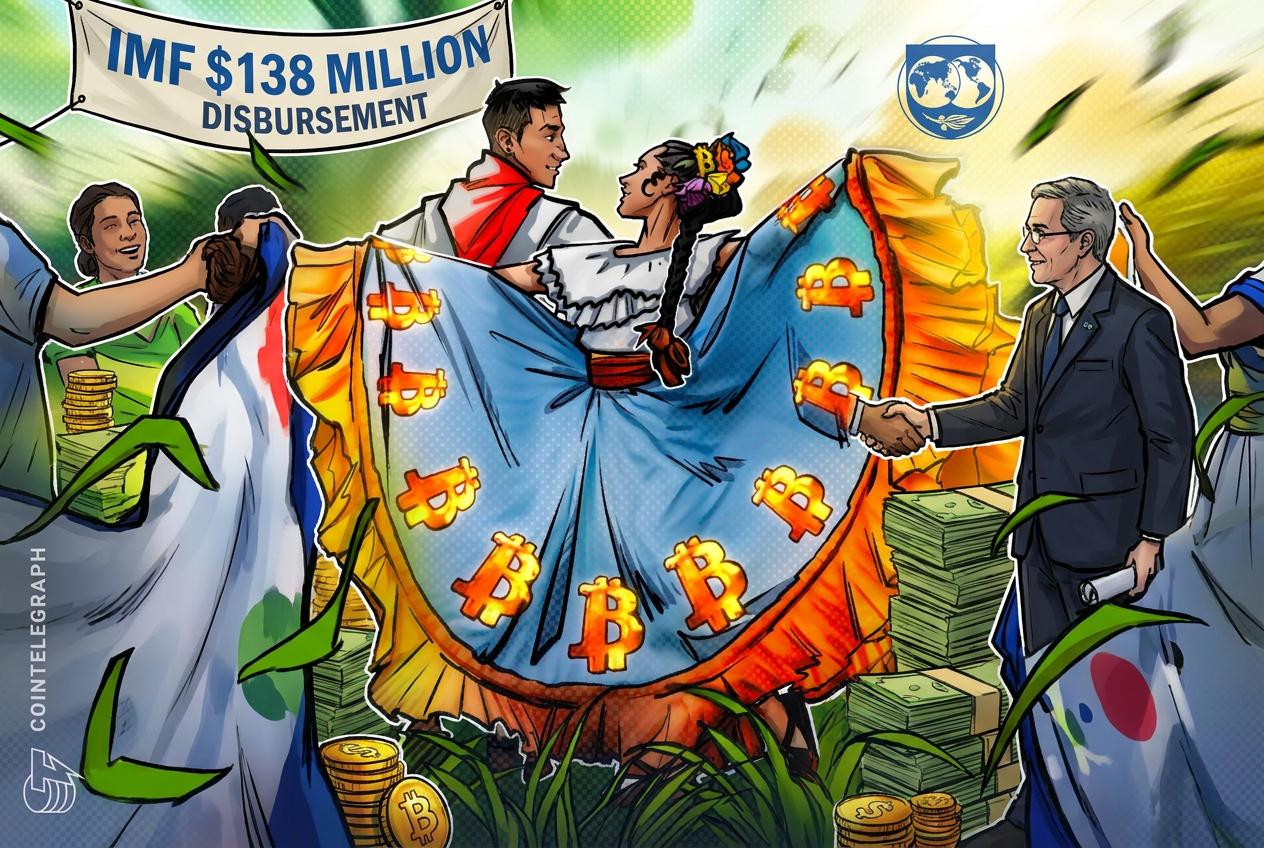
The IMF has approved a $139 million disbursement to El Salvador while simultaneously demanding that the nation scale back its state-led Bitcoin initiatives.

El Salvador's Bitcoin reserves reached $618 million, with an IMF review confirming that recent growth in holdings came from private donations rather than state funds.
The IMF projects 4.5% GDP growth for El Salvador in 2026 and has approved a new $140 million disbursement despite a breach of Bitcoin accumulation requirements.
Brazil is set to reach a 97.3 percent public debt-to-GDP ratio by 2026, marking the highest level in Latin America.

The IMF projects a 1% boost in European productivity from AI over five years but warns of rising inequality, energy grid strain, and strategic dependence on foreign technology.

Global AI employment trends for 2025 show Singapore leading in job vacancies and Israel in talent concentration, while 60% of advanced economy jobs are affected by AI.

The IMF claims that recent growth in El Salvador's Bitcoin reserves stems from private donations, contradicting government reports of state-funded purchases.

The IMF stated that El Salvador's Bitcoin accumulation since June 2025 was funded by private donations, not public resources.