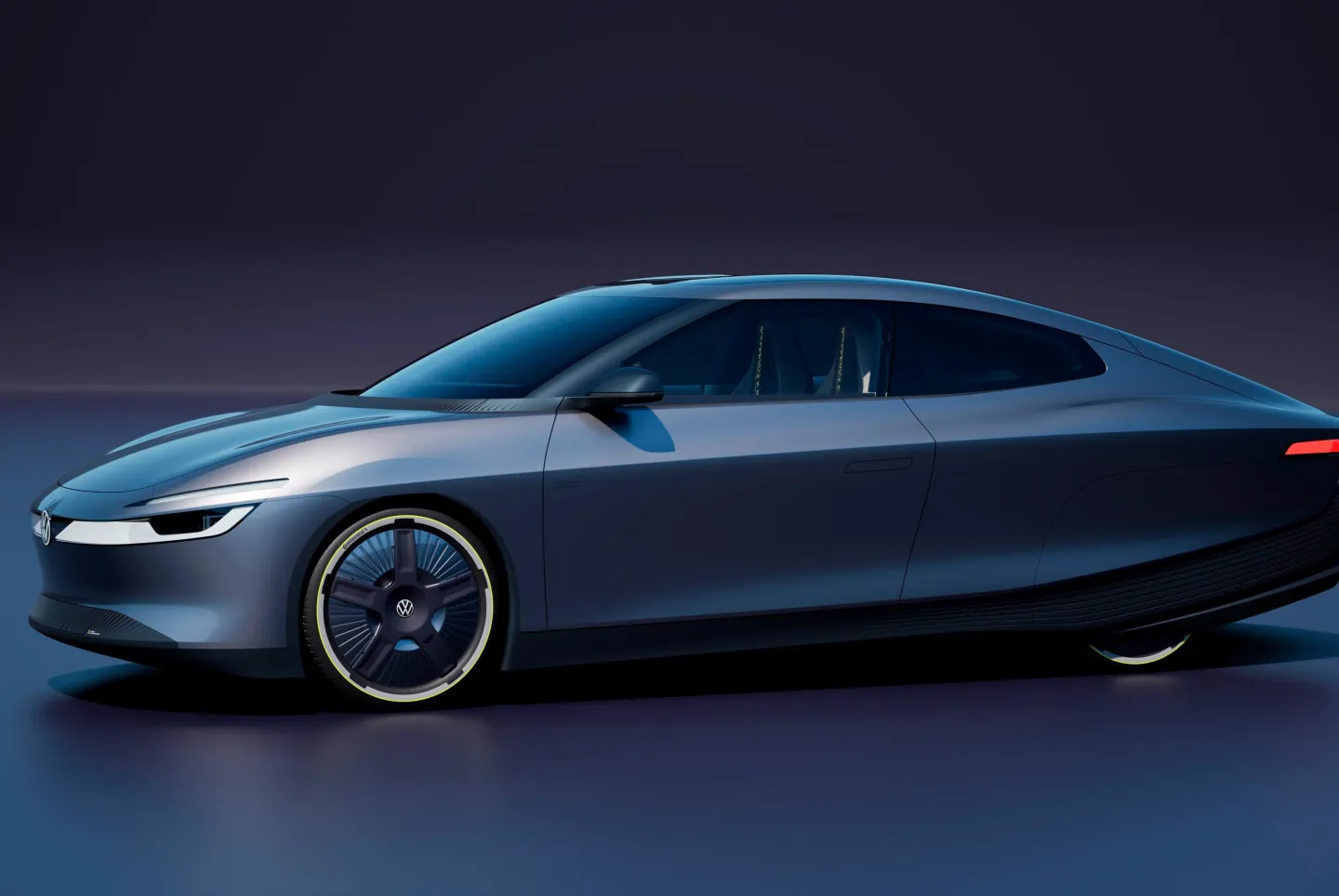
Volkswagen has unveiled the Mission Efficiency, a near-production electric prototype designed to demonstrate extreme aerodynamic and energy efficiency. The vehicle features a teardrop-shaped body with a drag coefficient of 0.158, which the company claims sets a record for road-legal vehicles. It is built on the MEB+ platform and utilizes technology intended for the upcoming ID. Polo.
The prototype measures nearly 4.8 meters in length and under 1.4 meters in height, with a frontal area of 2.08 square meters. Key aerodynamic features include a fully covered chassis, active cooling air flaps, and specialized wheel covers. The car is powered by a 99 kW front-mounted motor and a 54.9 kWh net capacity battery, prioritizing system optimization over massive battery size.
In a real-world long-distance test from Wolfsburg to Vienna, the vehicle covered 1,278.36 kilometers on a single charge. It achieved an energy consumption of 6.89 kWh per 100 kilometers, or 7.51 kWh including charging losses. The average speed was 67.72 km/h, with a top speed of 138 km/h. Upon arrival, the car retained enough charge for an estimated 164 kilometers of additional range.
The interior design focuses on weight reduction, omitting a traditional infotainment screen in favor of a bring-your-own-device approach using smartphones or tablets. The roof integrates solar panels to power auxiliary systems, providing up to 30 kilometers of additional range. Despite its aerodynamic shape, the car maintains a 2+2 seating layout and 481 liters of luggage space.
Volkswagen does not currently have plans for mass production, positioning the vehicle as a technical demonstrator. The project aims to prove that technologies like active aerodynamics, lightweight materials, and efficient thermal management can significantly reduce energy consumption in future production models, potentially offering long-range capabilities without relying solely on larger batteries.