

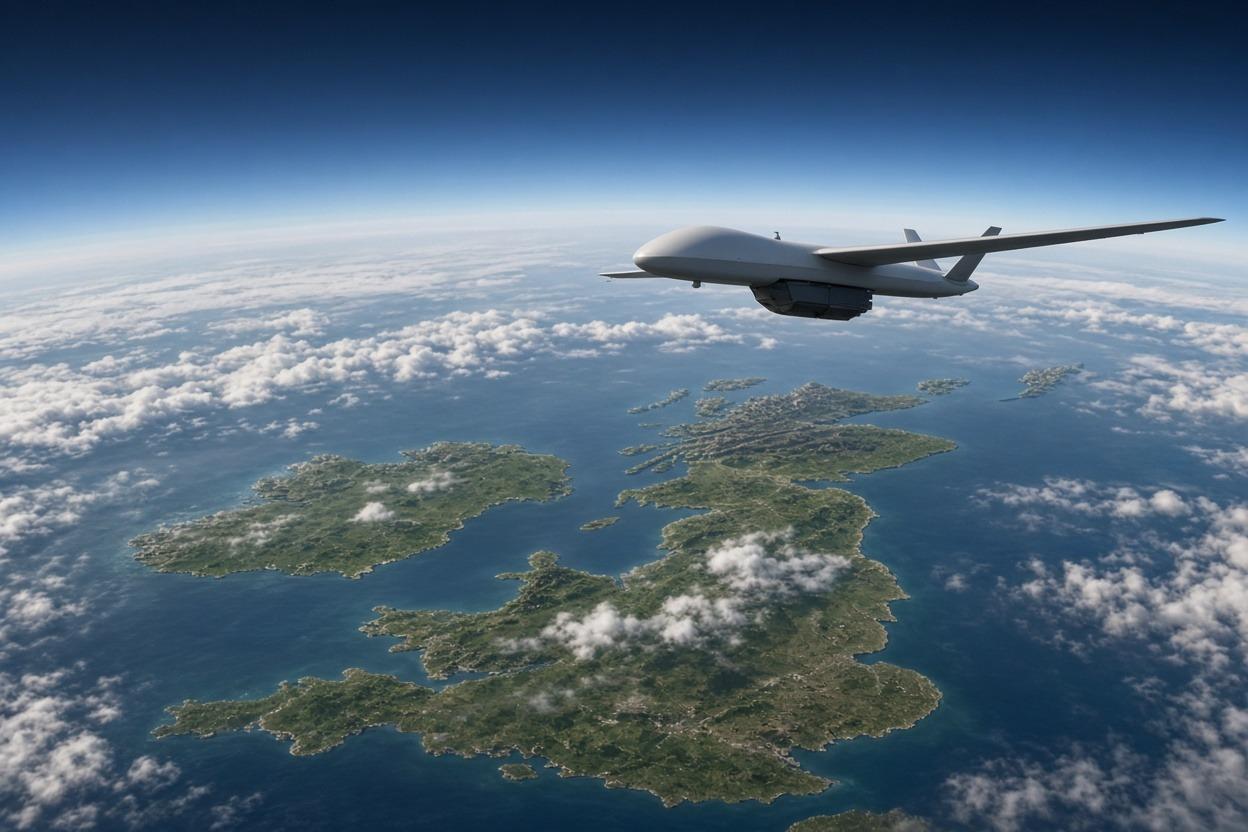
The UK's Advanced Research and Invention Agency (ARIA) has launched the Enduring Atmospheric Platforms program, allocating $94 million to support 18 distinct projects. The initiative focuses on High Altitude Pseudo-Satellites (HAPS) designed to operate at an altitude of approximately 19 km, aiming to provide mobile and internet connectivity as an alternative to traditional satellite constellations.
The program spans three and a half years and is structured into three phases: technology development, system integration, and deployment. A primary technical requirement for these platforms is the ability to carry 300 W of telecommunications equipment and maintain a stationary position for at least one week.
Various startups and institutions are contributing unique concepts. Menapia is developing the Carousel project, a drone network intended to cover the entire UK. VFP Aerospace proposes a rotation model where drones are swapped for maintenance, with each unit estimated to cost $67 thousand. Other projects explore wireless power transmission using lasers or microwaves, while the University of Bath is researching the use of atmospheric gravity waves to extend flight duration.
ARIA is evaluating a diverse range of designs, including solar-powered aircraft and experimental models featuring rotating wings. These platforms are intended to serve as aerial communication towers, providing coverage to regions where terrestrial infrastructure is insufficient or entirely absent.



