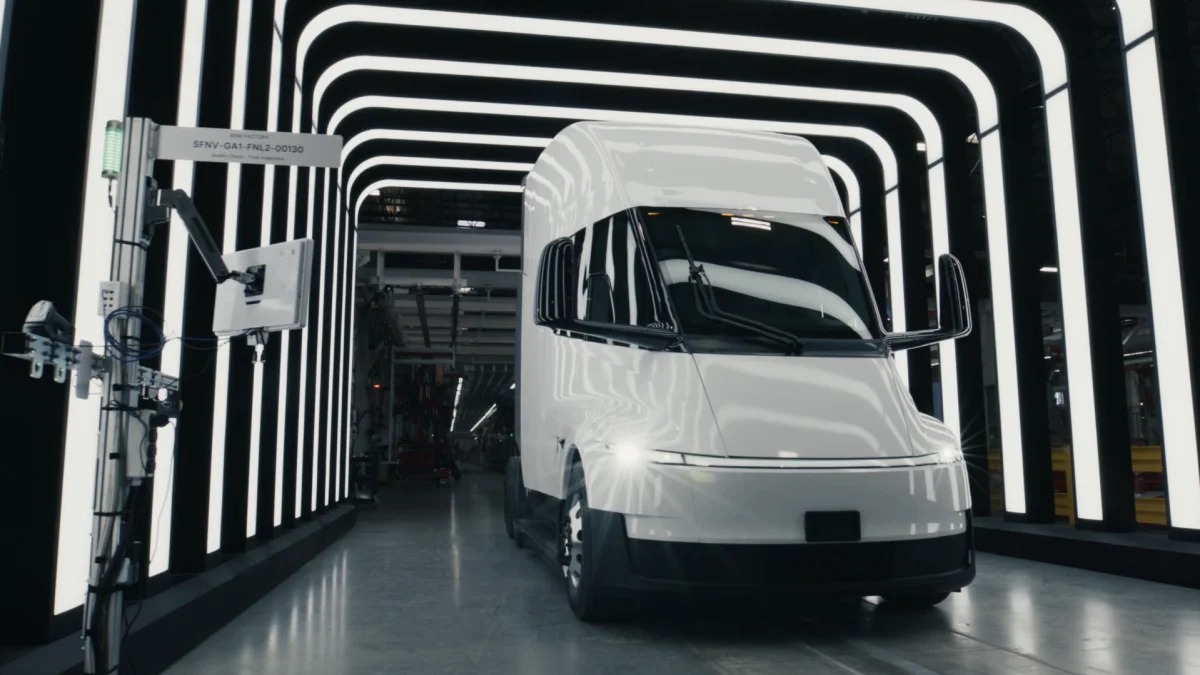
Tesla has officially launched mass production of the updated Semi electric truck at its facility in Sparks, Nevada. The vehicle features a redesigned mechanical architecture, including a new integrated thermal management system and a revised powertrain, aimed at improving efficiency and reliability.
The new thermal management system, shared with the Cybercab, serves as a central hub for heating and cooling the cabin, battery, and motors. It allows the truck to recover waste heat from the drive unit to warm the cabin, which preserves battery range in cold weather conditions.
The powertrain now utilizes a steel-sleeve rotor, replacing the carbon-fiber version used in prototypes to enhance durability and reduce production costs. Additionally, the truck has transitioned from hydraulic power steering to an electric system powered by a 48-volt architecture, similar to the Cybertruck.
Operating costs for the Semi are significantly lower than those of diesel trucks. While diesel fuel costs range from $0.50 to $0.80 per mile, the Semi's electricity costs are between $0.20 and $0.25 per mile. A 1.2-megawatt charger can add 300 miles of range in 30 minutes.
The interior includes dual displays, with the left screen dedicated to commercial data such as tire pressure, suspension status, and fifth-wheel locking. Tesla is also working on adapting its Full Self-Driving (FSD) software for the Semi to further enhance its operational capabilities.