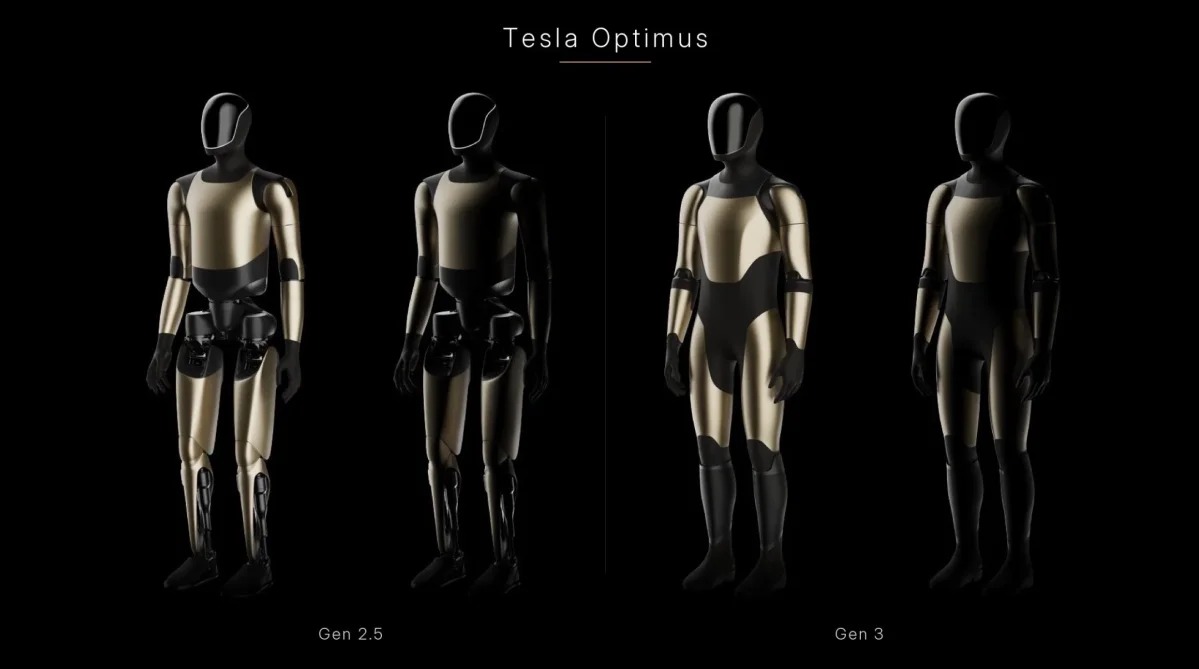
Tesla has increased the production of its Optimus humanoid robots by approximately tenfold in recent months. Despite this growth, the company continues to face significant hurdles in achieving stable, large-scale manufacturing. Key obstacles include the complexity of the robot's hand design, automation equipment limitations, and supply chain constraints.
Production figures have risen from several dozen units per week during small-batch testing in the second quarter to several hundred units per week last month. Management aims to establish a continuous automated production line by the end of the year, targeting a capacity of over 1,000 units per week. This remains far below the long-term goal of 20,000 units per week.
The current V3 version of Optimus is lighter, features more cameras, and has a more human-like appearance than its predecessors. These units are primarily deployed for internal testing, training, and data collection at Tesla facilities, where they operate under strict supervision and follow pre-programmed tasks rather than functioning as autonomous general-purpose robots.
Tesla plans to lease Optimus robots to external commercial clients rather than selling them outright. This strategy allows the company to retrieve units for upgrades and refurbishment while gathering data from client factories and warehouses to refine its AI systems. The company has already identified a shortlist of potential partners with facility layouts similar to its own.