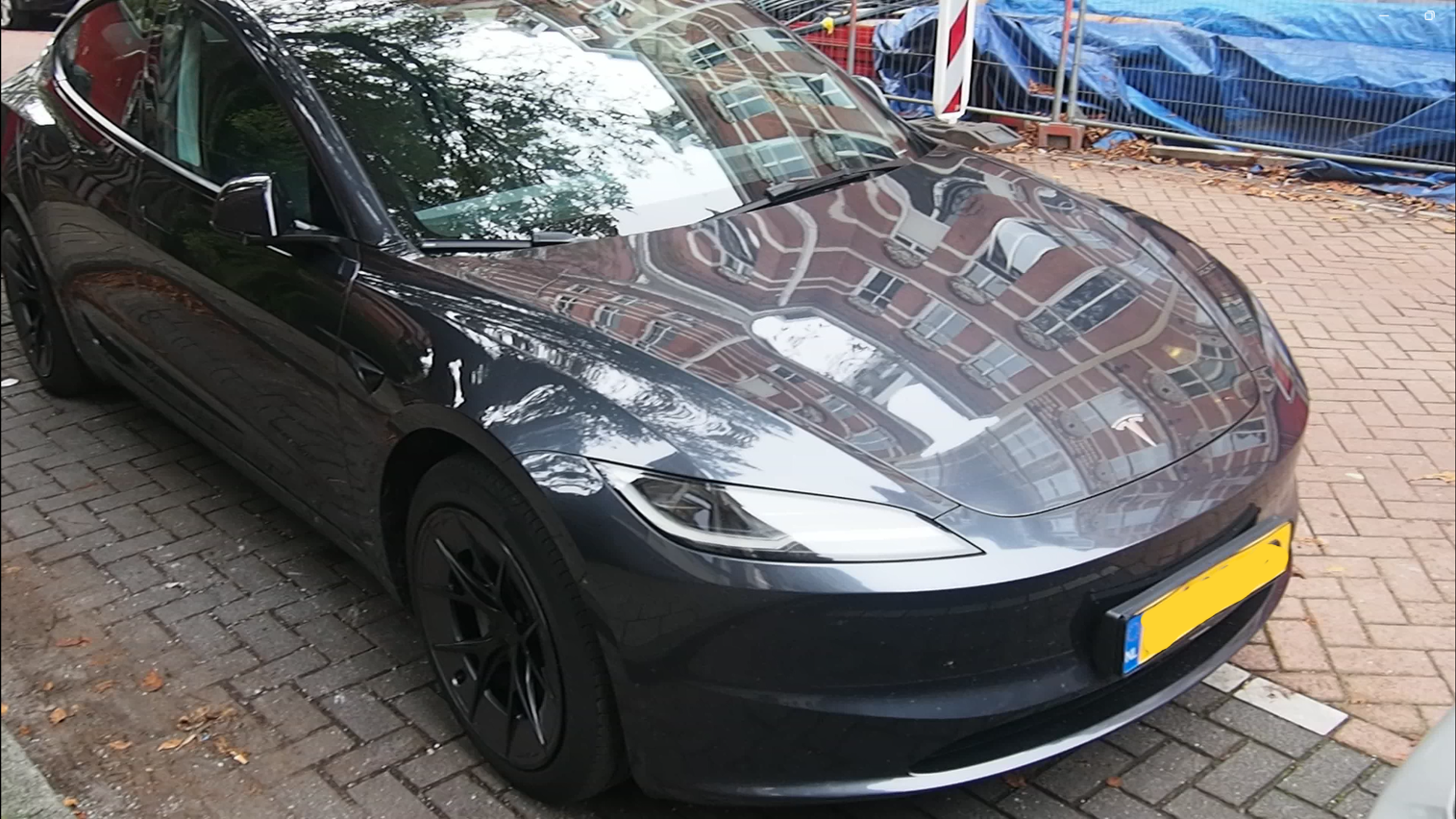
The test involved a black Tesla Model 3 Highland, produced in Shanghai for the European market, equipped with FSD and HW4 hardware. The vehicle was a customer car provided for the test in Amsterdam, where Tesla FSD has received regulatory approval.
During the test loop, the Tesla system demonstrated a reactive driving style characterized by abrupt braking and frequent steering corrections. The vehicle struggled with complex urban traffic, including cyclists and intersections, leading to instances where it blocked tram lines and traffic lanes.
The FSD system encountered difficulties with lane selection, waypoint navigation, and autonomous parking in tight spaces, often requiring human intervention. In some scenarios, the car made incorrect turns or failed to navigate around road obstacles smoothly.
Despite these challenges, the system successfully performed a reverse maneuver to accommodate oncoming construction equipment. The vehicle's performance improved in areas with lower traffic density, where the driving felt more consistent and comfortable.
The author noted that the Tesla's behavior appeared overly cautious compared to the XPENG L03 with VLA 2.0 tested on the same routes. The experience highlighted differences in how the software adapts to complex European traffic patterns versus typical US road conditions.