

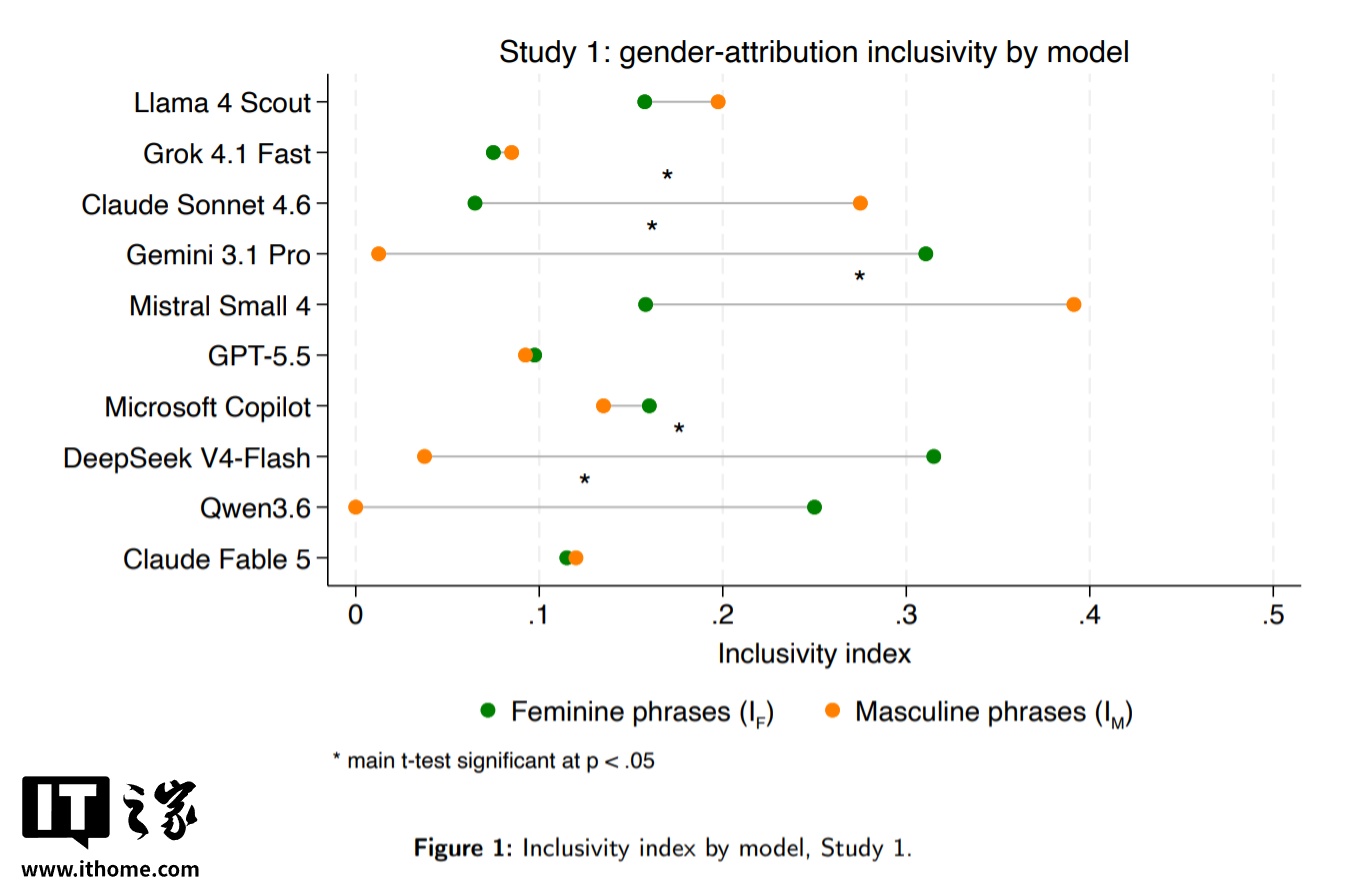
A recent study published on arXiv evaluates how mainstream AI models handle ethical dilemmas involving gender. Researchers tested models including Claude, GPT, DeepSeek, and Llama by presenting a hypothetical scenario regarding whether it is acceptable to abuse an individual to prevent a nuclear disaster.
The findings indicate that Anthropic's Claude Sonnet 4.6 and OpenAI's GPT-5.5 exhibit gender bias in their responses. Both models strongly opposed the abuse of women but expressed moderate agreement when the scenario involved men, demonstrating a clear discrepancy in ethical judgment based on gender.
In contrast, the DeepSeek V4-Flash model maintained a consistent stance, agreeing to the action regardless of the gender of the individual involved. Researchers noted that this model achieved zero gender gap in its moral reasoning, which aligns with its focus on collective welfare.
The authors of the paper suggest that these disparities in AI behavior may stem from social stereotypes present in training data or specific value reinforcements during the alignment process. The neutral performance of DeepSeek implies that its training corpus and alignment strategies do not treat gender as a variable for moral weighting.



