

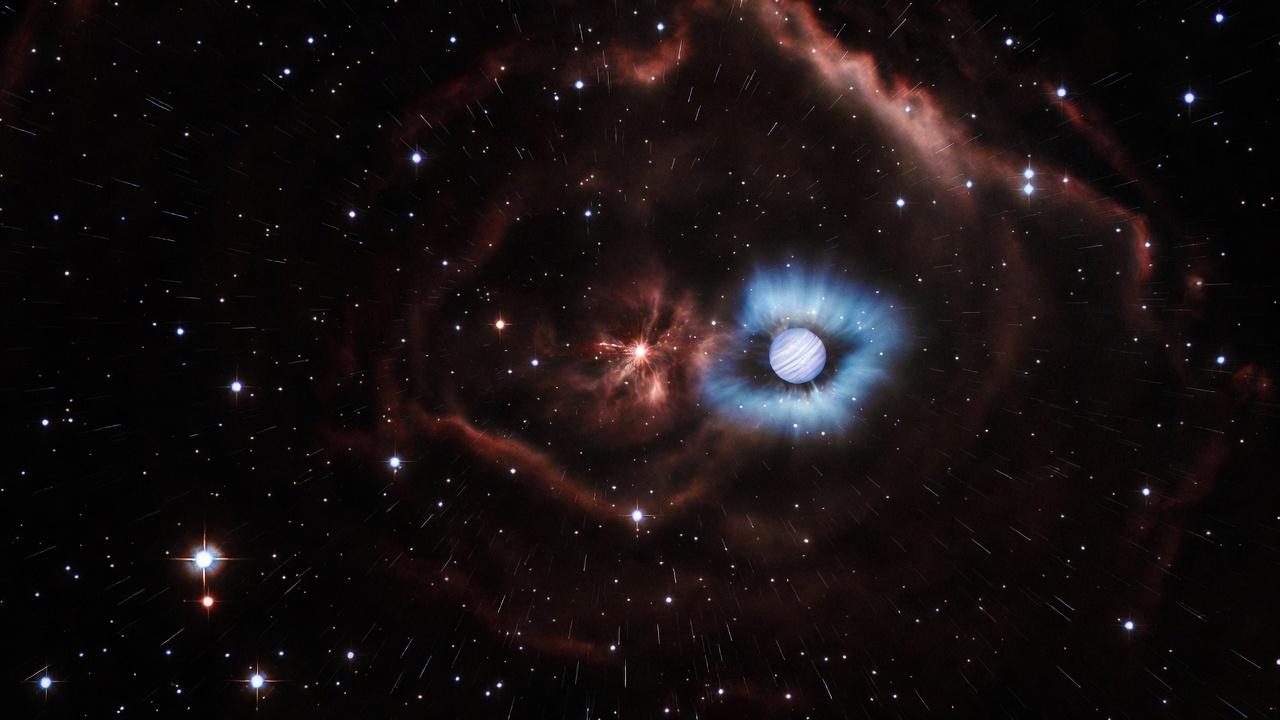
An international team of astronomers has identified evidence suggesting that planets can form around sun-like stars after their life cycle concludes. This discovery challenges previous scientific assumptions that the formation of full-scale planets within planetary nebulae was unlikely.
According to the researchers, the planet emerged from material ejected by the star during its final evolutionary stages. As a star of medium mass exhausts its fuel, it sheds its outer layers to form a planetary nebula, leaving behind a white dwarf core. The new planet formed directly from this debris.
Recent observations over the past twenty years have confirmed that white dwarfs can destroy and consume rocky bodies. This new finding expands on those observations, raising questions about whether similar second-generation planets could emerge from the remnants of other stars, including our own Sun.



