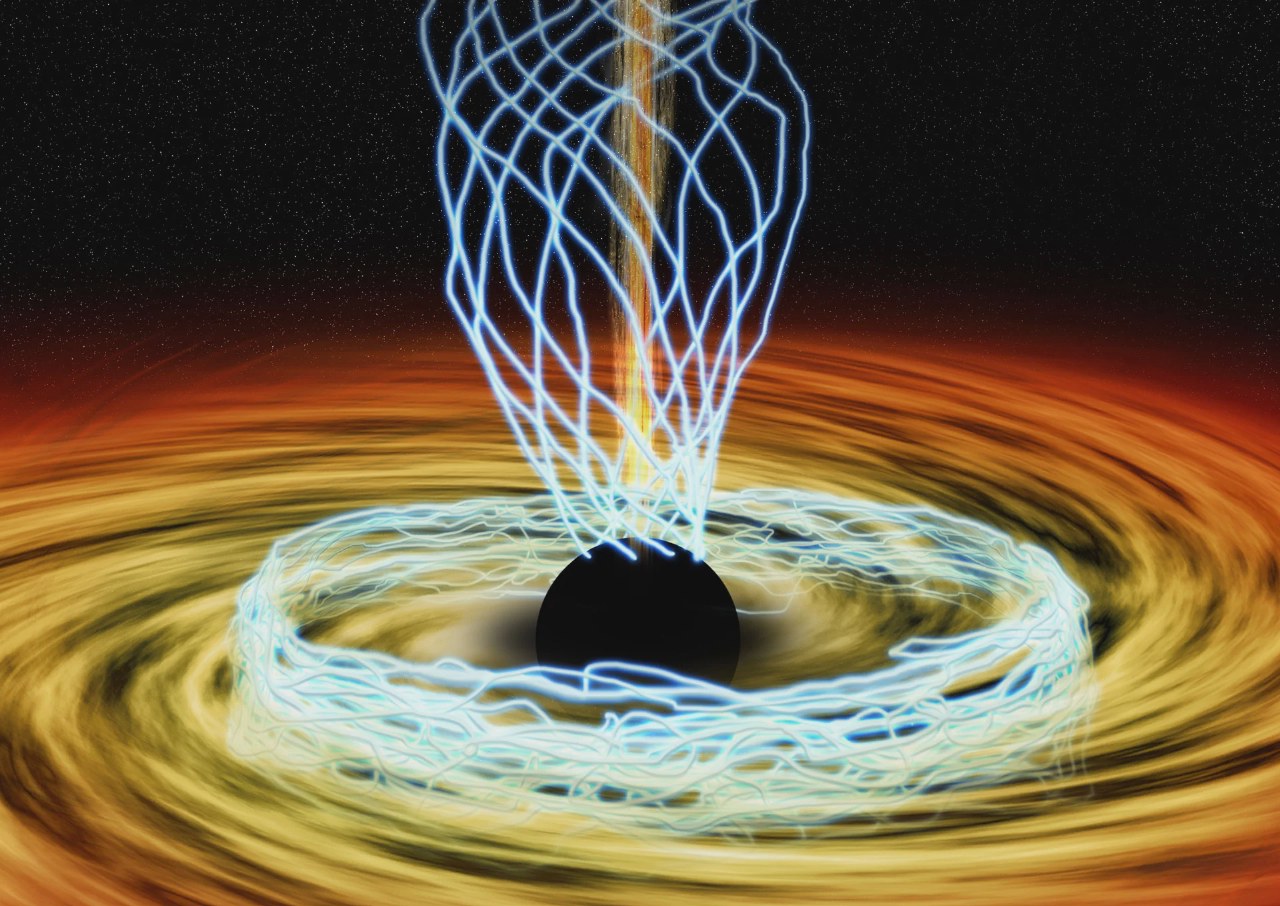
Researchers have proposed a theoretical model suggesting that Sagittarius A*, the supermassive black hole at the center of the Milky Way, may act as a natural particle accelerator. The study, published as a preprint on September 2, 2026, explores the 'Magnetic Penrose Process' as a mechanism for this phenomenon.
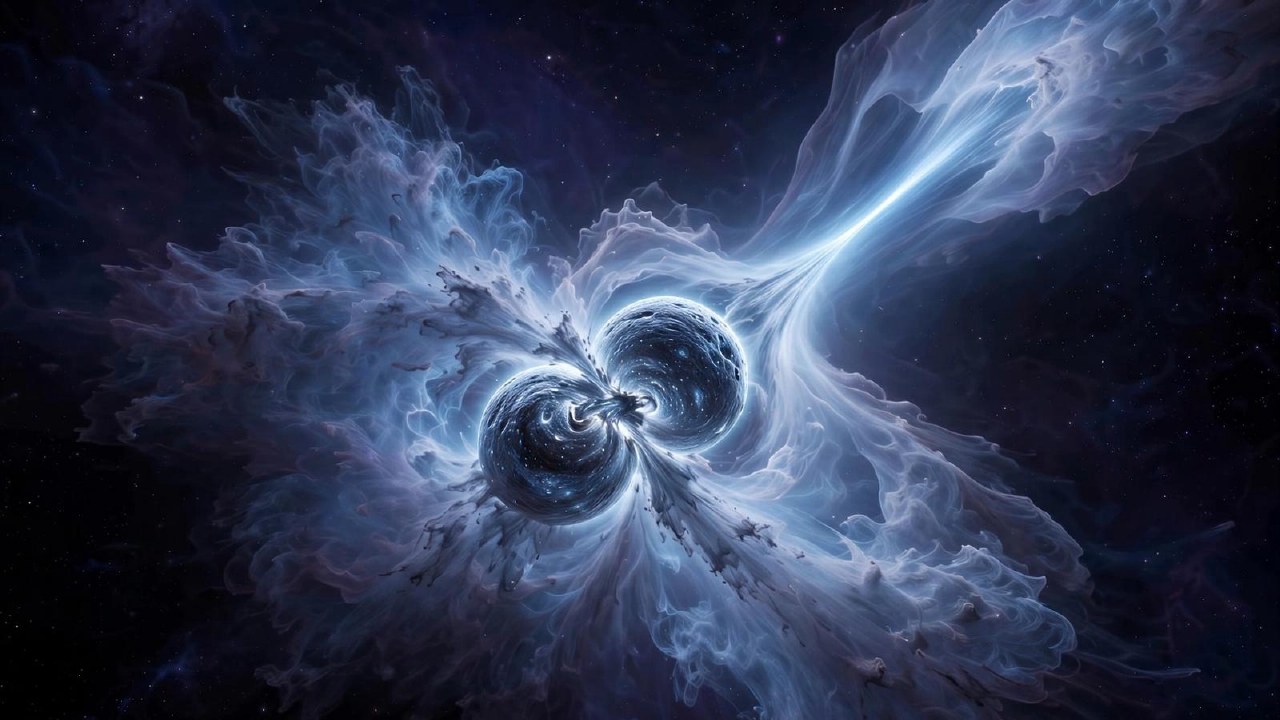
The model suggests that the black hole could transfer its rotational energy to protons, accelerating them to energy levels in the range of several peta-electronvolts (PeV). This process involves neutrons produced in the hot gas surrounding the black hole, which decay into protons within the black hole's ergosphere.
These accelerated protons could potentially interact with dense gas in the galactic center, producing high-energy gamma rays and neutrinos. Scientists hope to verify this theory by comparing predicted energy spectra with data from future observatories, including the Southern Wide-field Gamma-ray Observatory (SWGO) and the Cherenkov Telescope Array Observatory (CTAO).
While this mechanism provides a potential explanation for cosmic ray sources, it remains a hypothesis. Recent data from the IceCube Neutrino Observatory and HAWC, published in September 2026, did not find significant neutrino signals from the galactic center, highlighting the need for more sensitive future facilities like IceCube-Gen2 and KM3NeT.