

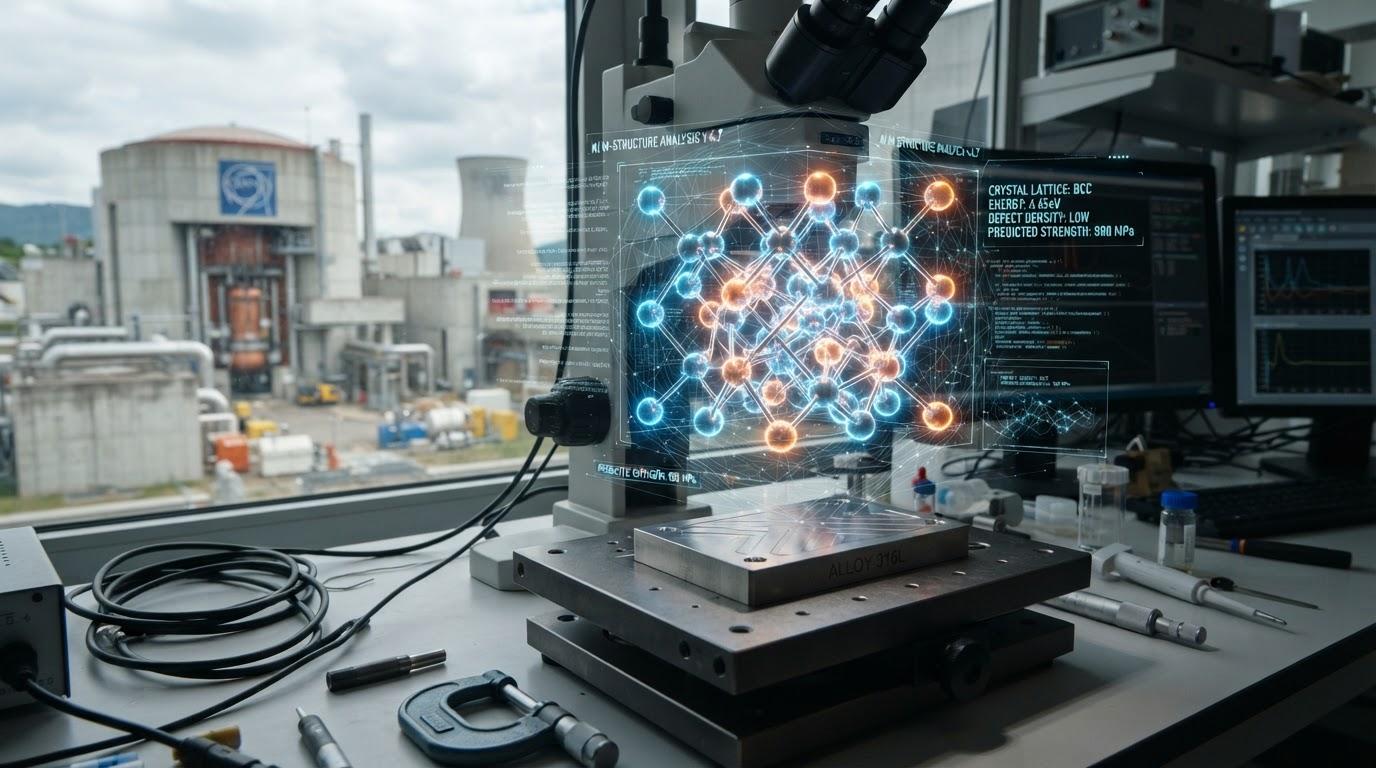
Rosatom is utilizing artificial intelligence to accelerate the development of new materials for advanced nuclear reactors. By employing algorithms to analyze potential chemical compositions, the company significantly reduced the time required for research, which previously took years.
For the BREST fast-neutron reactor and the VVER-SKD supercritical water-cooled reactor, researchers needed to evaluate approximately 250,000 alloying combinations. The AI system successfully identified the optimal material composition within a few weeks, after which physical samples were produced and tested in laboratory conditions.
Beyond nuclear materials, Rosatom has applied AI to optimize carbon fiber production. The algorithms adjusted manufacturing parameters, resulting in more consistent material strength along the fiber length and improved production efficiency, enabling the creation of lighter structures.
The next phase of this initiative involves integrating computational search with physical production into a single automated workflow. In 2026, Rosatom plans to launch an experimental complex designed for the automated synthesis of structural materials using AI.
This system will calculate promising compositions, predict material properties, and independently manufacture samples for testing. This closed-loop process aims to reduce the overall development cycle for new materials by several times, minimizing the need for manual intervention.



