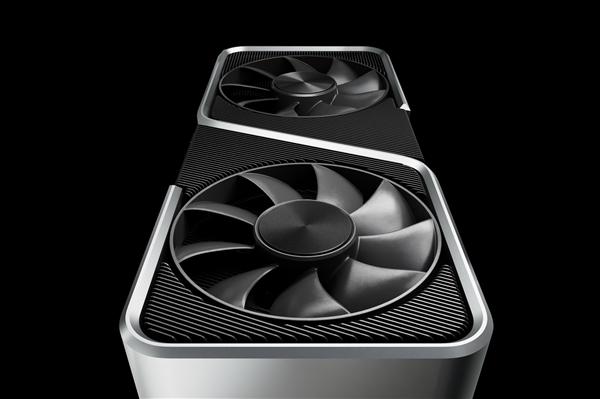
Enthusiasts have developed a method to repurpose NVIDIA RTX 2080 Ti graphics cards for local AI tasks by modifying hardware configuration resistors, known as straps. This approach allows for the creation of a budget-friendly alternative to the RTX 3090 Ti for running large language models.
In 2021, modder Ilya Korneychuk demonstrated the potential for increased VRAM capacity on the 2080 Ti architecture. By 2023, a team led by a modder under the alias wxnod attempted to expand VRAM to 44 GB, though this specific configuration faced stability issues in games and benchmarks.
Since February 2024, modified 2080 Ti cards with increased memory have become available on the market. These units, often paired via NVLink to reach 44 GB of VRAM, are priced between $450 and $500. They are marketed as a cost-effective solution for local LLM inference.
Technical comparisons show that a dual RTX 2080 Ti setup offers 44 GB of VRAM compared to the 24 GB found in an RTX 3090 Ti. The dual configuration provides 1,232 GB/s of memory bandwidth and theoretical FP16 performance of 228 TFLOPS, surpassing the 1,008 GB/s and 160 TFLOPS of the 3090 Ti.
Users opting for these modified cards face significant trade-offs, including high power consumption, noise levels, and potential reliability issues. The lack of official warranties and the risk of hardware failure due to thermal stress or component degradation are notable concerns for this DIY approach.