

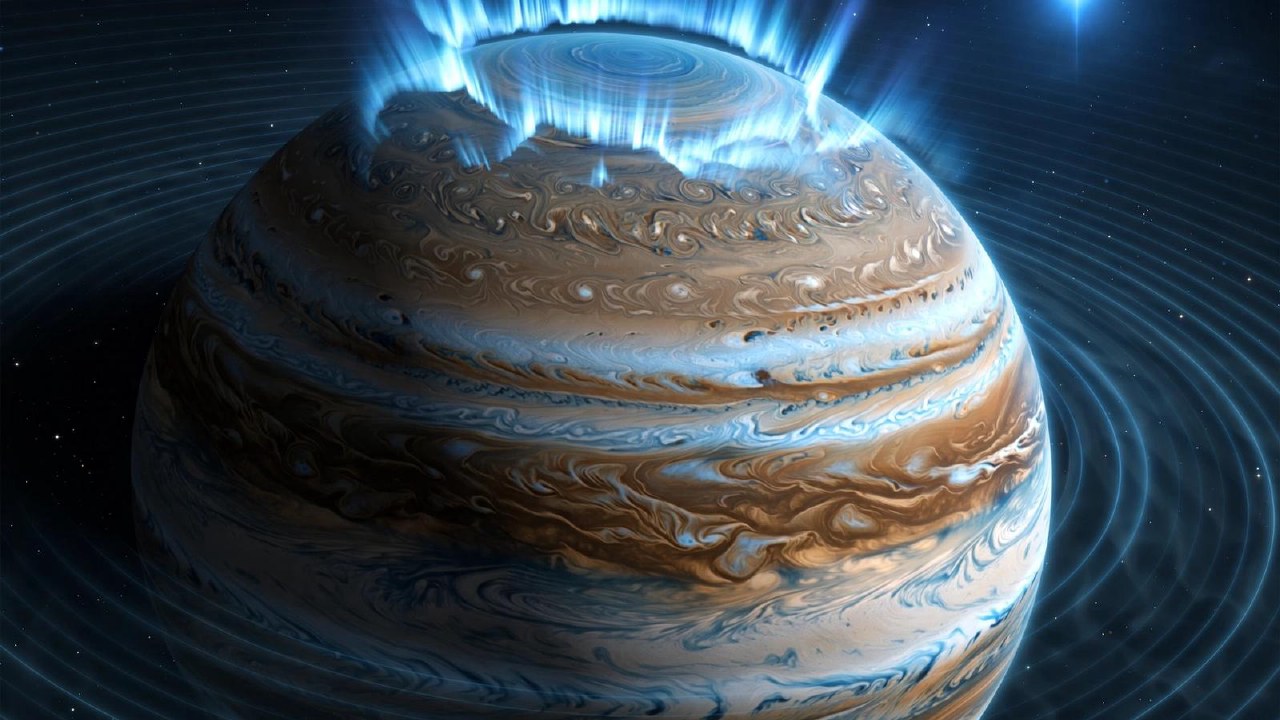
Astronomers from the Harvard-Smithsonian Center for Astrophysics and the University of Oregon have identified radio emissions originating directly from the exoplanet Beta Pictoris b. Observations were conducted using the MeerKAT radio telescope in South Africa across four sessions in 2025 and 2026, covering a frequency range of 0.85 to 3.5 GHz.
The detected signals include short, repeating bursts and constant radio emission. The bursts exhibit strong circular polarization, a characteristic linked to auroral activity. To pinpoint the source, researchers used quasars as reference points, confirming the signal location at the planet rather than its host star, Beta Pictoris, which is located 63.4 light-years from Earth.
The findings suggest the presence of electron-cyclotron maser instability, a mechanism similar to that producing auroras on Earth and Jupiter. Beta Pictoris b is estimated to be 10 times more massive than Jupiter with a rotation period of 8–9 hours. The data indicates the planet's magnetic field may be thousands of times stronger than Earth's, marking the first direct measurement of an exoplanet's magnetic field strength.
Researchers have identified seven additional gas giants in five nearby star systems that are candidates for similar study. Future radio telescope technology is expected to increase sensitivity by 5–7 times, enabling further investigation into the magnetic properties and radio auroras of young, massive exoplanets.



