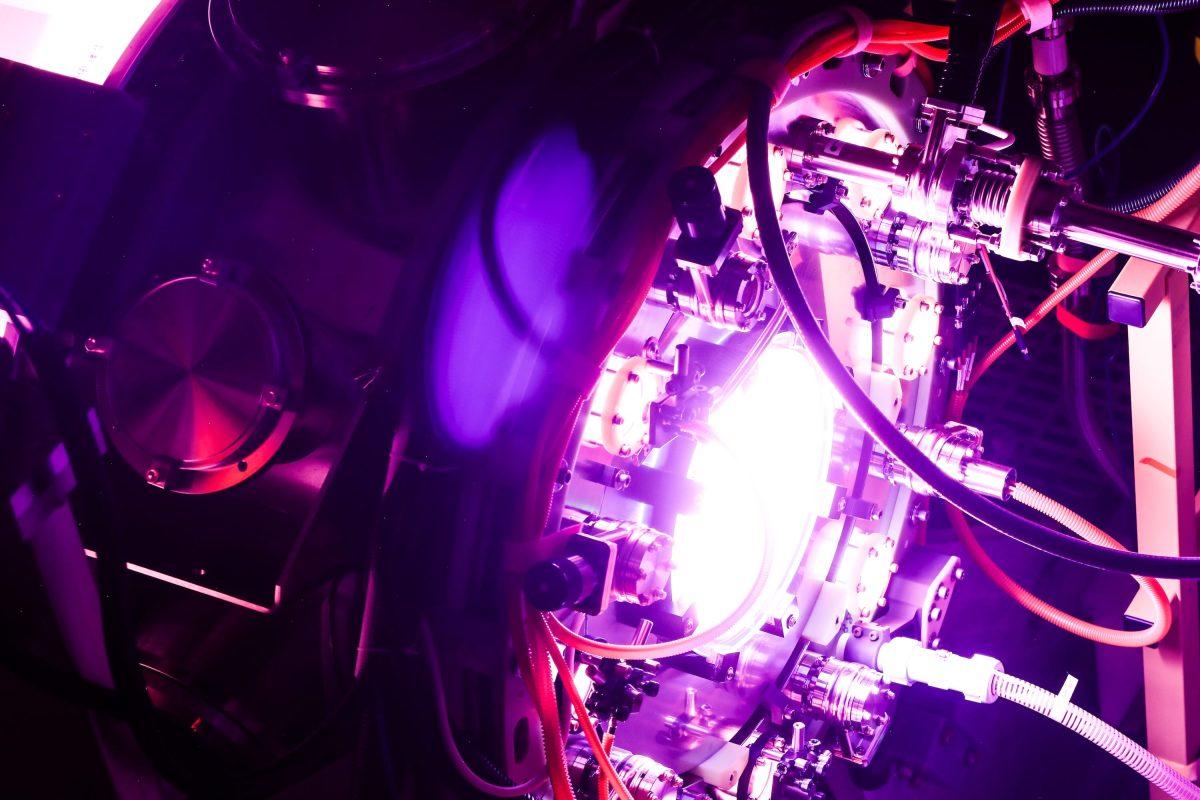
Physicists at Northwestern University have successfully trapped a single positron for several months. The experiment utilized a Penning trap, which employs electric and magnetic fields to isolate the antiparticle from ordinary matter to prevent annihilation.
The research team sourced positrons from the radioactive decay of sodium-22. To stabilize the particle, they maintained a high vacuum and cooled the environment to approximately 300 millikelvins, or 0.3 degrees above absolute zero, bringing the positron to its ground quantum state.
The setup, referred to as a single-positron quantum cyclotron, allowed researchers to manipulate the particle's quantum energy levels. By applying microwave radiation at specific frequencies, the team induced and recorded quantum transitions in the positron's cyclotron motion.
This study aims to measure the magnetic moment of the positron with high precision. By comparing this value to the electron's magnetic moment, which the team previously measured with a relative precision of 10^-13, scientists hope to test the symmetry between matter and antimatter.