

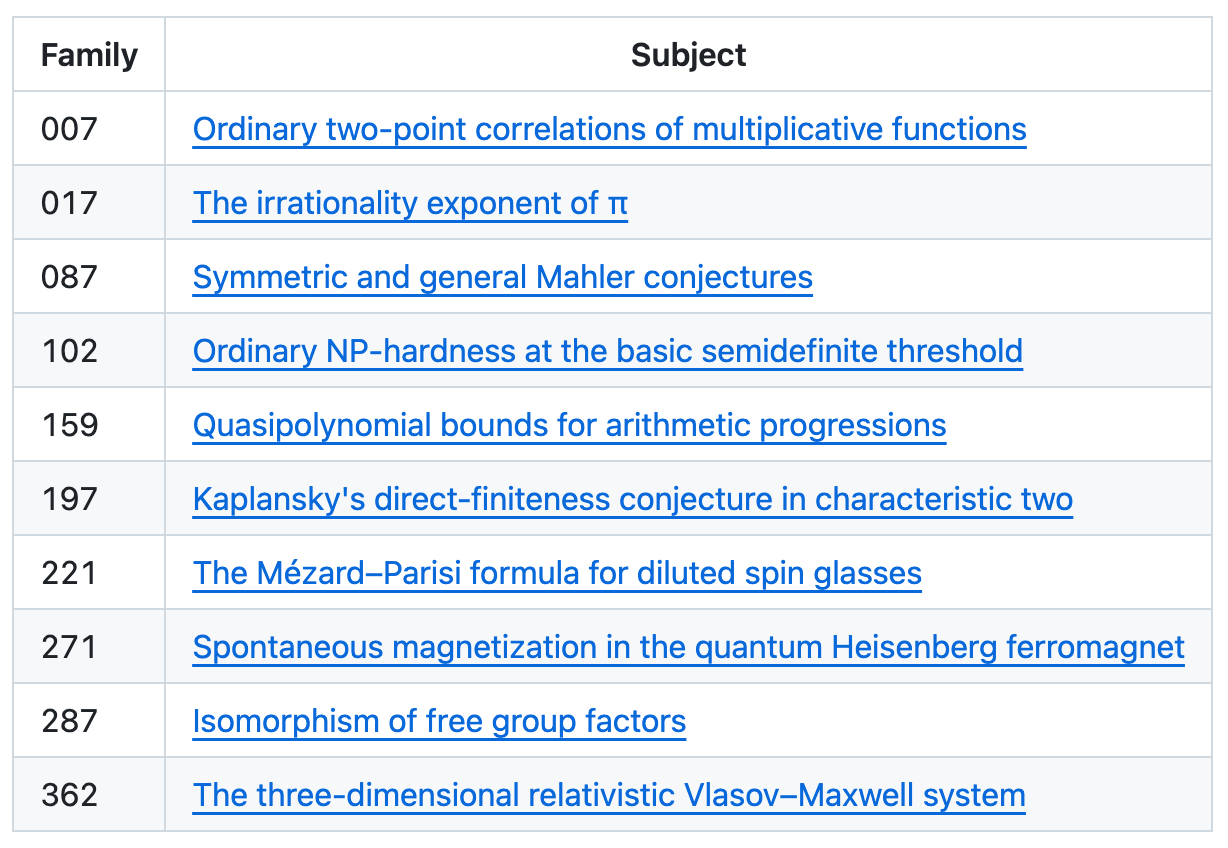
OpenAI has released 372 new mathematical results, covering areas such as number theory, algebraic geometry, and theoretical computer science. The release includes 722 research papers and manuscripts generated by an internal, unreleased AI model. Each result required computational resources equivalent to approximately 3 hours of continuous reasoning by ChatGPT Pro.
To address concerns regarding transparency and verification, OpenAI established a mathematics and AI advisory group. The company has published these findings on GitHub, allowing for revisions and citations. Furthermore, some proofs are provided in Lean, a formal verification software, to enable researchers to check for logical errors.
The release has sparked debate within the mathematical community regarding the validation of AI-generated work. Critics argue that the current research system lacks the capacity to verify such a high volume of results. Discussions are ongoing about how to define authorship and contribution when AI systems generate research at a speed far exceeding human capabilities.
OpenAI states that its goal is to expand the boundaries of mathematical knowledge rather than replace mathematicians. The company plans to host workshops and projects to facilitate collaboration. Additionally, OpenAI intends to release the underlying model to the public once safety and capability assessments are completed.


