Nvidia introduced the cuPotential library on October 14 at the SEMICON West exhibition. The tool is part of the CUDA-X platform and aims to accelerate simulations for semiconductor material development and manufacturing processes. Initial tests show a 2–3x speedup compared to existing GPU-optimized software, though performance varies by model and method. The library is currently in early access.
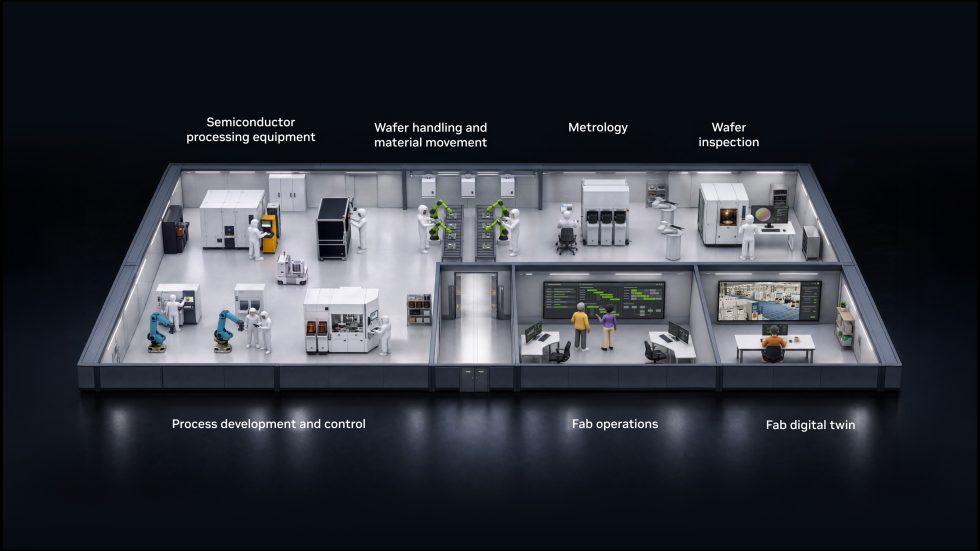
Industry partners are already integrating Nvidia solutions. Synopsys uses cuPotential for material modeling and reported a 12x speedup in its S-Device program using the cuDSS library. Lam Research plans to incorporate the open-source NanoVDB library into its SEMulator3D system for 3D data processing, such as silicon wafer etching, with potential speed gains of up to 30x.
Lam Research is also testing the PhysicsNeMo platform, which combines physical models with AI predictions. Nvidia notes that this approach has reduced plasma simulation times from days to milliseconds in some studies. Additionally, KLA reported a 50x acceleration in image processing for surface inspection and defect detection compared to CPU-based methods.
Nvidia plans to further automate these workflows using AI agents capable of preparing simulations, executing calculations, and analyzing results. The company aims to reduce reliance on physical experiments in semiconductor R&D. However, Nvidia emphasizes that these performance metrics are task-specific and do not guarantee direct improvements in overall factory yield or production costs.