

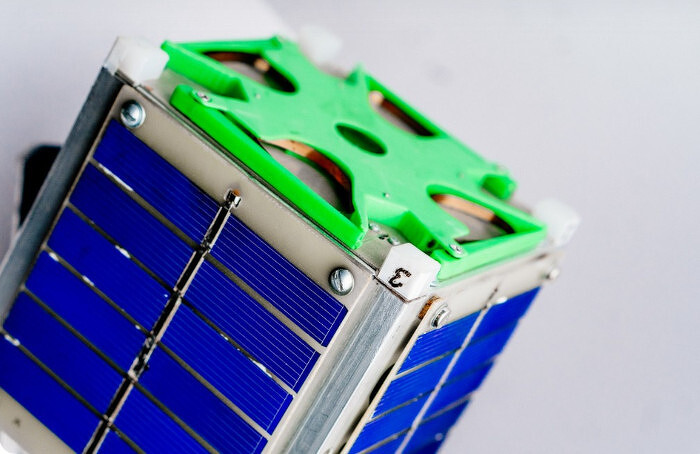
Researchers from the Moscow Aviation Institute (MAI) and the Samara National Research University have developed a pulsed plasma engine for nanosatellites weighing up to 10 kg. The system uses electrical energy to accelerate ionized gas within a magnetic field to generate thrust.
The engine features a high-speed electromagnetic valve with a thin magnetic membrane. This design eliminates friction, which enhances the reliability and longevity of the unit. According to developers, the valve can withstand over one million cycles without degradation.
The system allows for flexible component placement, as the gas tank can be installed in any available space within the spacecraft and connected via tubing. This configuration increases the onboard propellant supply and extends the duration of orbital maneuvers.
The engine enables satellites to perform up to 300 hours of active maneuvers, helping to compensate for atmospheric drag and extend their operational lifespan. Such capabilities facilitate the formation of distributed satellite networks.
Distributed satellite systems offer increased resilience, as tasks can be duplicated across multiple units. This approach allows for more cost-effective monitoring of transport, weather phenomena, solar flares, and space objects compared to single, complex satellites.



