

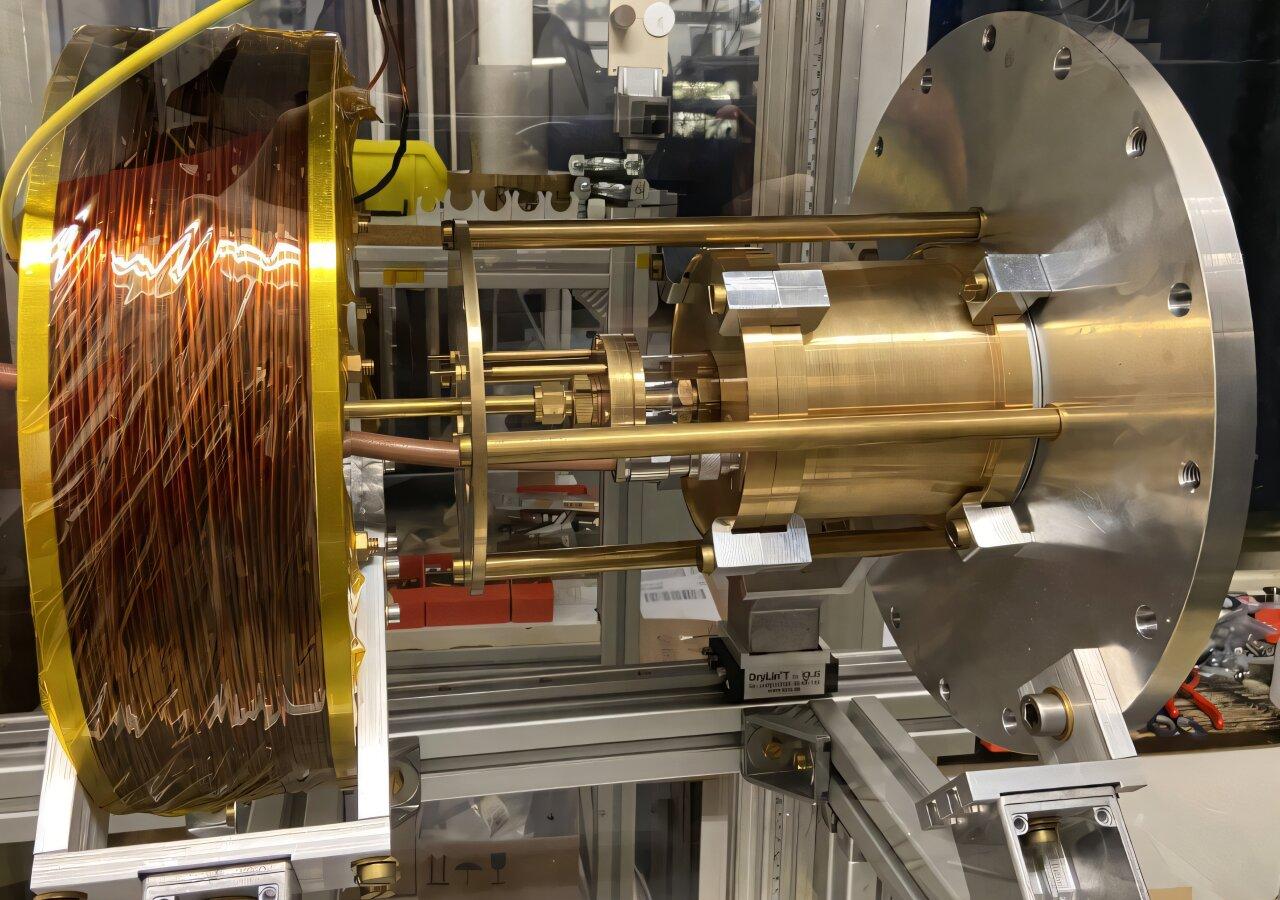
Researcher Francesco Romano from the University of Stuttgart has developed an experimental plasma engine designed for Atmosphere-Breathing Electric Propulsion (ABEP). The system captures molecules from the upper atmosphere, ionizes them into plasma, and accelerates them using an electromagnetic field to generate thrust, eliminating the need for traditional xenon fuel.
The engine utilizes a contactless radio-frequency helicon design without an external neutralizer to prevent damage from highly reactive atomic oxygen. A parabolic intake system demonstrated an efficiency of approximately 94.3% in collecting atmospheric particles, while a birdcage antenna, inspired by MRI technology, transferred up to 99% of high-frequency power to the plasma region.
During vacuum chamber tests, the unit generated stable plasma at 50–60 W. Simulations indicate that a satellite equipped with this technology could maintain an orbit between 190–250 km using less than 1.6 kW of power. The system is also being considered for use on Mars, where it could potentially utilize carbon dioxide to sustain orbits at 120–160 km.
The project is currently at the laboratory prototype stage. Future development will focus on validating the technology in actual space conditions, with the next critical milestone being an in-orbit flight test on a spacecraft.



