

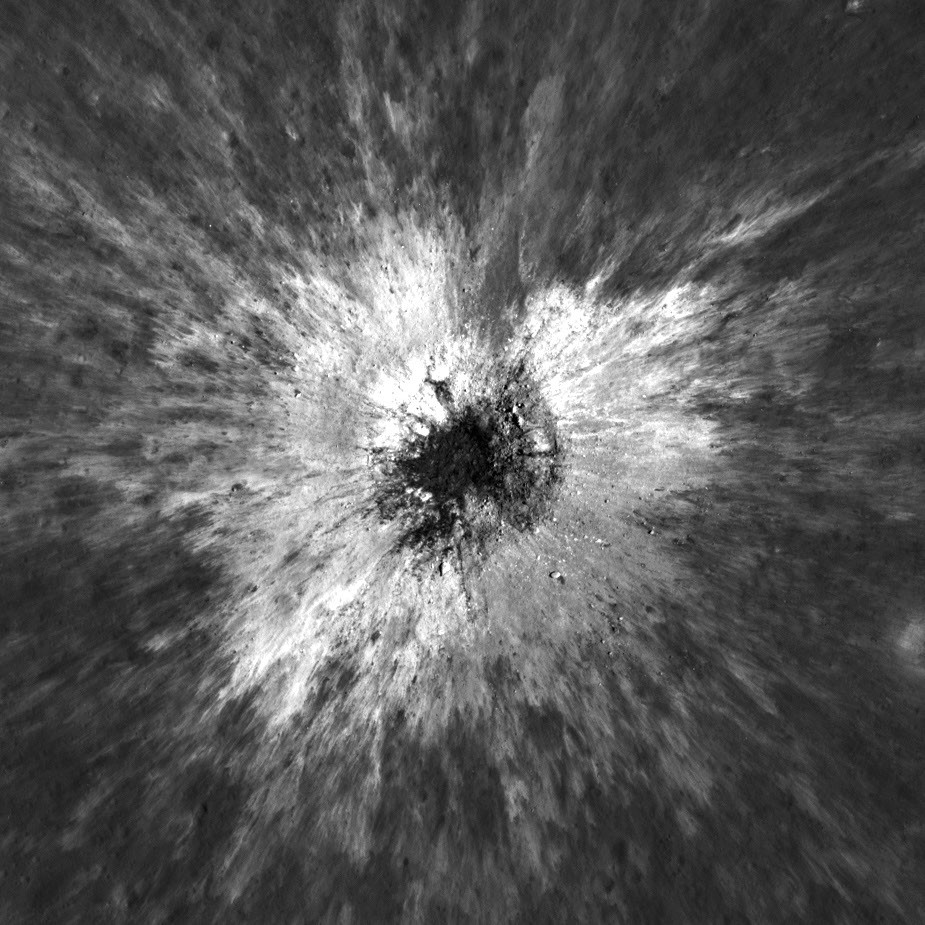
A new impact crater has been identified on the lunar surface, named McGetchin after an Apollo-era scientist. The formation resulted from a collision with a comet or asteroid measuring between 10 and 20 meters in diameter. This event occurred in the period between April and May 2024.
The Lunar Reconnaissance Orbiter recorded the surface changes through its regular monitoring program. The resulting crater spans the width of two soccer fields. According to researchers, impacts of this magnitude are statistically expected to occur only once every 132 years.
Thermal imaging of the site revealed a significant cold spot surrounding the crater. Scientists explain that the impact displaced loose lunar regolith, reducing its density and heat retention capacity. This affected area extends well beyond the boundaries of the visible crater.
The data collected from this event provides new insights into the evolution of the lunar surface and the mechanics of celestial impacts. NASA notes that the findings also highlight the protective role of Earth's atmosphere against similar space objects.



