

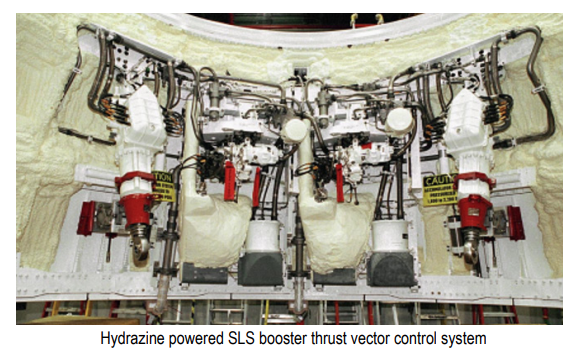
NASA has issued a technical bulletin detailing the risks of freeze-thaw cycles in hydrazine monopropellant systems. Hydrazine freezes at 1.6 degrees Celsius, and its phase transition can cause structural damage, valve failure, and system blockages. Historical data from the Space Shuttle and Voyager programs demonstrate that such cycles threaten mission reliability and hardware integrity.
The agency warns that freezing causes propellant contraction, which leads to over-expansion and potential rupture of plumbing upon thawing. Other risks include the formation of slush that restricts flow, hazardous toxic leaks, and the degradation of elastomeric seals. NASA notes that simple temperature readings are insufficient to assess line safety, requiring high-fidelity thermal modeling.
To mitigate these risks, NASA recommends maintaining hydrazine systems above freezing using heaters and insulation. If a system undergoes a freeze-thaw cycle, engineers must conduct integrity verification, including pressure decay tests. Each cycle should be treated as life-limiting, with hardware status tracked through formal engineering assessments and incident documentation.
Operational procedures should prioritize slow, uniform thawing to prevent pressure spikes. Before activating thrusters, systems must reach proper thermal conditions. NASA emphasizes that preventing freezing remains the most effective strategy for ensuring personnel safety and mission success, as documented in the agency’s long-term operational flight rules.


