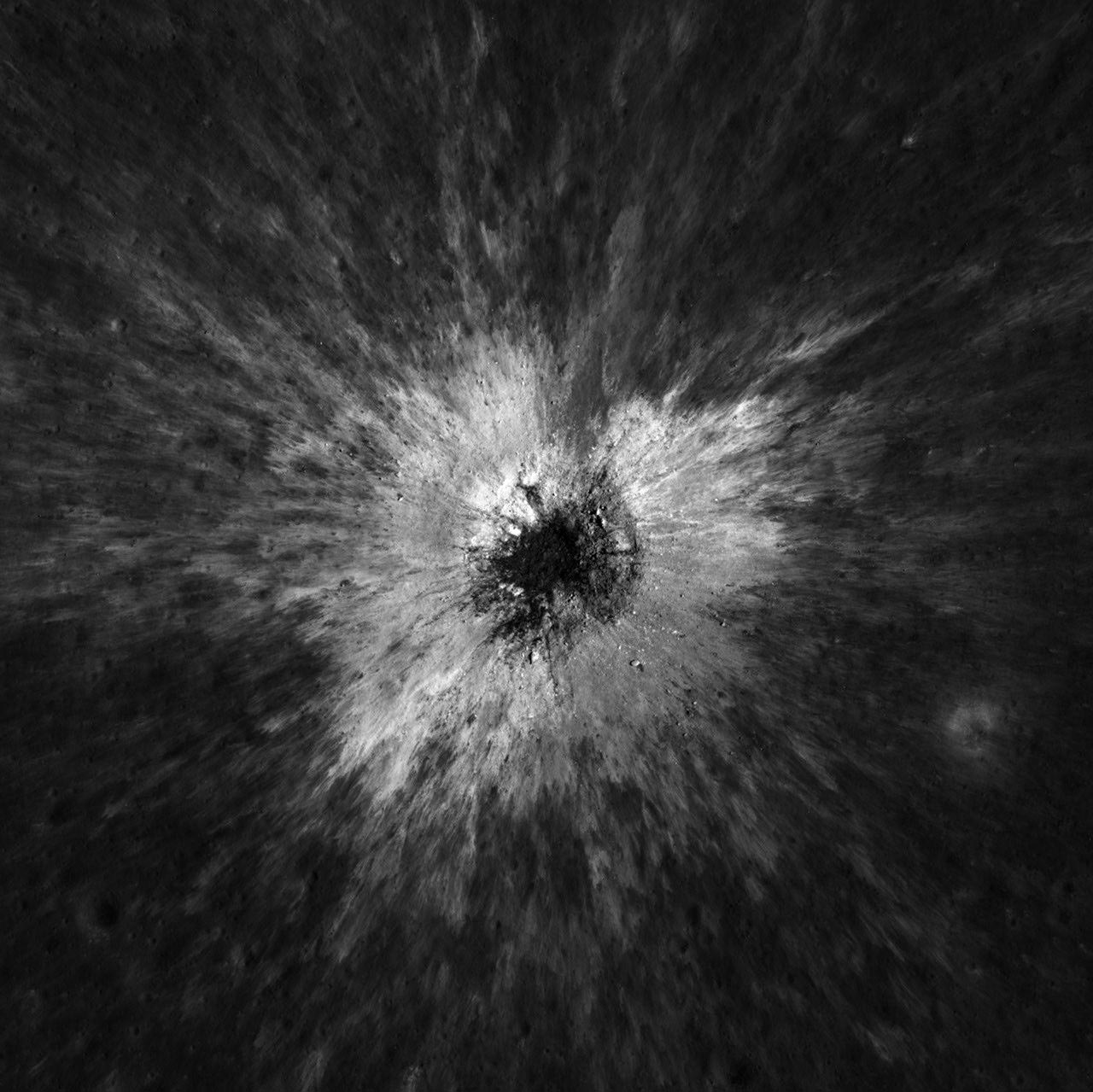
NASA's Lunar Reconnaissance Orbiter (LRO) has identified a new lunar crater, named McGuckin, located on the eastern edge of the Moon. The crater was formed between April 11 and May 22, 2024, and was discovered by expert Robert Wagner in October 2025 while analyzing lunar imagery.
The crater measures approximately 222 meters in diameter and 43 meters in depth. Scientists estimate the impact was caused by a comet or asteroid fragment roughly the size of a three-to-six-story building. Such events are rare, occurring on average once every 100 to 132 years.
The impact caused significant surface disruption, with effects extending up to 120 kilometers from the site. Researchers also identified a 6.4-kilometer-wide 'cold spot' surrounding the crater, attributed to changes in lunar soil structure and thermal conductivity following the collision.
This discovery provides a rare 'before and after' dataset for large-scale lunar impacts. Since 2009, the LRO has identified over 1,000 new craters, but the McGuckin crater is considered significant for its size and the completeness of the observational data captured.
The findings are relevant to NASA's Artemis program, as understanding surface changes and lunar soil characteristics is essential for future base construction and resource development. The data serves as a critical sample for studying the geological evolution of the Moon.