Researchers tested the feasibility of warming Mars using aluminum nanoparticles designed to trap heat and boost the greenhouse effect. However, a 3D climate model simulation yielded unexpected results, showing a decrease in average surface temperature by 3.09 K and a reduction in atmospheric water vapor by over 99%.
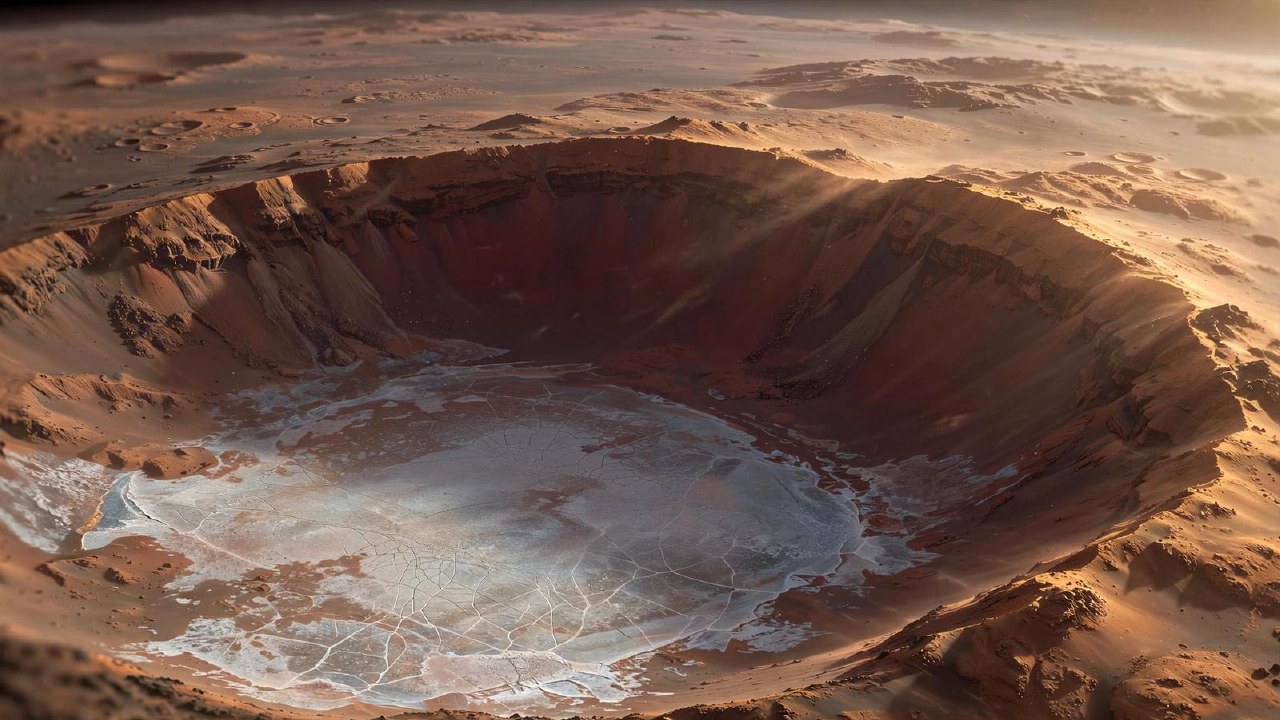
The study utilized the Generic Planetary Climate Model to track climate changes over a Martian year of 669 sols. Scientists replaced natural Martian dust with aluminum nanoparticles and accounted for a regional ice reservoir in the Hellas Basin with a mass density of 3400 kg/m2. The model compared these results against a control scenario using natural dust.
The simulation revealed that the average surface temperature dropped to 191.80 K compared to 194.89 K in the control group. Surface pressure decreased from 515.78 Pa to 452.38 Pa as carbon dioxide condensed into solid form. Meanwhile, the average mass of dry ice deposited on the surface increased by nearly 24%.
The cooling effect also disrupted the water cycle, with the average mass fraction of water vapor in the atmosphere falling by approximately 286 times. Peak sublimation rates dropped from 169.12 W/m2 to 0.374 W/m2. These findings suggest that a single injection of nanoparticles is insufficient for sustainable climate modification without continuous replenishment.