

Researchers from NASA and the Advanced Light Source have developed a method to monitor the degradation of spacecraft heat shields in real time. By combining X-ray microtomography with artificial intelligence, the team creates 3D models of material changes during heating, which previously could only be analyzed before and after testing.
During experiments, samples were heated to 900 degrees Celsius while being scanned at micrometer resolution. The study focused on two commercial materials, SLA-220 and SLA-561V. The latter, which contains natural cork, forms numerous internal cavities when heated, whereas the silicone matrix of SLA-220 develops a dense network of interconnected channels.
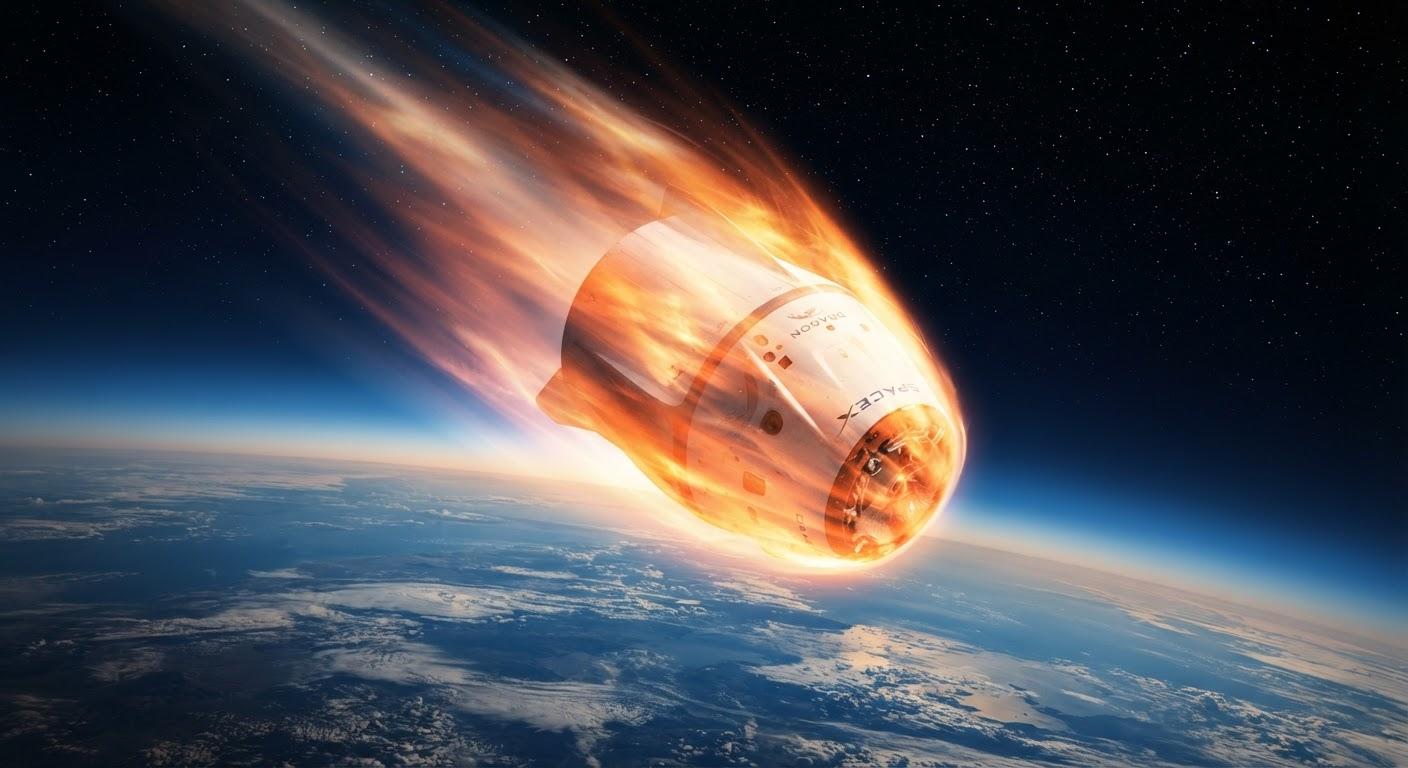
This research follows discrepancies between predicted and actual heat shield performance observed during the first Artemis mission. The new data will help engineers refine calculations for shield thickness and mass in future projects, including upcoming Artemis missions and planned expeditions to Mars, to improve safety during atmospheric reentry.



